
Explore the Ananda-X directory of 108 yoga asanas by Sanskrit or English name, posture family, practice level and health-support research category. 19 entries include verified PWA guidance, 20 use source-derived instructions from Ananda-X PWA routines, and 69 contain complete pose-specific Ananda-X practice guidance. Together, all 108 entries now include a practice guide.
Safety: This educational directory is not medical advice. Work within a comfortable range and seek qualified guidance for pain, injury, pregnancy, balance concerns, surgery recovery or a medical condition.
Showing 108 asanas
Health-support research index: Results show internally researched associations for navigation only. They are not medical advice, treatment recommendations or proof that an individual pose is suitable for a condition. Continue prescribed care and consult an appropriate health professional and qualified yoga therapist.
Asana 001
Tadasana
Mountain Pose
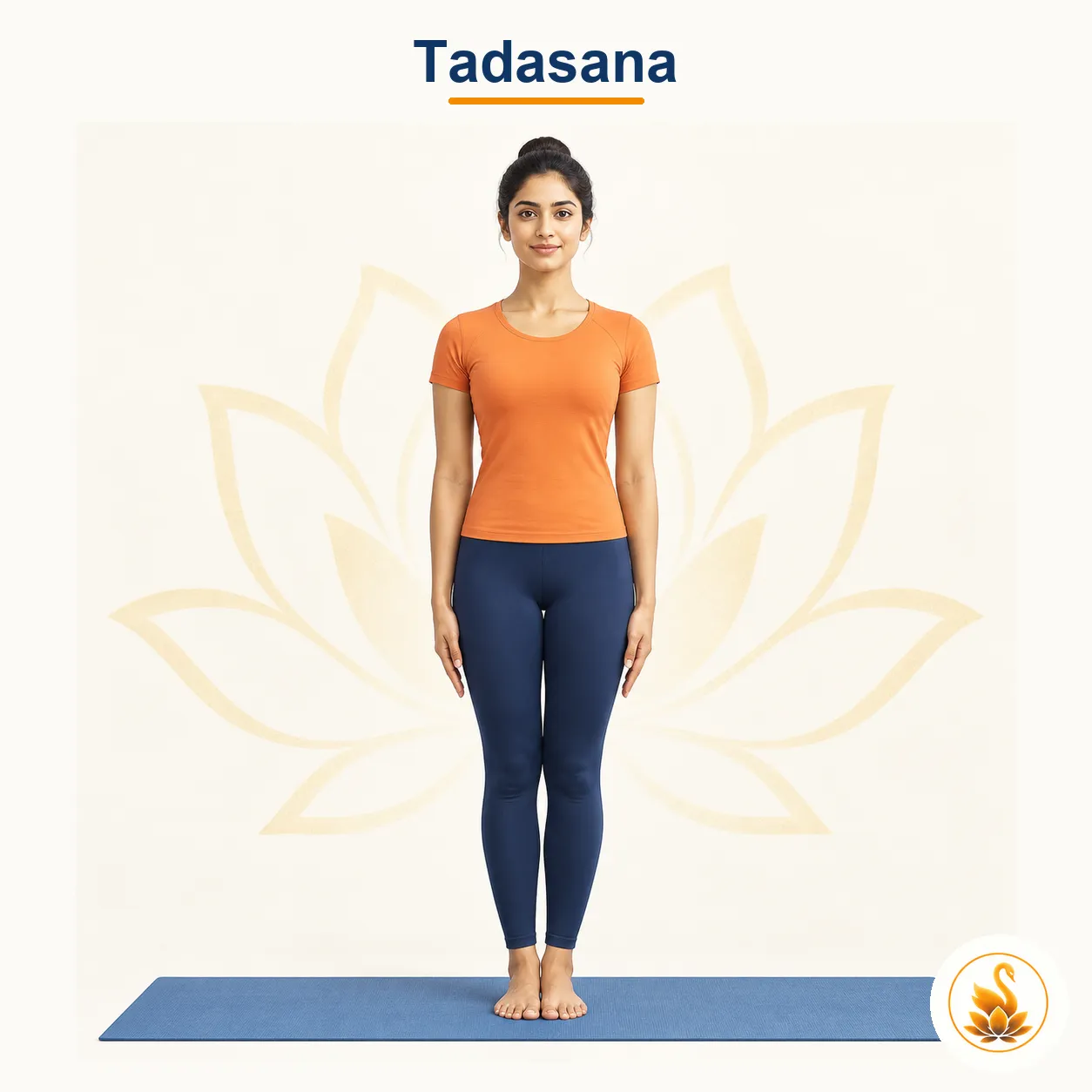
PWA verified guide
How to practise safely
Focus
posture, balance, body awareness
Steps
- Stand with feet comfortable and weight spread evenly through both feet.
- Lengthen upward through the crown of the head without stiffening the neck.
- Let shoulders soften, arms rest naturally, and breathe slowly.
- Keep the body steady while noticing alignment from feet to head.
Benefits
- Builds standing awareness and postural organization.
- Supports steady balance and calm breathing.
- Useful as a neutral starting or transition posture.
Suggested duration
3 to 5 slow breaths; repeat 2 to 3 times.
Important caution
Use support if balance is uncertain. Stop if standing causes dizziness, pain or unusual breathlessness.
Asana 002
Urdhva Hastottanasana
Upward Hand Stretch
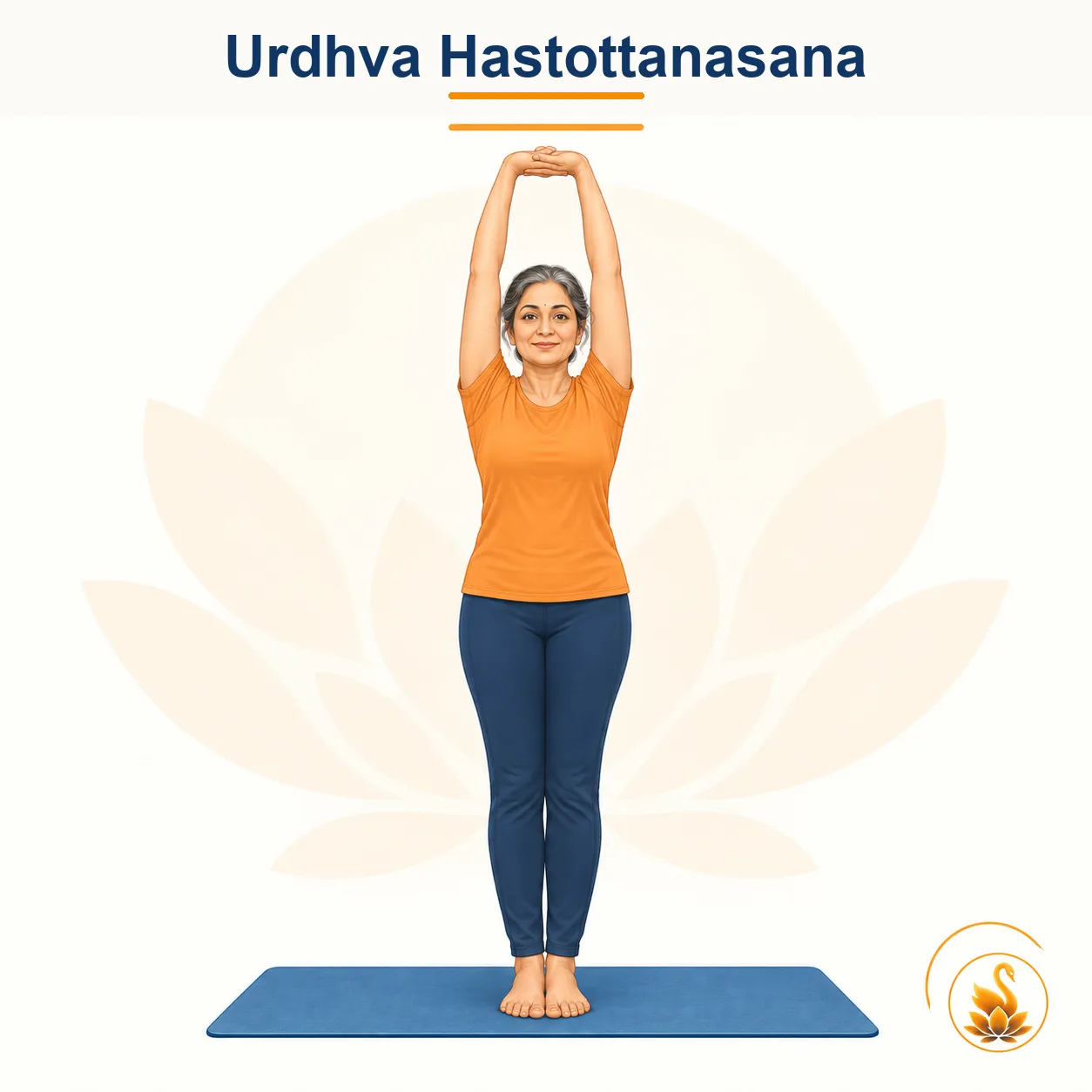
Ananda-X practice guide
How to practise safely
Focus
upright reach, side-body length, steady breathing
Steps
- Stand tall with the feet stable and the arms beside the body.
- Inhale and sweep both arms overhead without lifting the shoulders.
- Reach upward through the fingertips while keeping the ribs controlled and the neck easy.
- Exhale and lower the arms slowly to return to standing.
Benefits
- Develops standing awareness and controlled movement.
- Supports balance, coordination and postural organization.
- Encourages steady breathing while the body remains attentive.
Suggested duration
3 to 5 slow breaths; repeat 2 to 3 times.
Important caution
Keep the reach comfortable. Lower the arms if shoulder or neck discomfort appears, and avoid leaning backward.
Source status: Ananda-X editorial practice guidance. This entry is complete but is not labelled PWA-verified.
Asana 003
Ardha Chakrasana
Standing Half Wheel
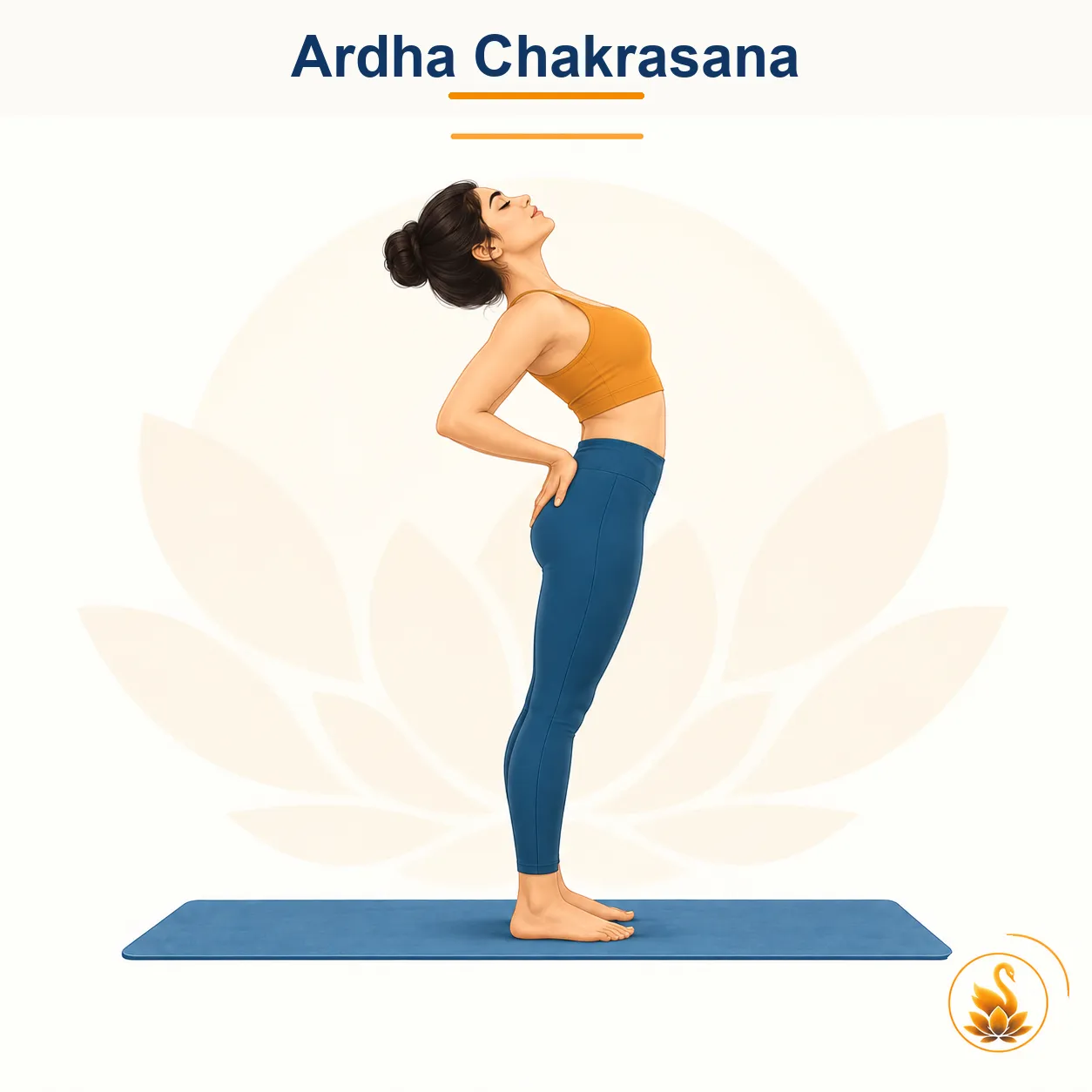
Ananda-X practice guide
How to practise safely
Focus
gentle spinal extension, chest opening, stable legs
Steps
- Stand tall with the feet hip-width apart and place the hands on the back of the pelvis.
- Inhale, lengthen upward and draw the elbows gently toward one another.
- Keeping the legs steady, lift the breastbone and make a small backward arc without dropping the head.
- Exhale and return to upright slowly.
Benefits
- Develops standing awareness and controlled movement.
- Supports balance, coordination and postural organization.
- Encourages steady breathing while the body remains attentive.
Suggested duration
2 to 4 breaths; repeat up to 3 times.
Important caution
Use only a mild range. Avoid compressing the lower back; stop with dizziness, back pain or neck discomfort.
Source status: Ananda-X editorial practice guidance. This entry is complete but is not labelled PWA-verified.
Asana 004
Padahastasana / Uttanasana
Standing Forward Bend
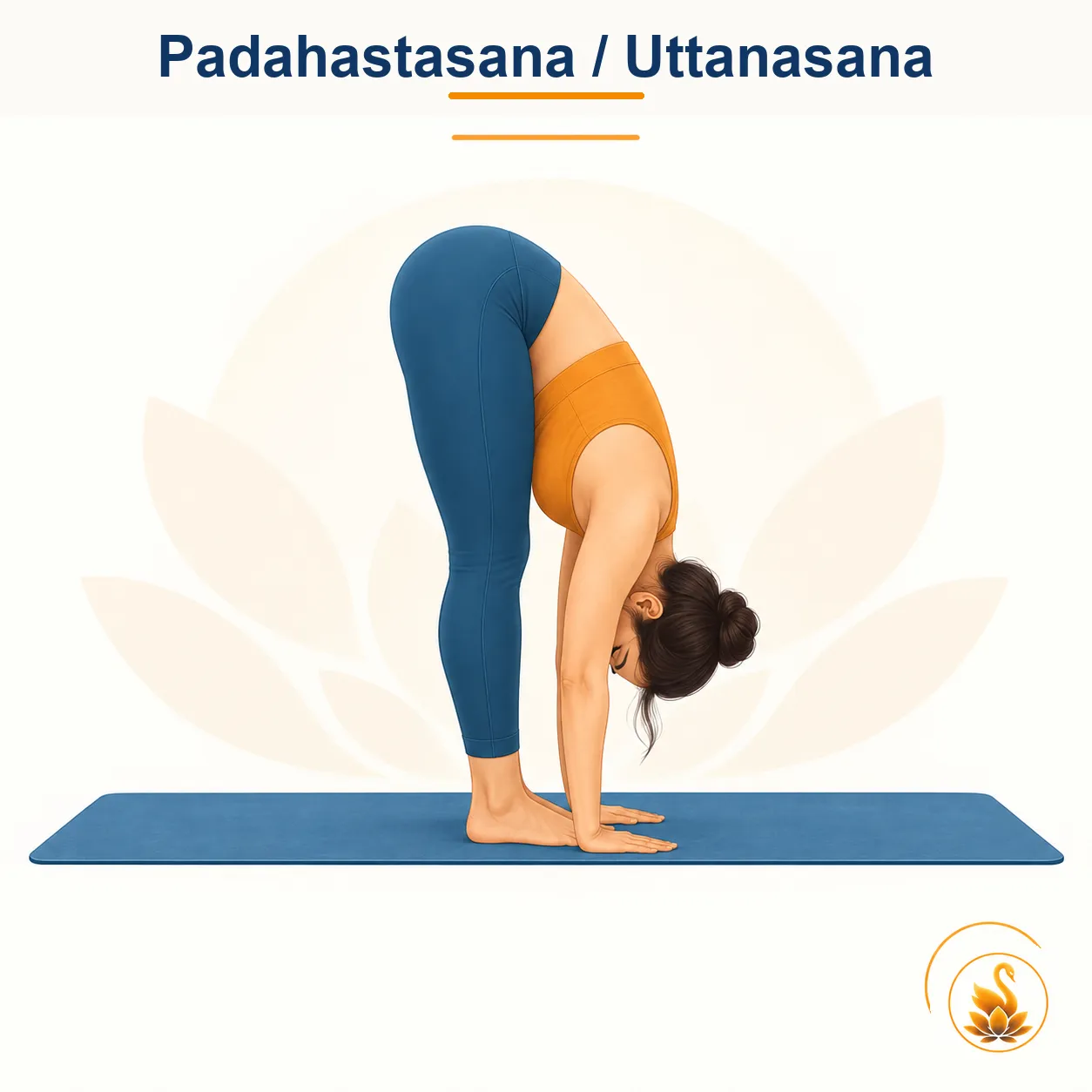
Ananda-X practice guide
How to practise safely
Focus
hip hinge, hamstring length, relaxed neck
Steps
- Stand with the feet comfortable and soften the knees.
- Exhale and fold forward from the hips, keeping length through the front of the trunk.
- Rest the hands on blocks, shins or the floor without pulling the body downward.
- Inhale, bend the knees as needed and rise with a long spine.
Benefits
- Develops standing awareness and controlled movement.
- Supports balance, coordination and postural organization.
- Encourages steady breathing while the body remains attentive.
Suggested duration
3 to 5 breaths; repeat 1 to 2 times.
Important caution
Bend the knees for tight hamstrings or back sensitivity. Avoid deep forward folding with acute disc symptoms, dizziness or uncontrolled blood pressure.
Source status: Ananda-X editorial practice guidance. This entry is complete but is not labelled PWA-verified.
Asana 005
Trikonasana
Triangle Pose
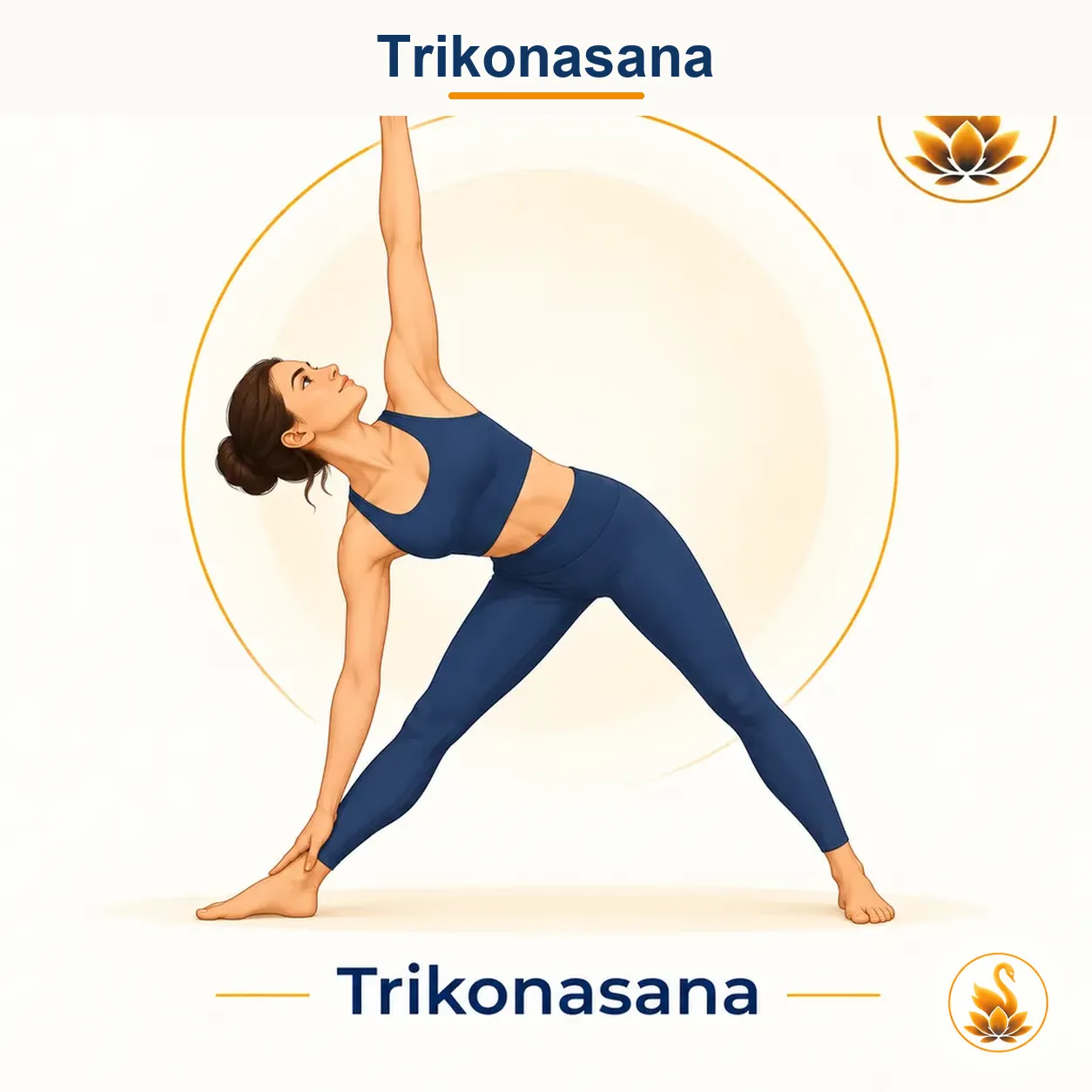
PWA verified guide
How to practise safely
Focus
standing balance, lateral mobility, leg strength
Steps
- Stand with feet wide and turn the front foot outward comfortably.
- Extend arms and lengthen the torso over the front leg.
- Place the lower hand on the shin, a block, or another comfortable support.
- Reach the upper arm upward, keep breathing, then rise with control.
Benefits
- Combines standing stability with side-body length.
- Supports leg strength and balance.
- Encourages coordinated hip and trunk movement.
Suggested duration
2 to 4 breaths each side; 1 to 2 rounds.
Important caution
Use a block or wall if balance is uncertain. Avoid forcing the neck upward; modify with vertigo, acute back/hip pain or instability.
Asana 006
Parivrtta Trikonasana
Revolved Triangle
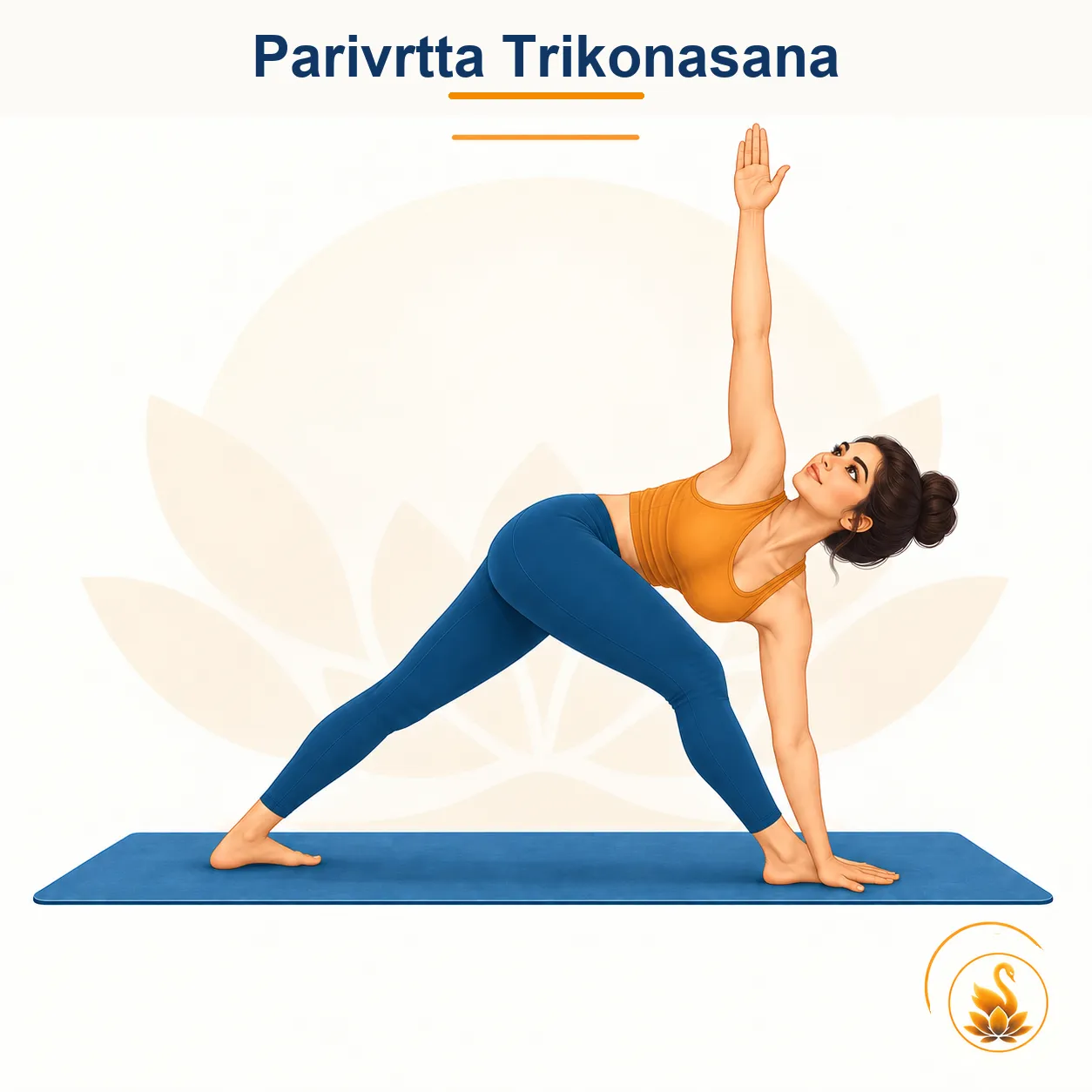
Ananda-X practice guide
How to practise safely
Focus
standing rotation, leg stability, spinal length
Steps
- Stand with the feet wide, turn the right foot outward and square the pelvis as comfortably as possible.
- Lengthen forward over the right leg, then place the left hand on a block inside or outside the foot.
- Rotate the chest gently to the right and raise the right arm only if balance and the shoulder allow.
- Unwind slowly, rise, and repeat on the other side.
Benefits
- Develops standing awareness and controlled movement.
- Supports balance, coordination and postural organization.
- Encourages steady breathing while the body remains attentive.
Suggested duration
2 to 4 breaths each side.
Important caution
Use a block and keep the twist modest. Avoid forcing the neck or rotation with back injury, vertigo, pregnancy or balance concerns.
Source status: Ananda-X editorial practice guidance. This entry is complete but is not labelled PWA-verified.
Asana 007
Utthita Parsvakonasana
Extended Side Angle
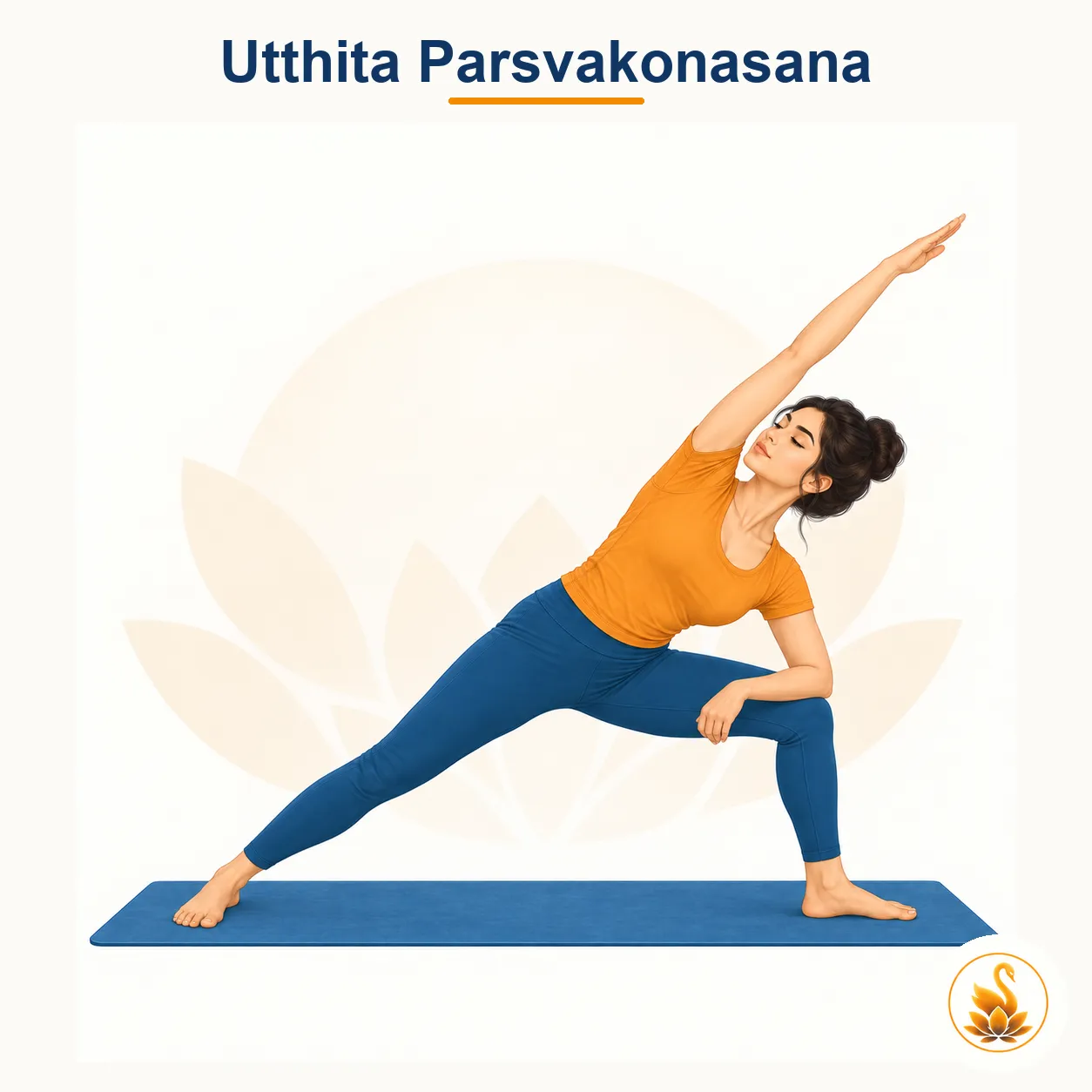
Ananda-X practice guide
How to practise safely
Focus
side-body length, bent-knee alignment, grounded feet
Steps
- Take a wide stance, turn the right foot out and bend the right knee toward a comfortable right angle.
- Place the right forearm lightly on the thigh or the hand on a block.
- Extend the left arm overhead in line with the side body while keeping both feet grounded.
- Press through the feet to rise and repeat on the other side.
Benefits
- Develops standing awareness and controlled movement.
- Supports balance, coordination and postural organization.
- Encourages steady breathing while the body remains attentive.
Suggested duration
3 to 5 breaths each side.
Important caution
Keep the front knee tracking toward the toes. Shorten the stance or use support for knee, hip, shoulder or balance difficulty.
Source status: Ananda-X editorial practice guidance. This entry is complete but is not labelled PWA-verified.
Asana 008
Parivrtta Parsvakonasana
Revolved Side Angle
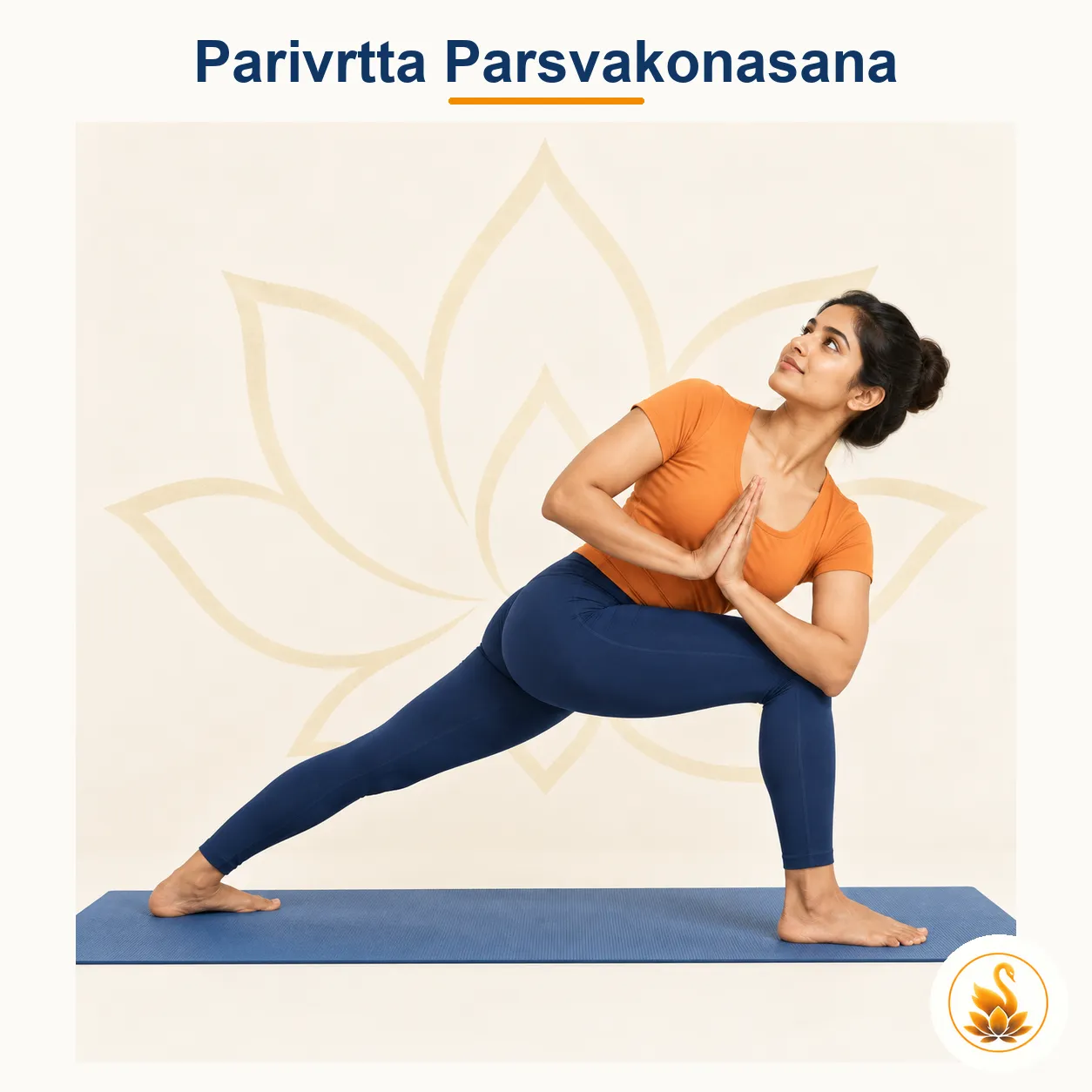
Ananda-X practice guide
How to practise safely
Focus
lunge stability, gentle rotation, coordinated breathing
Steps
- From a comfortable lunge with the right foot forward, keep the back knee lifted or place it down for support.
- Bring the palms together and lengthen the spine.
- Rotate gently toward the right, optionally placing the left elbow outside the thigh without using force.
- Return to centre, step in carefully and repeat on the other side.
Benefits
- Develops standing awareness and controlled movement.
- Supports balance, coordination and postural organization.
- Encourages steady breathing while the body remains attentive.
Suggested duration
2 to 4 breaths each side.
Important caution
Keep the twist small and the breath free. Avoid deep rotation with pregnancy, acute back pain, recent abdominal surgery or poor balance.
Source status: Ananda-X editorial practice guidance. This entry is complete but is not labelled PWA-verified.
Asana 009
Parsvottanasana
Intense Side Stretch
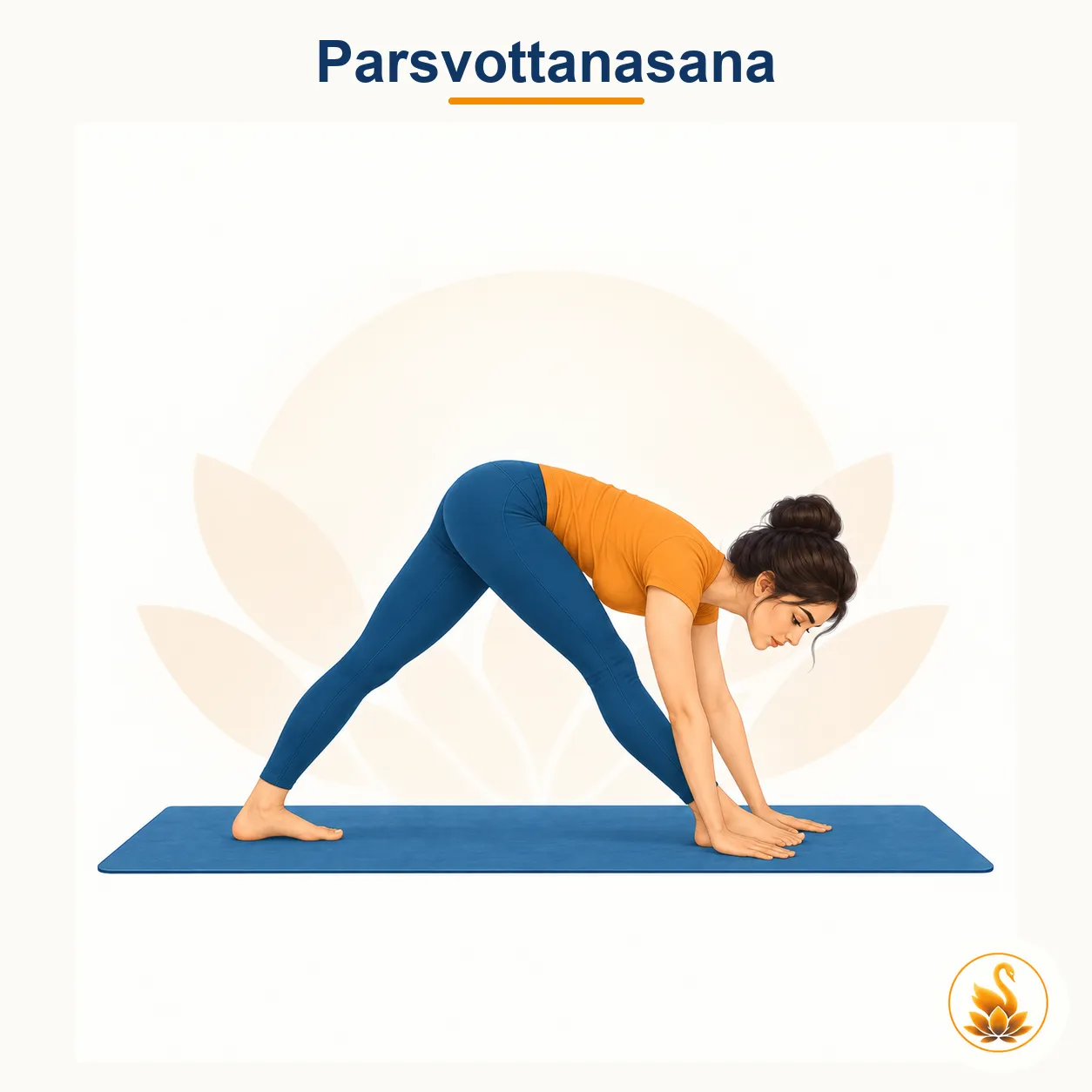
Ananda-X practice guide
How to practise safely
Focus
hip hinge, leg alignment, calm forward fold
Steps
- Step the left foot back and turn it slightly outward, keeping both legs steady.
- Square the pelvis toward the front as comfortably as possible and lengthen the spine on an inhale.
- Exhale and hinge forward over the front leg, resting the hands on blocks or the floor.
- Press through both feet to rise, then change sides.
Benefits
- Develops standing awareness and controlled movement.
- Supports balance, coordination and postural organization.
- Encourages steady breathing while the body remains attentive.
Suggested duration
3 to 5 breaths each side.
Important caution
Do not lock the knees or force the pelvis square. Use blocks and reduce the range for hamstring, hip or lower-back sensitivity.
Source status: Ananda-X editorial practice guidance. This entry is complete but is not labelled PWA-verified.
Asana 010
Prasarita Padottanasana
Wide-Legged Forward Bend
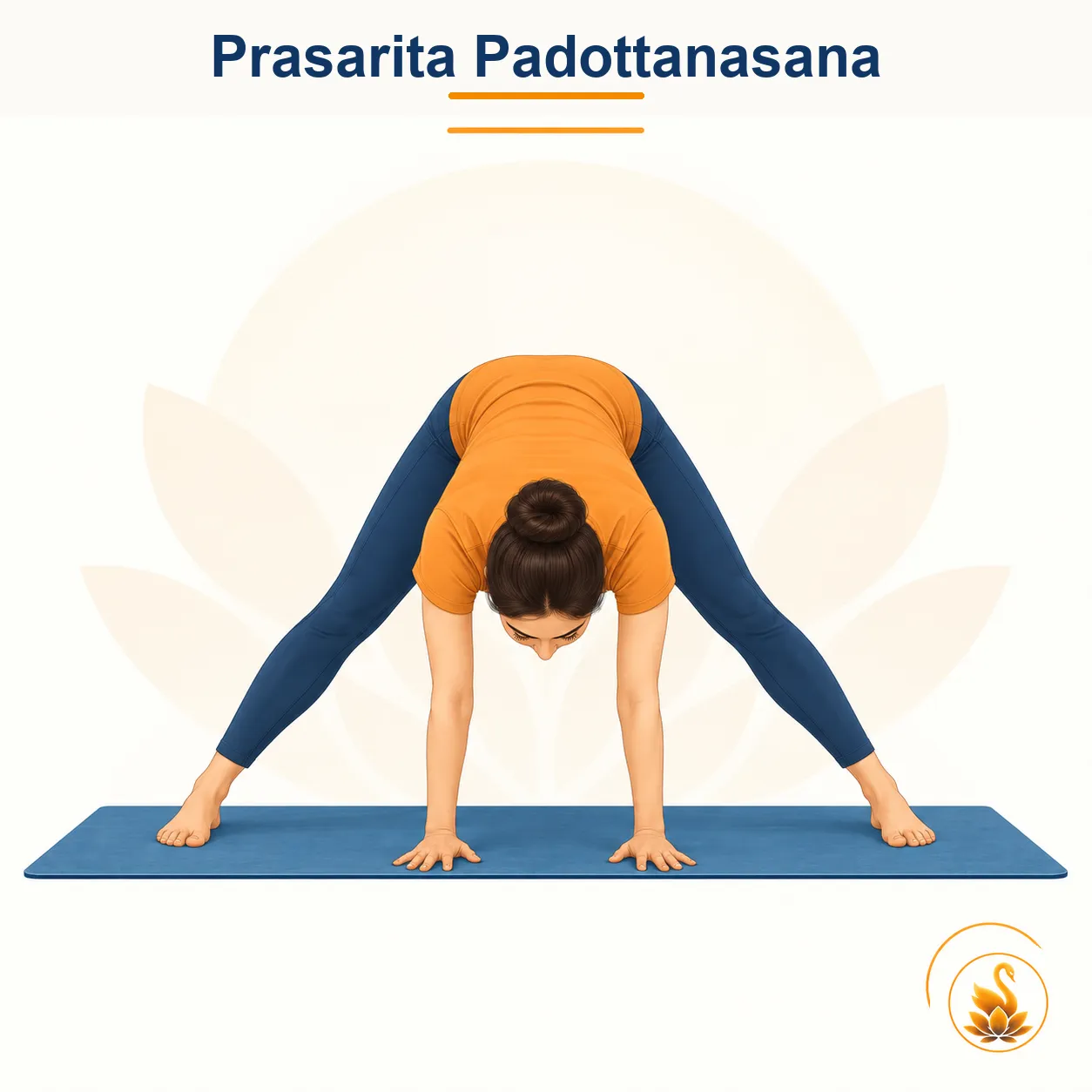
Ananda-X practice guide
How to practise safely
Focus
wide-leg fold, hamstring length, even weight
Steps
- Stand with the feet wide and parallel, placing the hands on the hips.
- Inhale to lengthen the spine, then exhale and hinge forward from the hips.
- Place the hands on blocks or the floor and let the neck remain easy while weight stays even across both feet.
- Bring the hands to the hips and rise with a long spine.
Benefits
- Develops standing awareness and controlled movement.
- Supports balance, coordination and postural organization.
- Encourages steady breathing while the body remains attentive.
Suggested duration
3 to 6 breaths.
Important caution
Use blocks and bend the knees if needed. Avoid letting weight roll into the heels; come up slowly if prone to dizziness.
Source status: Ananda-X editorial practice guidance. This entry is complete but is not labelled PWA-verified.
Asana 011
Vrikshasana
Tree Pose
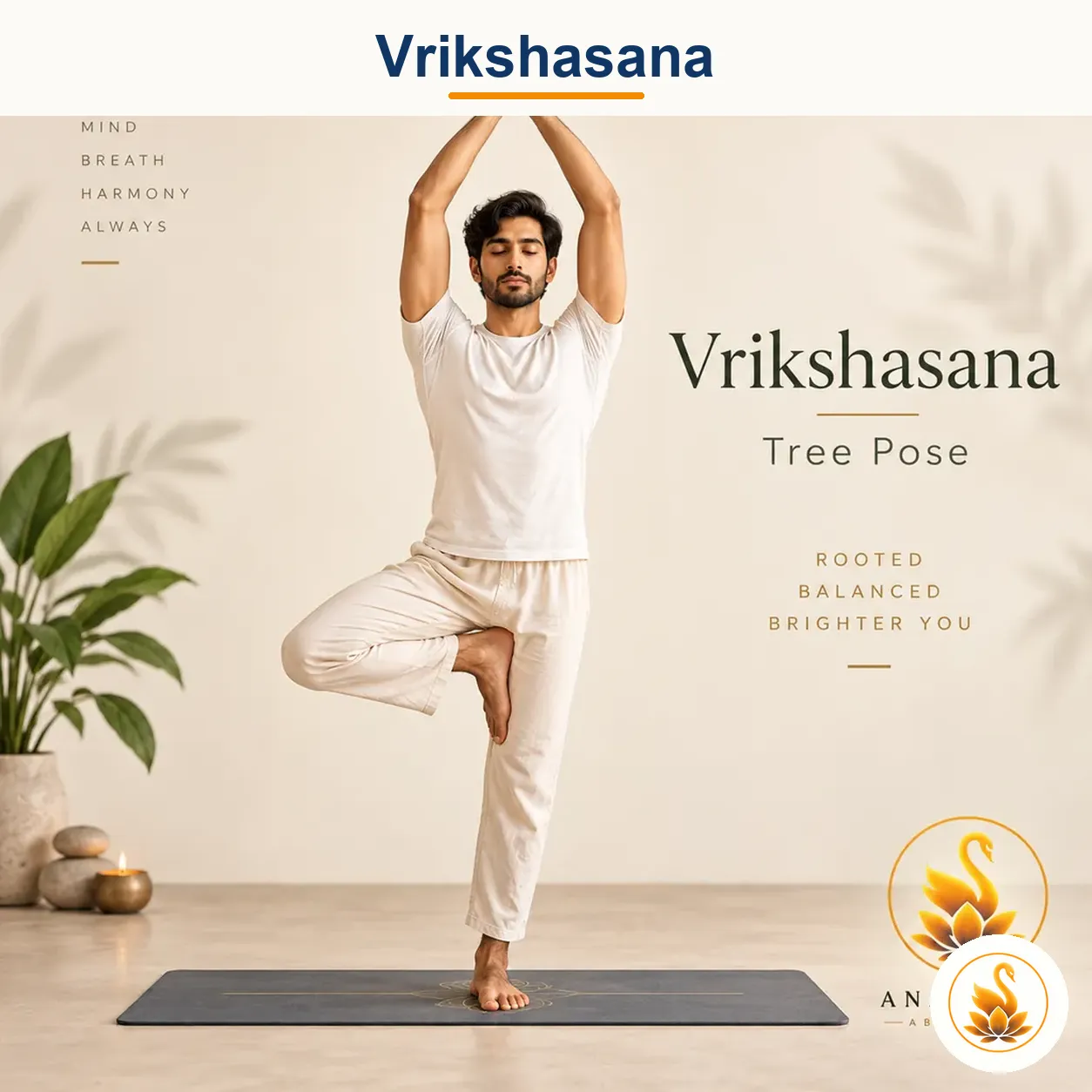
PWA verified guide
How to practise safely
Focus
balance, single-leg stability, attention
Steps
- Stand beside a wall or chair for optional support.
- Shift weight into one foot and place the other foot at the ankle, calf or inner thigh – never directly on the knee.
- Bring hands together or keep one hand on support.
- Fix the gaze on a steady point, breathe, then switch sides.
Benefits
- Develops single-leg balance and attention.
- Builds standing stability.
- Can be scaled easily using wall or chair support.
Suggested duration
2 to 5 breaths each side; 1 to 3 rounds.
Important caution
Always use support if there is fall risk, dizziness, neurological balance difficulty or recent lower-limb injury.
Asana 012
Utkatasana
Chair Pose
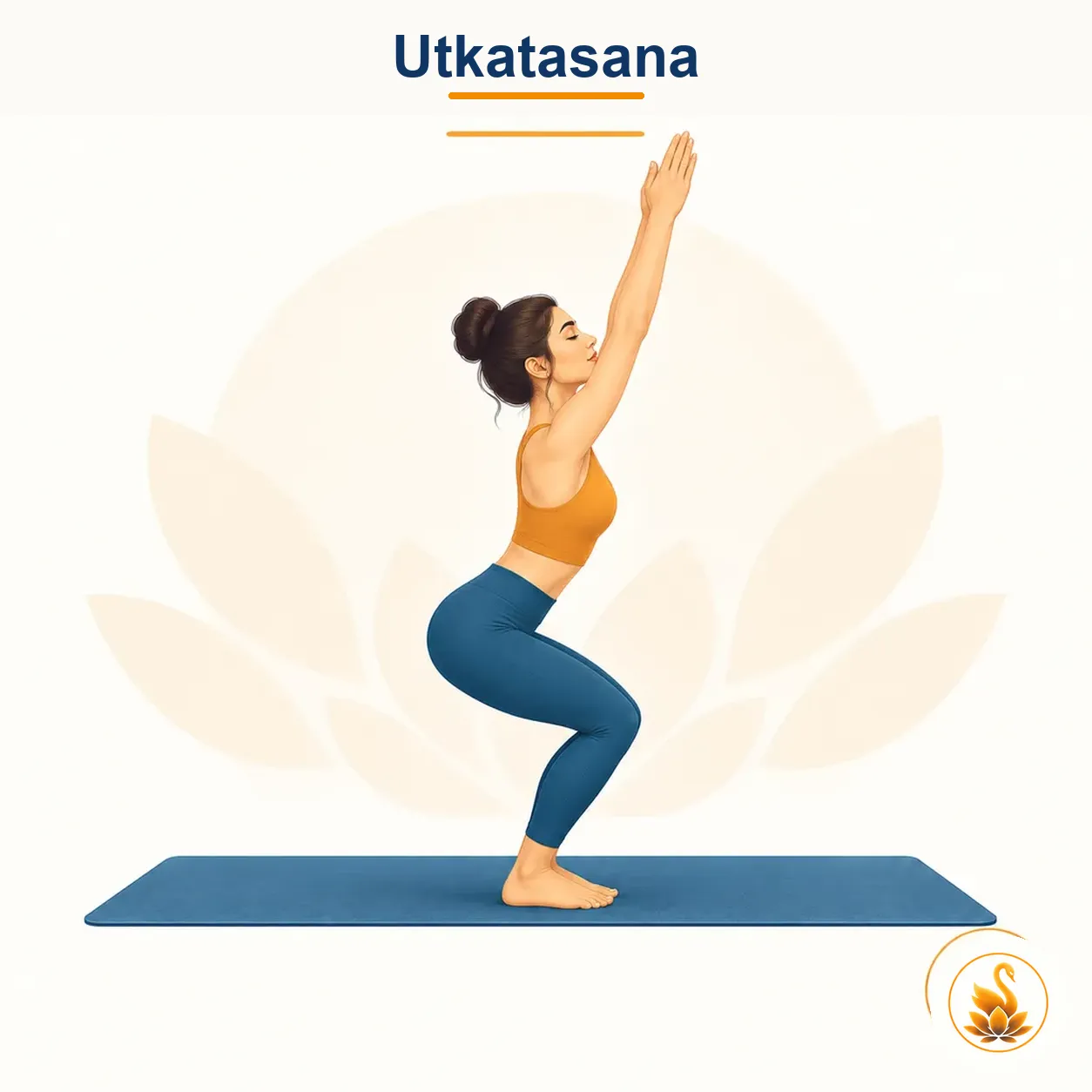
PWA routine source – expert review pending
How to practise safely
Focus
standing, controlled movement, steady breathing
Steps
- Prepare in a stable starting position and keep the breath comfortable.
- Raise the arms and, while inhaling, bend the knees toward a chair-like position; exhale and return to standing.
Benefits
- Develops standing awareness and controlled movement.
- Supports balance, coordination and postural organization.
- Encourages steady breathing while the body remains attentive.
Suggested duration
Source says 10 times
Important caution
Use a wall or chair if balance is uncertain. Stop with pain, dizziness, unusual breathlessness or loss of control.
Source: YogaAX2. Practice wording is source-derived; focus, benefits and caution are cautious editorial guidance pending expert review.
Asana 013
Garudasana
Eagle Pose
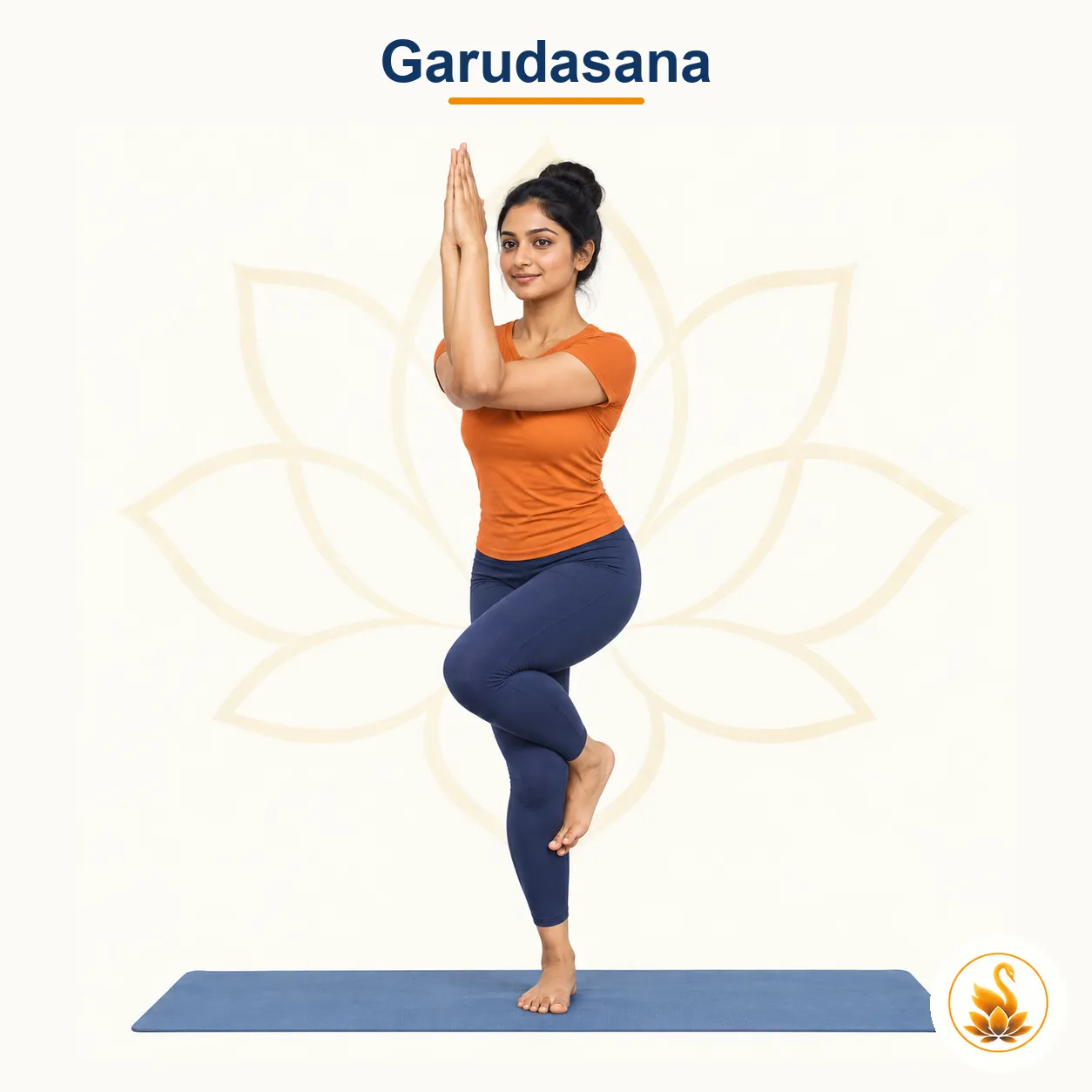
Ananda-X practice guide
How to practise safely
Focus
single-leg balance, shoulder mobility, steady gaze
Steps
- Stand tall and focus on one unmoving point.
- Shift weight into the left foot, cross the right thigh over the left and use the toes as a kickstand if needed.
- Cross the arms in front, bringing palms or backs of the hands together, and sit back slightly.
- Unwind with control and repeat on the other side.
Benefits
- Develops standing awareness and controlled movement.
- Supports balance, coordination and postural organization.
- Encourages steady breathing while the body remains attentive.
Suggested duration
3 to 5 breaths each side.
Important caution
Use a wall or keep the lifted toes down if balance is uncertain. Avoid deep knee flexion with knee pain.
Source status: Ananda-X editorial practice guidance. This entry is complete but is not labelled PWA-verified.
Asana 014
Virabhadrasana I
Warrior I
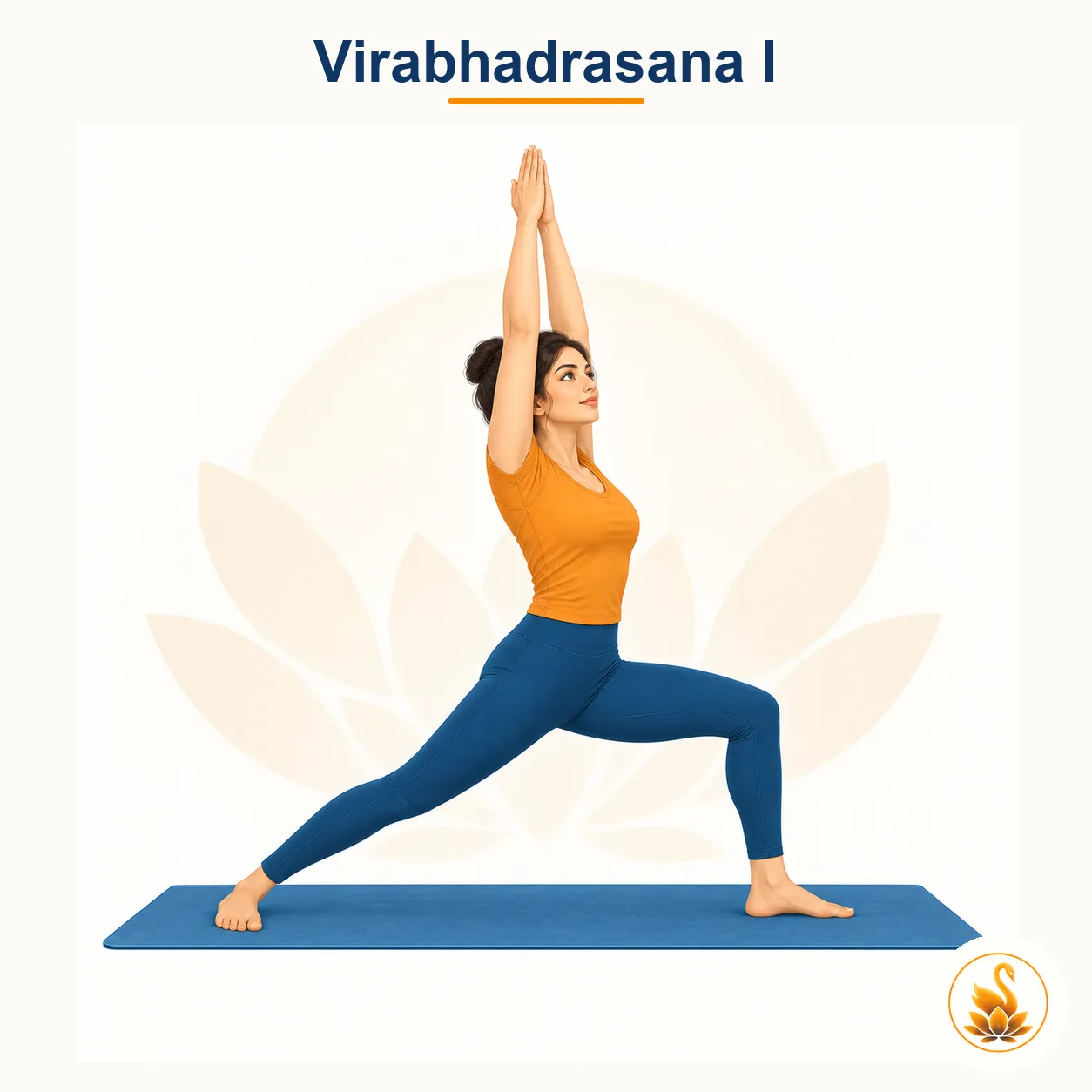
Ananda-X practice guide
How to practise safely
Focus
lunge strength, upright trunk, overhead reach
Steps
- Step the left foot back, turning it slightly outward while the right knee bends over the ankle.
- Turn the pelvis and chest toward the front as comfortably as possible.
- Inhale and raise the arms overhead, keeping the shoulders soft and the lower ribs controlled.
- Lower the arms, step forward and repeat on the other side.
Benefits
- Develops standing awareness and controlled movement.
- Supports balance, coordination and postural organization.
- Encourages steady breathing while the body remains attentive.
Suggested duration
3 to 5 breaths each side.
Important caution
Shorten the stance for balance or hip discomfort. Keep the front knee aligned and avoid forcing the back foot or pelvis.
Source status: Ananda-X editorial practice guidance. This entry is complete but is not labelled PWA-verified.
Asana 015
Virabhadrasana II
Warrior II
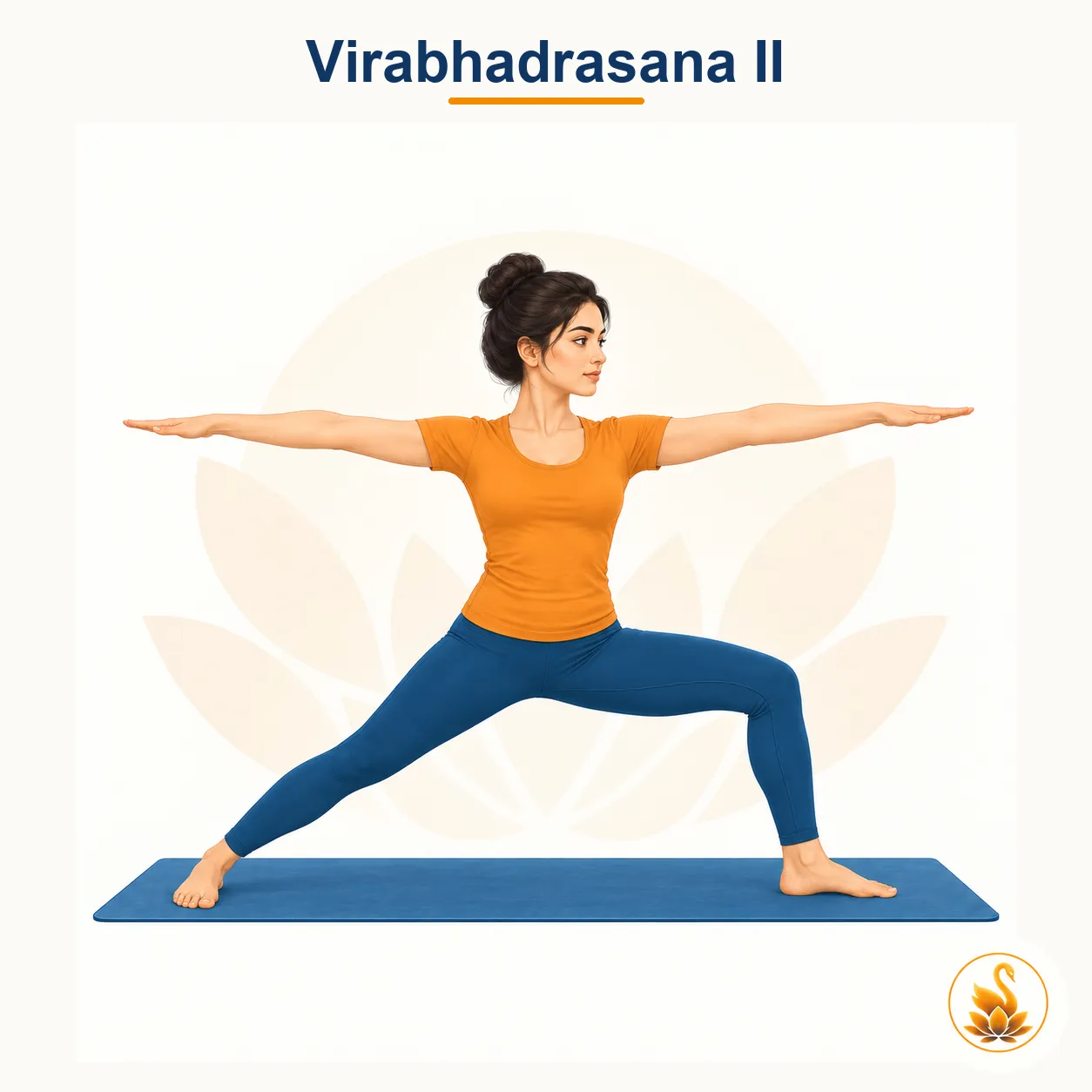
Ananda-X practice guide
How to practise safely
Focus
wide stance, leg endurance, open chest
Steps
- Take a wide stance, turn the right foot out and the left foot slightly in.
- Bend the right knee toward the ankle while keeping the back leg active.
- Extend both arms at shoulder height and gaze comfortably over the front hand.
- Straighten the front leg, lower the arms and repeat on the other side.
Benefits
- Develops standing awareness and controlled movement.
- Supports balance, coordination and postural organization.
- Encourages steady breathing while the body remains attentive.
Suggested duration
3 to 6 breaths each side.
Important caution
Keep the bent knee tracking toward the toes. Reduce the stance or use a chair if the knees, hips or balance feel strained.
Source status: Ananda-X editorial practice guidance. This entry is complete but is not labelled PWA-verified.
Asana 016
Virabhadrasana III
Warrior III
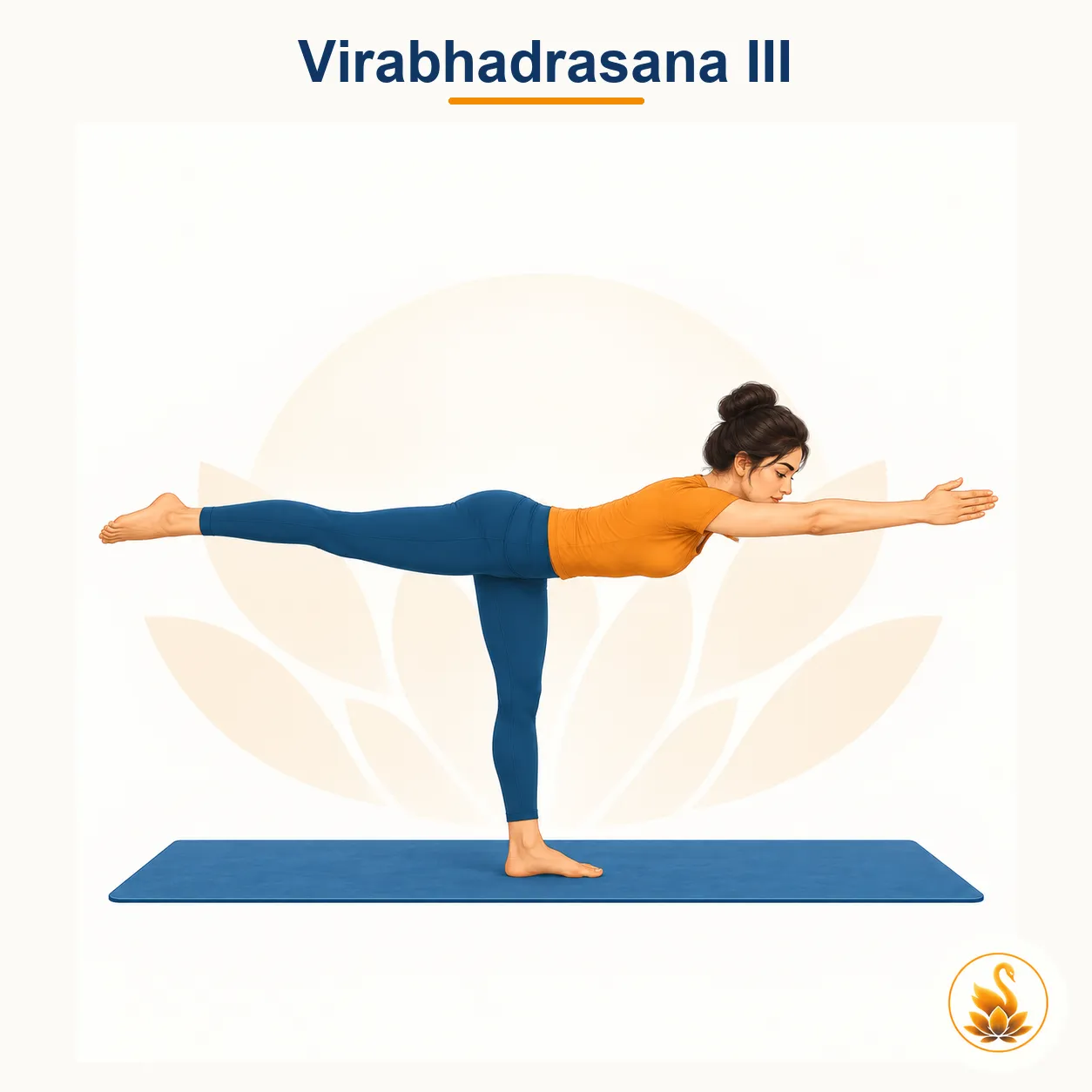
Ananda-X practice guide
How to practise safely
Focus
single-leg balance, hip hinge, whole-body line
Steps
- Stand tall and shift weight into the right foot.
- Hinge forward from the hips as the left leg extends behind, keeping the pelvis level.
- Reach the arms forward, sideways or keep the hands on blocks while forming a long line through the body.
- Bend the standing knee slightly, return upright with control and change sides.
Benefits
- Develops standing awareness and controlled movement.
- Supports balance, coordination and postural organization.
- Encourages steady breathing while the body remains attentive.
Suggested duration
2 to 4 breaths each side.
Important caution
Practise near a wall and keep the standing knee soft. Stop if balance is lost or the hamstring, hip or lower back becomes painful.
Source status: Ananda-X editorial practice guidance. This entry is complete but is not labelled PWA-verified.
Asana 017
Ardha Chandrasana
Half Moon Pose
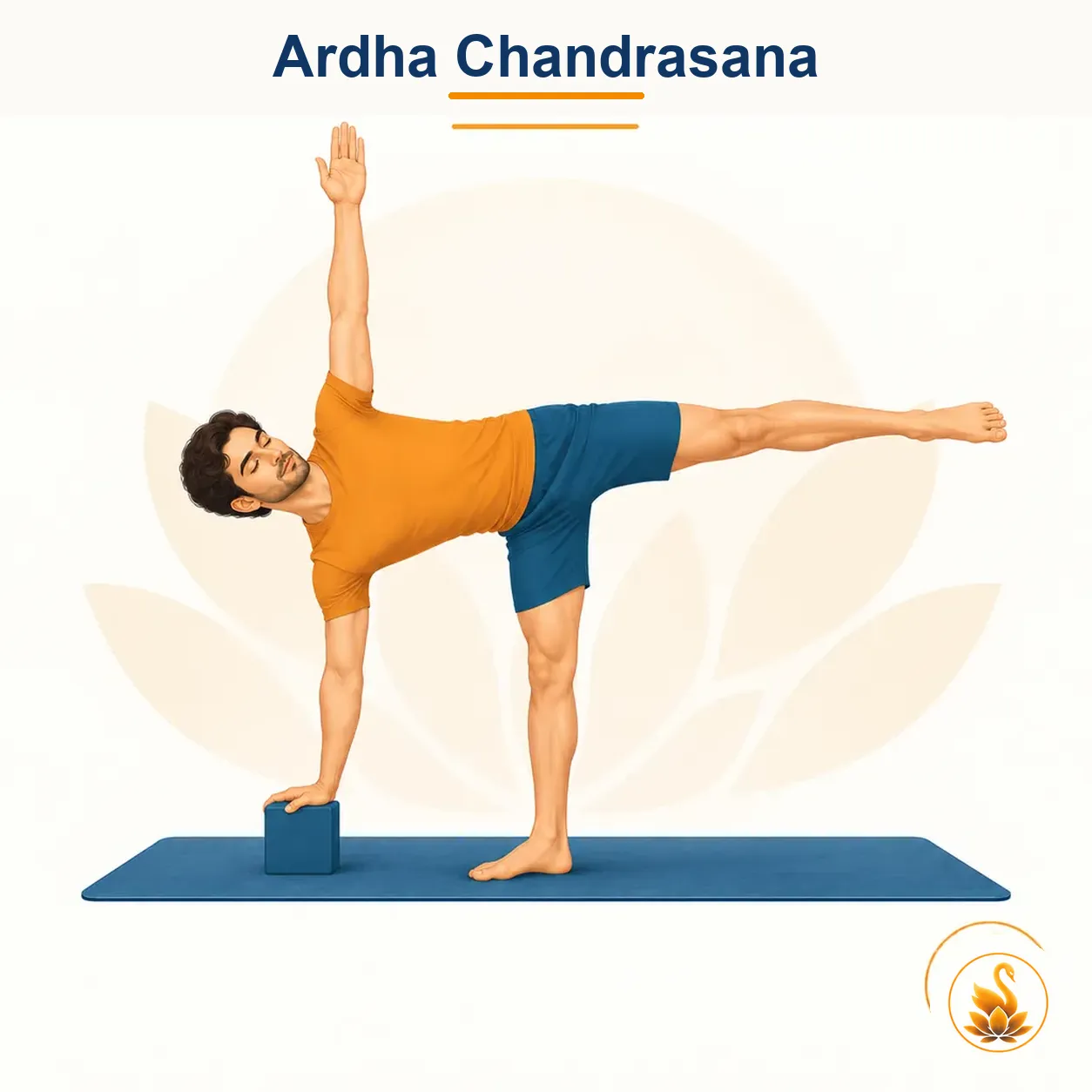
Ananda-X practice guide
How to practise safely
Focus
single-leg balance, lateral hip opening, stacked alignment
Steps
- Begin from Triangle Pose or a short lunge with a block beside the front foot.
- Place the lower hand on the block, shift weight into the front foot and lift the back leg until the pelvis stays controlled.
- Open the chest and upper hip gradually, extending the upper arm only when balance is steady.
- Bend the standing knee slightly, lower the lifted foot with control and repeat on the other side.
Benefits
- Develops standing awareness and controlled movement.
- Supports balance, coordination and postural organization.
- Encourages steady breathing while the body remains attentive.
Suggested duration
2 to 4 breaths each side.
Important caution
Use a wall and block. Keep the standing knee soft and avoid turning the head if there is neck strain, vertigo or unstable balance.
Source status: Ananda-X editorial practice guidance. This entry is complete but is not labelled PWA-verified.
Asana 018
Parivrtta Ardha Chandrasana
Revolved Half Moon
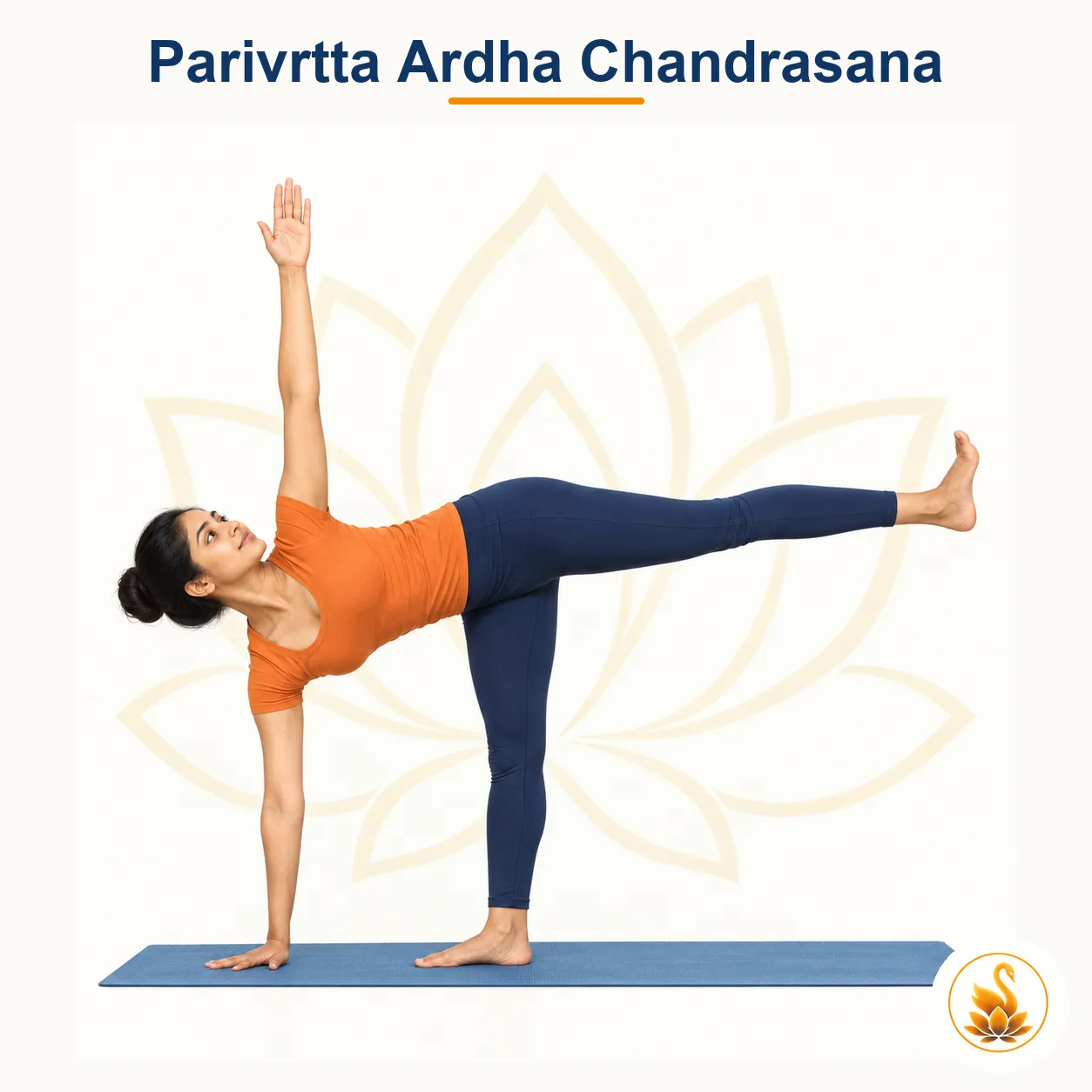
Ananda-X practice guide
How to practise safely
Focus
standing rotation, pelvic control, focused balance
Steps
- From a supported half-moon position, ground through the standing foot and place the lower hand on a block.
- Keep the lifted leg active and lengthen the spine.
- Rotate the chest gently toward the standing leg, raising the upper arm only if steady.
- Unwind to a supported position, lower the lifted foot and repeat on the other side.
Benefits
- Develops standing awareness and controlled movement.
- Supports balance, coordination and postural organization.
- Encourages steady breathing while the body remains attentive.
Suggested duration
2 to 3 breaths each side.
Important caution
Advanced balance: use a wall and block with qualified guidance. Avoid with vertigo, acute back pain or uncontrolled balance problems.
Source status: Ananda-X editorial practice guidance. This entry is complete but is not labelled PWA-verified.
Asana 019
Natarajasana
Dancer Pose
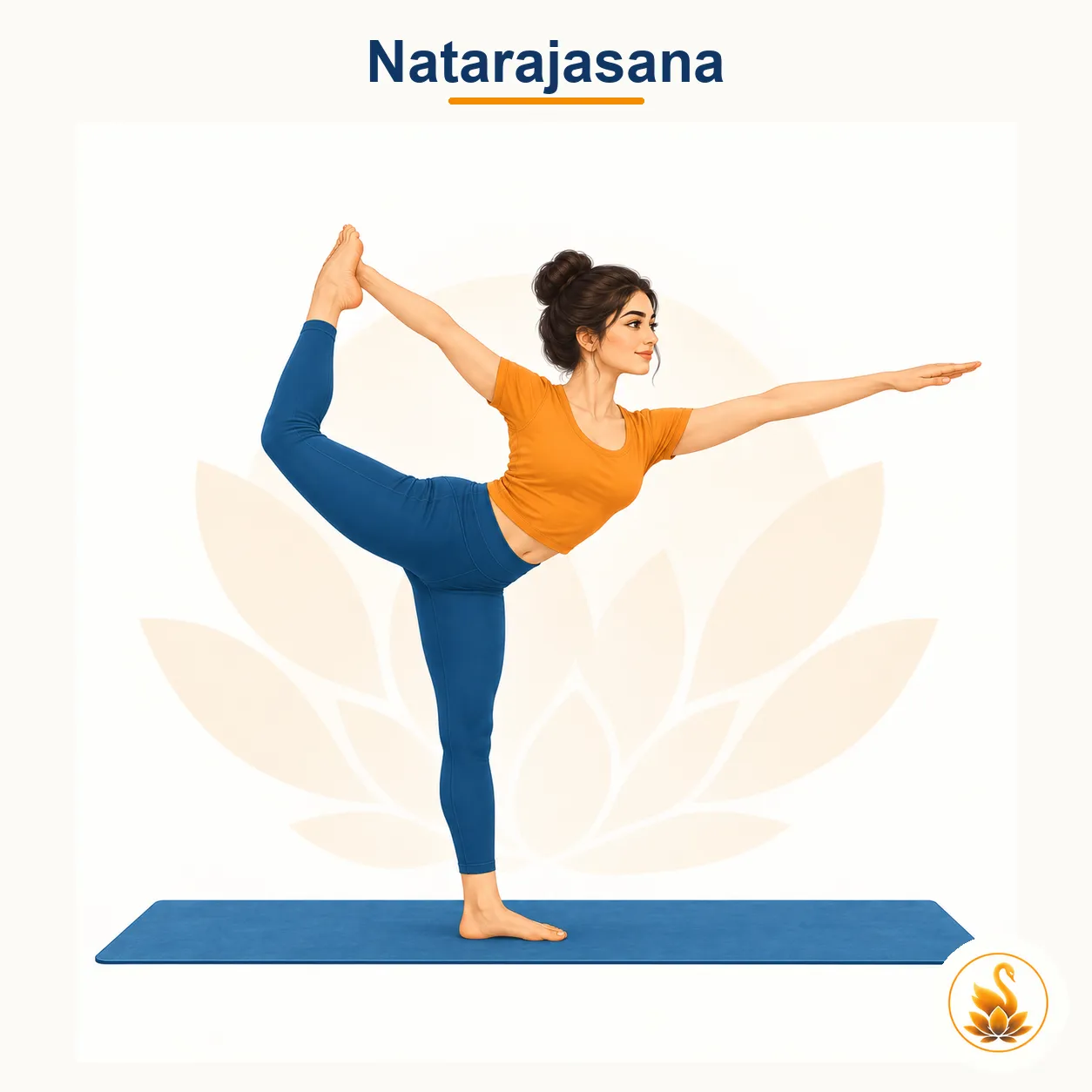
Ananda-X practice guide
How to practise safely
Focus
standing balance, controlled backbend, open chest
Steps
- Stand tall and fix the gaze on a steady point.
- Bend the right knee and hold the ankle or use a strap around the foot.
- Keep the knees near one another as the left arm reaches forward.
- Press the foot gently back into the hand, lift the chest, then release slowly and change sides.
Benefits
- Develops standing awareness and controlled movement.
- Supports balance, coordination and postural organization.
- Encourages steady breathing while the body remains attentive.
Suggested duration
2 to 4 breaths each side.
Important caution
Use a wall and avoid pulling the foot aggressively. Stop with knee, back, shoulder or balance discomfort.
Source status: Ananda-X editorial practice guidance. This entry is complete but is not labelled PWA-verified.
Asana 020
Utthita Hasta Padangusthasana
Extended Hand-to-Big-Toe
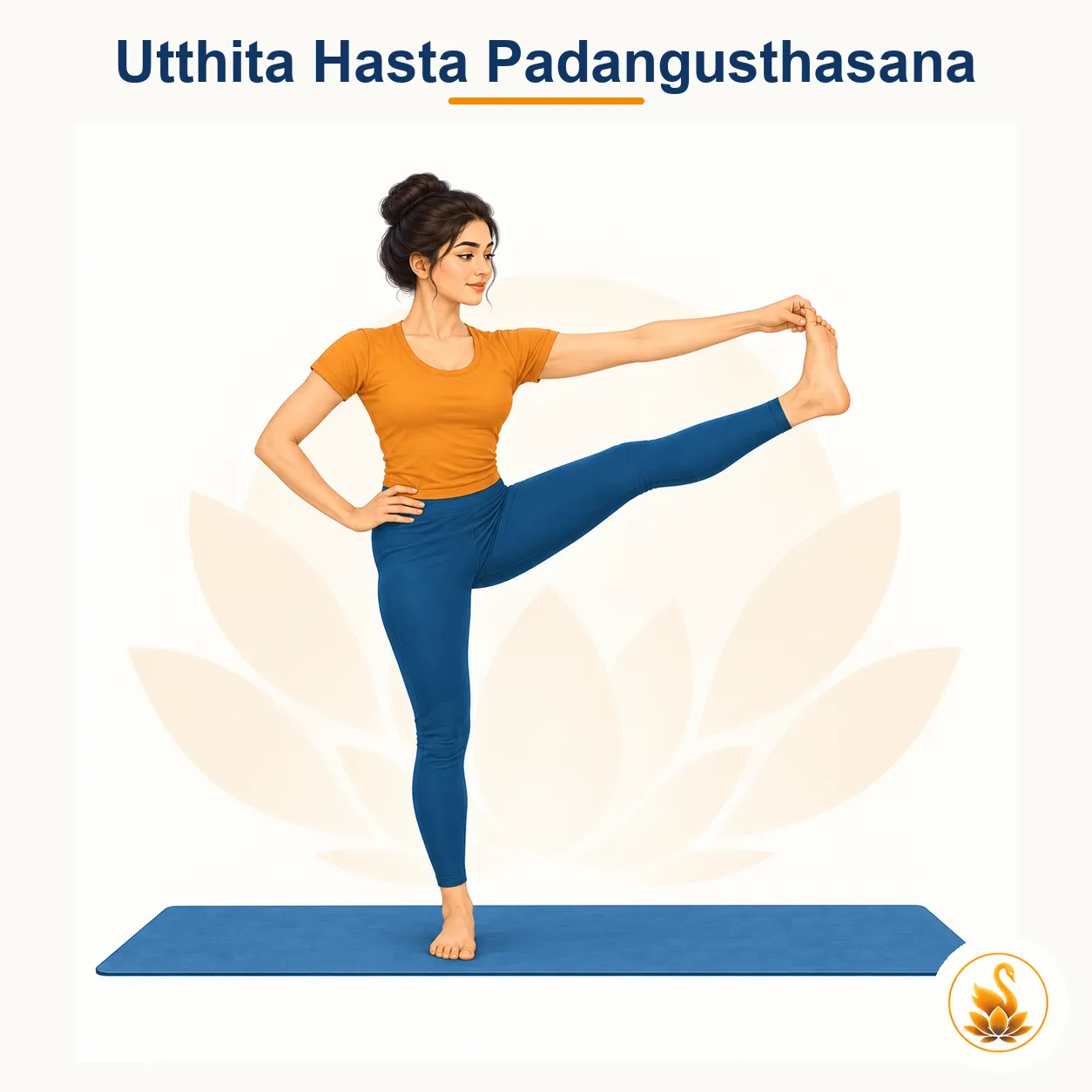
Ananda-X practice guide
How to practise safely
Focus
single-leg balance, lateral hip mobility, upright posture
Steps
- Stand near a wall, shift weight into the left foot and lift the right knee.
- Hold the right big toe with the first two fingers or use a strap around the foot.
- Extend the leg forward, then open it to the right only as far as the pelvis stays level and the spine remains tall, matching the illustrated lateral form.
- Bring the leg back toward centre, bend the knee, lower the foot with control and repeat on the other side.
Benefits
- Develops standing awareness and controlled movement.
- Supports balance, coordination and postural organization.
- Encourages steady breathing while the body remains attentive.
Suggested duration
2 to 4 breaths each side.
Important caution
Do not lock either knee or pull the leg sideways. Keep a hand on support and reduce the range for hamstring, hip, sciatic or balance difficulty.
Source status: Ananda-X editorial practice guidance. This entry is complete but is not labelled PWA-verified.
Asana 021
Malasana
Garland Squat
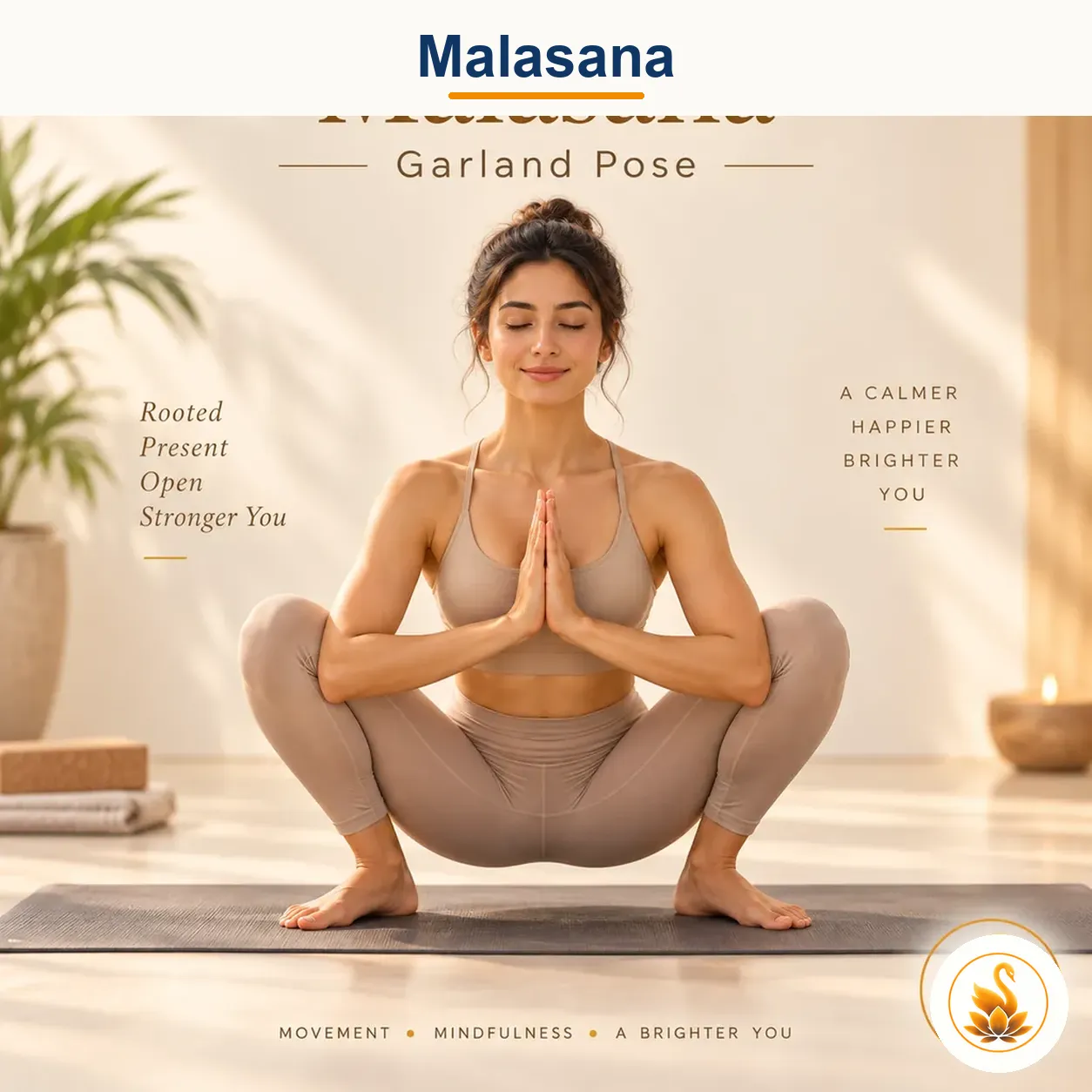
PWA verified guide
How to practise safely
Focus
hip mobility, ankle mobility, squat pattern
Steps
- Stand with feet comfortably apart and toes turned slightly outward.
- Lower into a squat only as far as knees, hips and ankles allow.
- Use a block under the hips or hold a support if needed.
- Keep the chest lifted and rise slowly.
Benefits
- Explores a deep squat pattern.
- Encourages hip and ankle mobility.
- Builds lower-body control when performed with support.
Suggested duration
3 to 5 breaths with support; repeat 1 to 3 times.
Important caution
Use support and reduce depth with knee, hip, ankle or pelvic-floor discomfort. Avoid forcing a deep squat.
Asana 022
Skandasana
Side Lunge
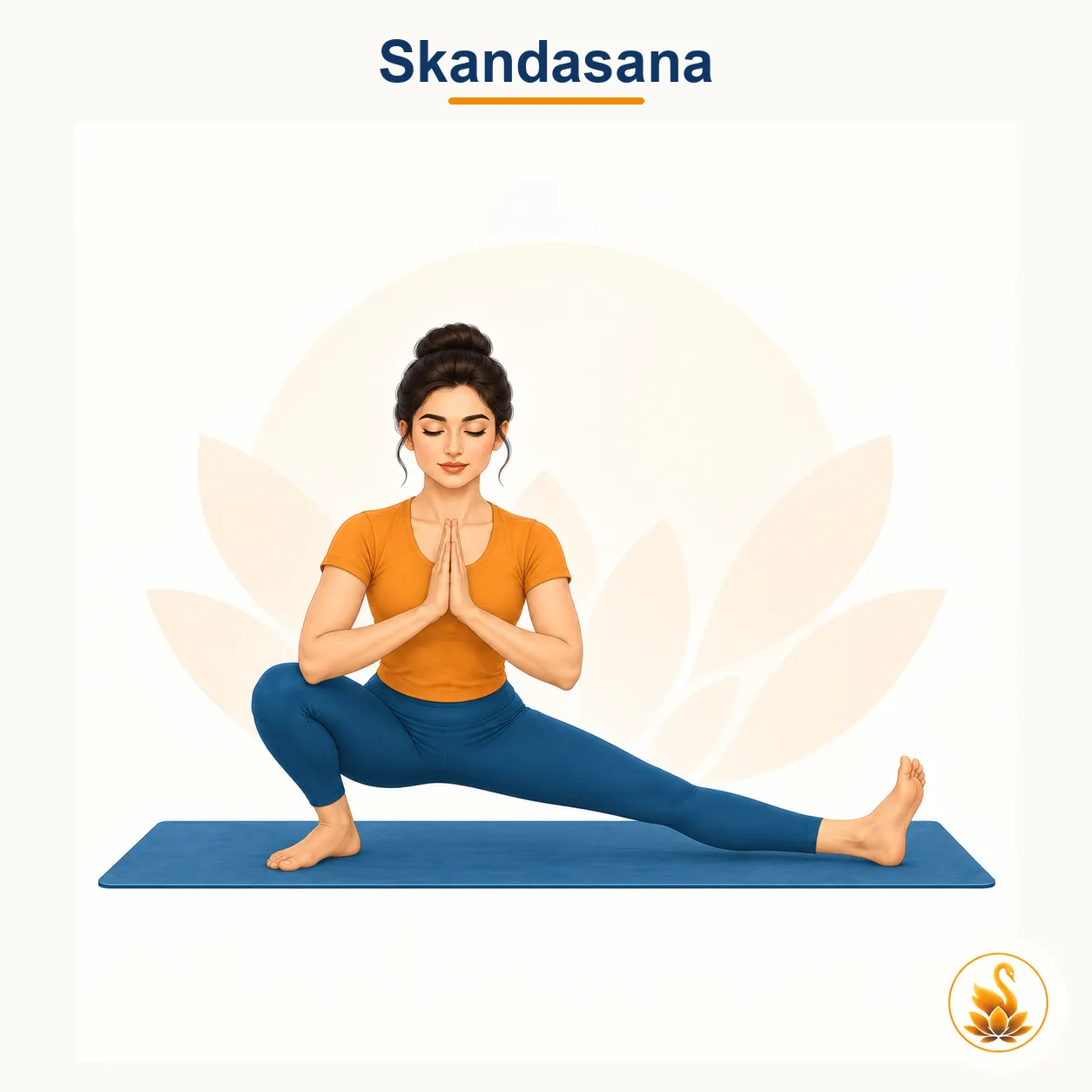
Ananda-X practice guide
How to practise safely
Focus
lateral squat, hip mobility, grounded transition
Steps
- Take a wide stance with the feet turned slightly outward.
- Shift the pelvis toward the right, bending the right knee while the left leg lengthens.
- Keep the right foot grounded and place the hands on blocks or together at the chest.
- Press through the right foot to return to centre, then repeat to the left.
Benefits
- Develops standing awareness and controlled movement.
- Supports balance, coordination and postural organization.
- Encourages steady breathing while the body remains attentive.
Suggested duration
3 to 5 breaths each side or 4 slow side-to-side rounds.
Important caution
Keep the bent knee aligned with the toes. Work higher and use blocks for knee, ankle, groin or balance limitations.
Source status: Ananda-X editorial practice guidance. This entry is complete but is not labelled PWA-verified.
Asana 023
Anjaneyasana
Low Lunge
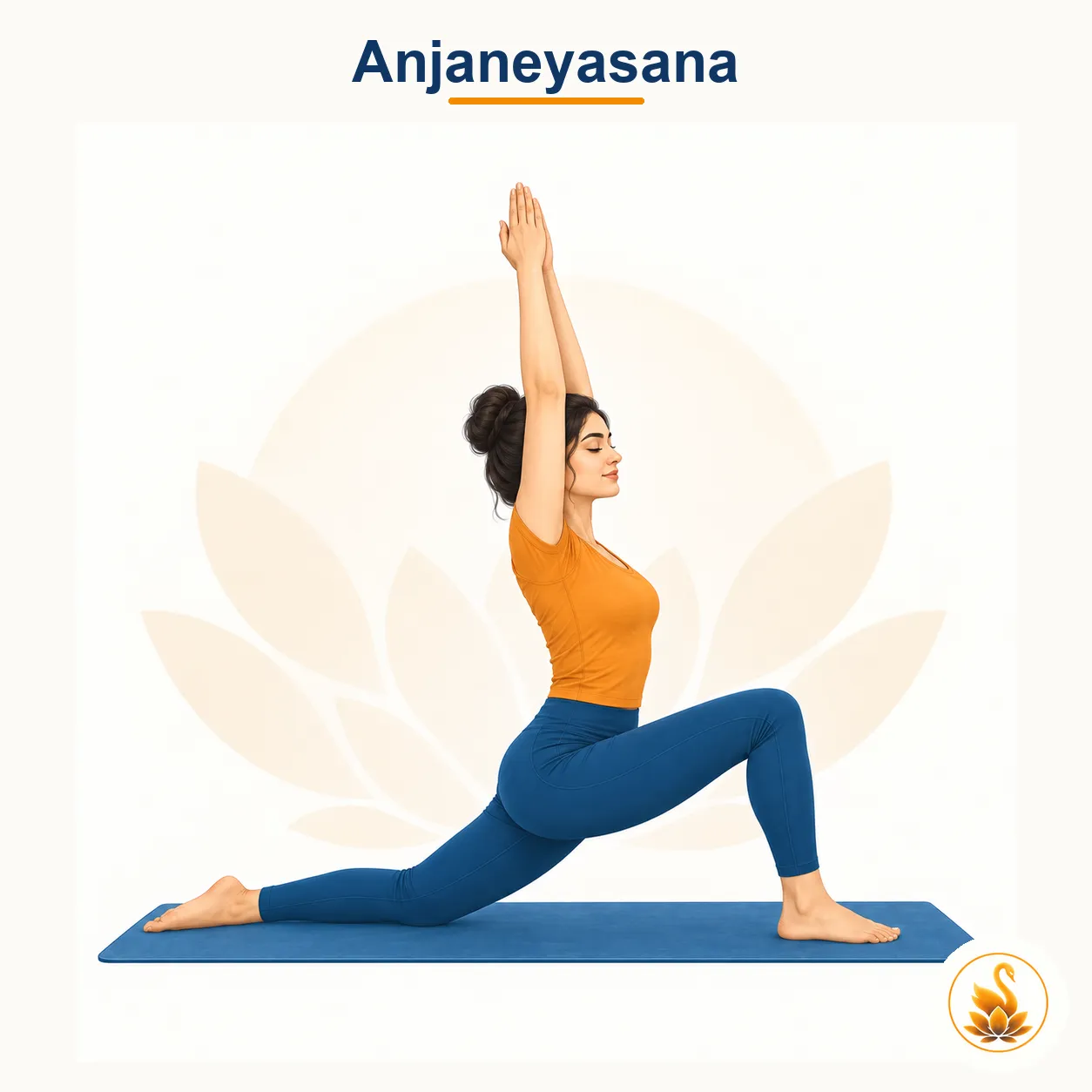
Ananda-X practice guide
How to practise safely
Focus
low lunge, hip-front length, steady trunk
Steps
- From hands and knees, step the right foot between the hands and place the left knee down on padding.
- Bring the torso upright and place the hands on the thigh or raise the arms if comfortable.
- Let the pelvis move forward only until a mild stretch is felt at the front of the left hip.
- Return the hands to the floor, step back and change sides.
Benefits
- Develops standing awareness and controlled movement.
- Supports balance, coordination and postural organization.
- Encourages steady breathing while the body remains attentive.
Suggested duration
3 to 5 breaths each side.
Important caution
Pad the back knee and keep the front knee near the ankle. Avoid sinking into the lower back or forcing the groin.
Source status: Ananda-X editorial practice guidance. This entry is complete but is not labelled PWA-verified.
Asana 024
Kati Chakrasana
Standing Spinal Twist
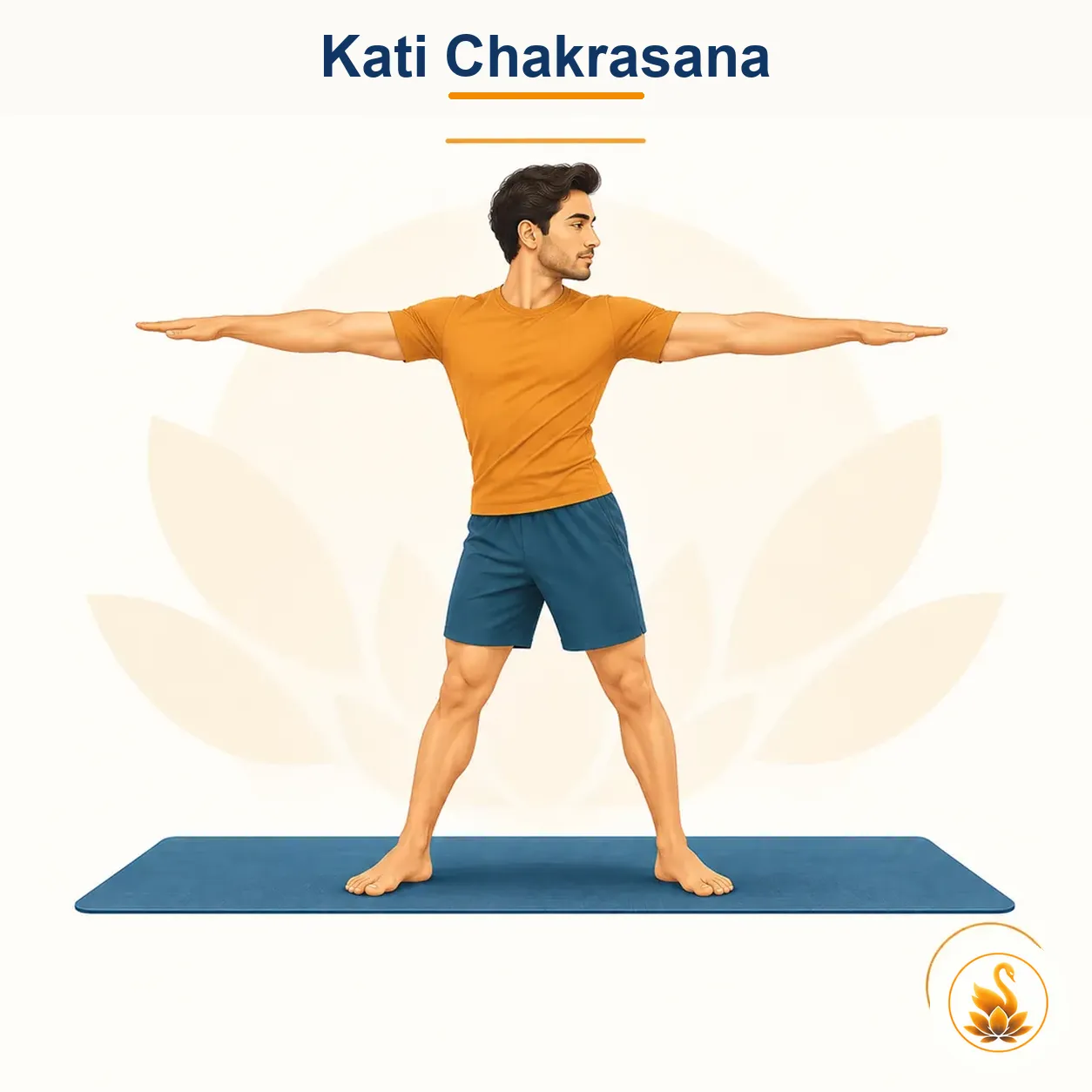
PWA routine source – expert review pending
How to practise safely
Focus
standing, controlled movement, steady breathing
Steps
- Prepare in a stable starting position and keep the breath comfortable.
- Stand with feet slightly apart and arms at shoulder level.
- Twist the trunk to one side with the arms wrapping as shown, hold briefly, return and repeat opposite side.
Benefits
- Develops standing awareness and controlled movement.
- Supports balance, coordination and postural organization.
- Encourages steady breathing while the body remains attentive.
Suggested duration
Source says 5 rounds
Important caution
Use a wall or chair if balance is uncertain. Stop with pain, dizziness, unusual breathlessness or loss of control.
Source: YogaAX1. Practice wording is source-derived; focus, benefits and caution are cautious editorial guidance pending expert review.
Asana 025
Tiryaka Tadasana
Swaying Palm Tree
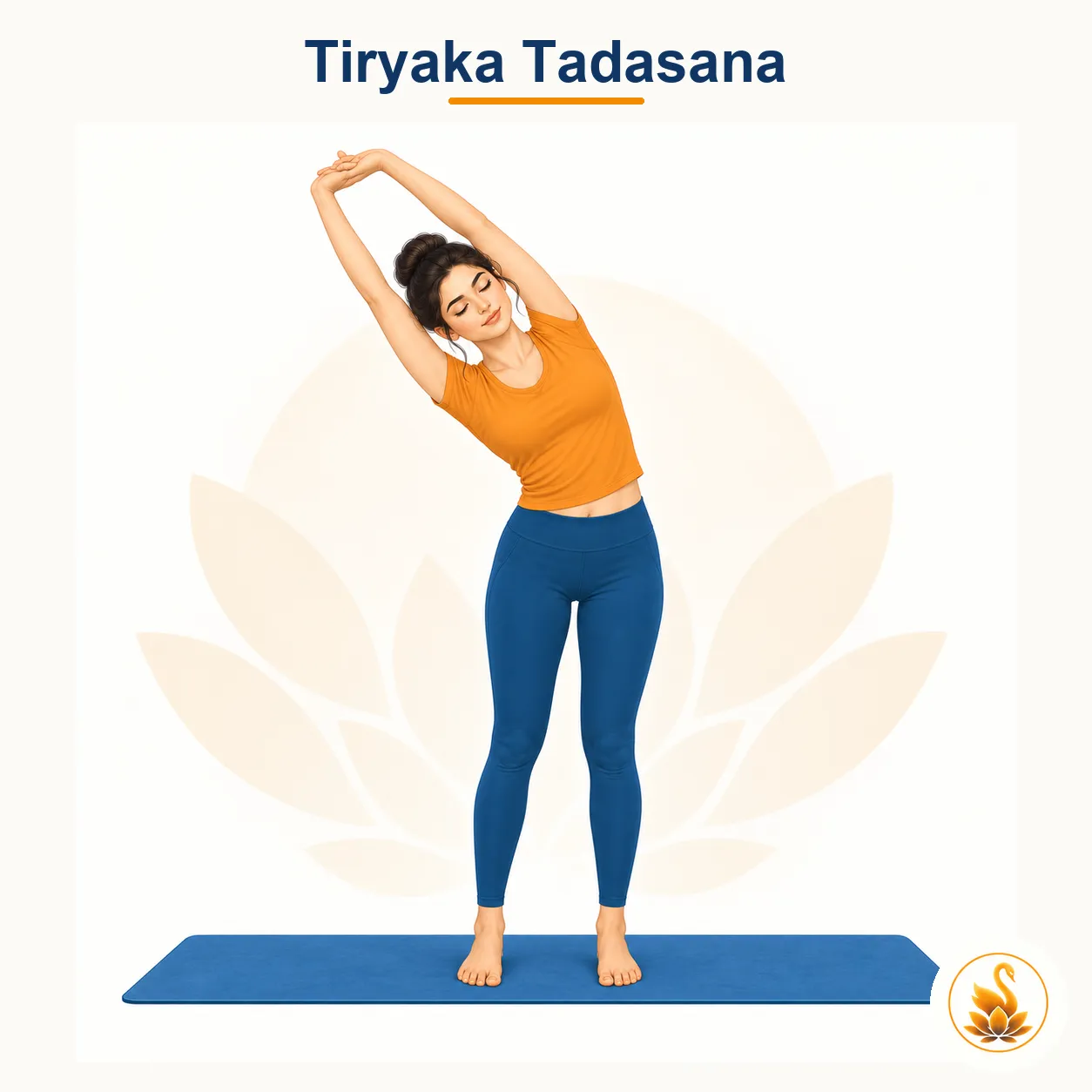
Ananda-X practice guide
How to practise safely
Focus
side-body length, upright alignment, controlled return
Steps
- Stand with the feet comfortably apart and distribute weight evenly.
- Inhale and raise the arms overhead, holding one wrist if helpful.
- Exhale and bend gently to the right without twisting or collapsing forward.
- Inhale back to centre, then repeat to the left and lower the arms.
Benefits
- Develops standing awareness and controlled movement.
- Supports balance, coordination and postural organization.
- Encourages steady breathing while the body remains attentive.
Suggested duration
3 slow rounds each side.
Important caution
Keep both feet grounded and the movement small. Stop with sharp back, rib or shoulder pain, dizziness or breathlessness.
Source status: Ananda-X editorial practice guidance. This entry is complete but is not labelled PWA-verified.
Asana 026
Sukhasana
Easy Pose
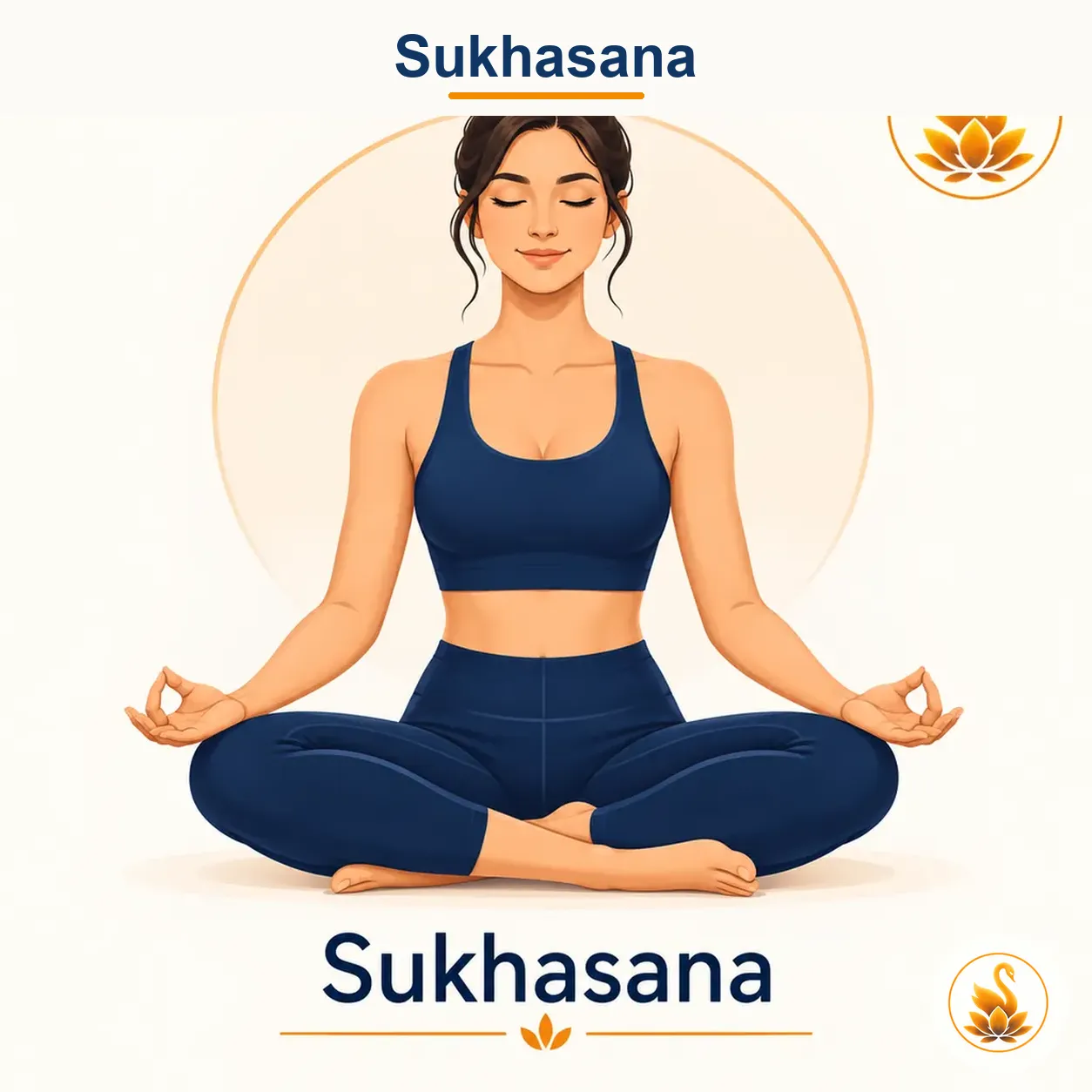
PWA verified guide
How to practise safely
Focus
comfortable sitting, breath, meditation posture
Steps
- Sit on a folded blanket or cushion with legs crossed comfortably.
- Keep the pelvis supported so the spine can rise without strain.
- Rest hands on thighs and soften the shoulders.
- Breathe naturally and change the leg crossing if needed.
Benefits
- Provides a simple seated base for breath and meditation.
- Encourages upright, relaxed posture.
- Supports stillness without requiring an advanced leg position.
Suggested duration
1 to 5 minutes with posture breaks as needed.
Important caution
Use extra height or a chair if hips, knees or back are uncomfortable. Do not force the knees downward.
Asana 027
Vajrasana
Thunderbolt Pose
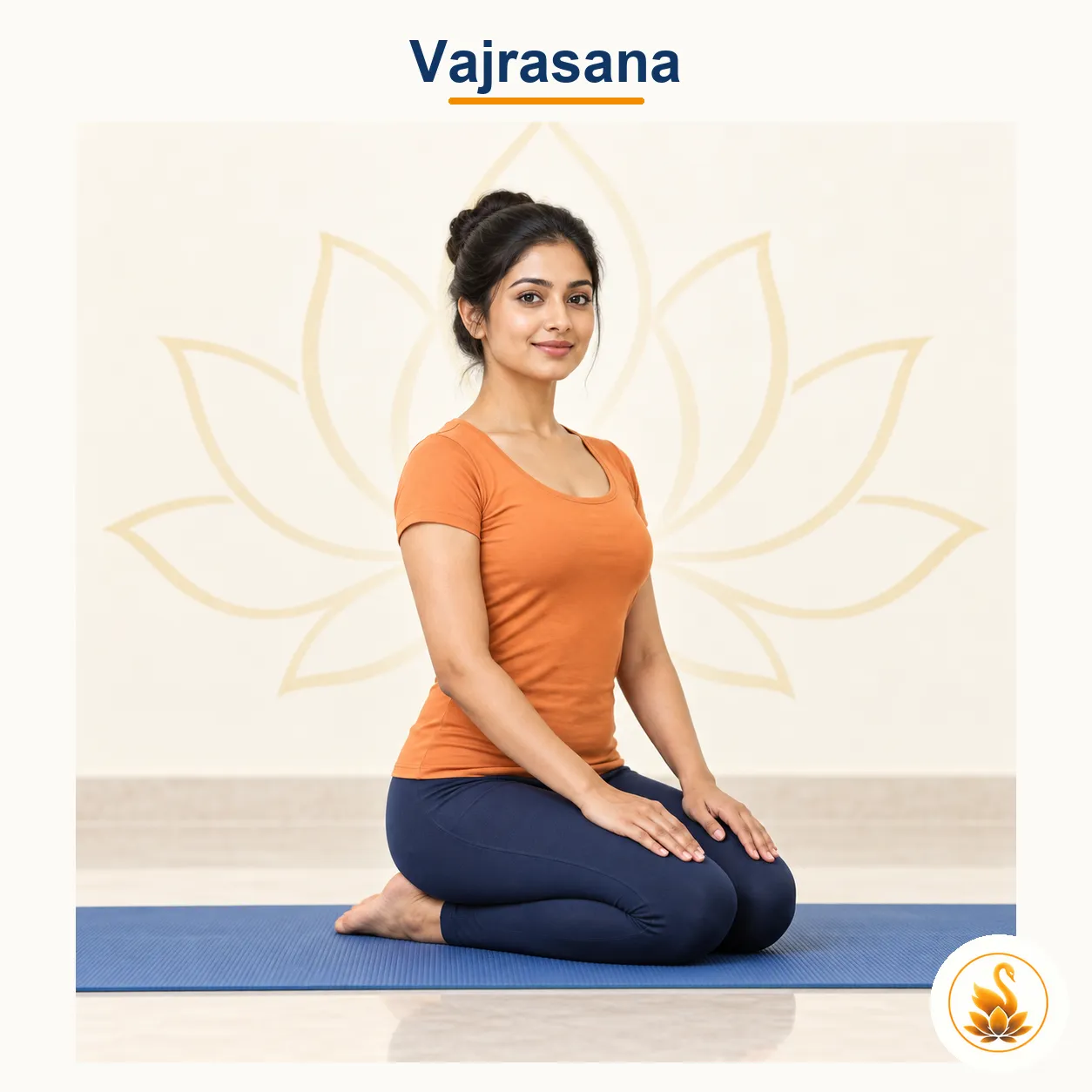
PWA verified guide
How to practise safely
Focus
upright sitting, breath, post-meal sitting tradition
Steps
- Kneel with knees comfortable and sit back toward the heels.
- Keep the spine upright and shoulders relaxed.
- Rest hands on thighs and breathe naturally.
- Use a cushion between hips and heels if needed.
Benefits
- Provides an upright kneeling seat for breath or reflection.
- Encourages postural awareness.
- Can be a compact alternative to cross-legged sitting for some people.
Suggested duration
30 seconds to 3 minutes, only while knees and ankles remain comfortable.
Important caution
Avoid prolonged kneeling with knee, ankle or foot pain. Use support or choose a chair if there is joint limitation.
Asana 028
Virasana
Hero Pose
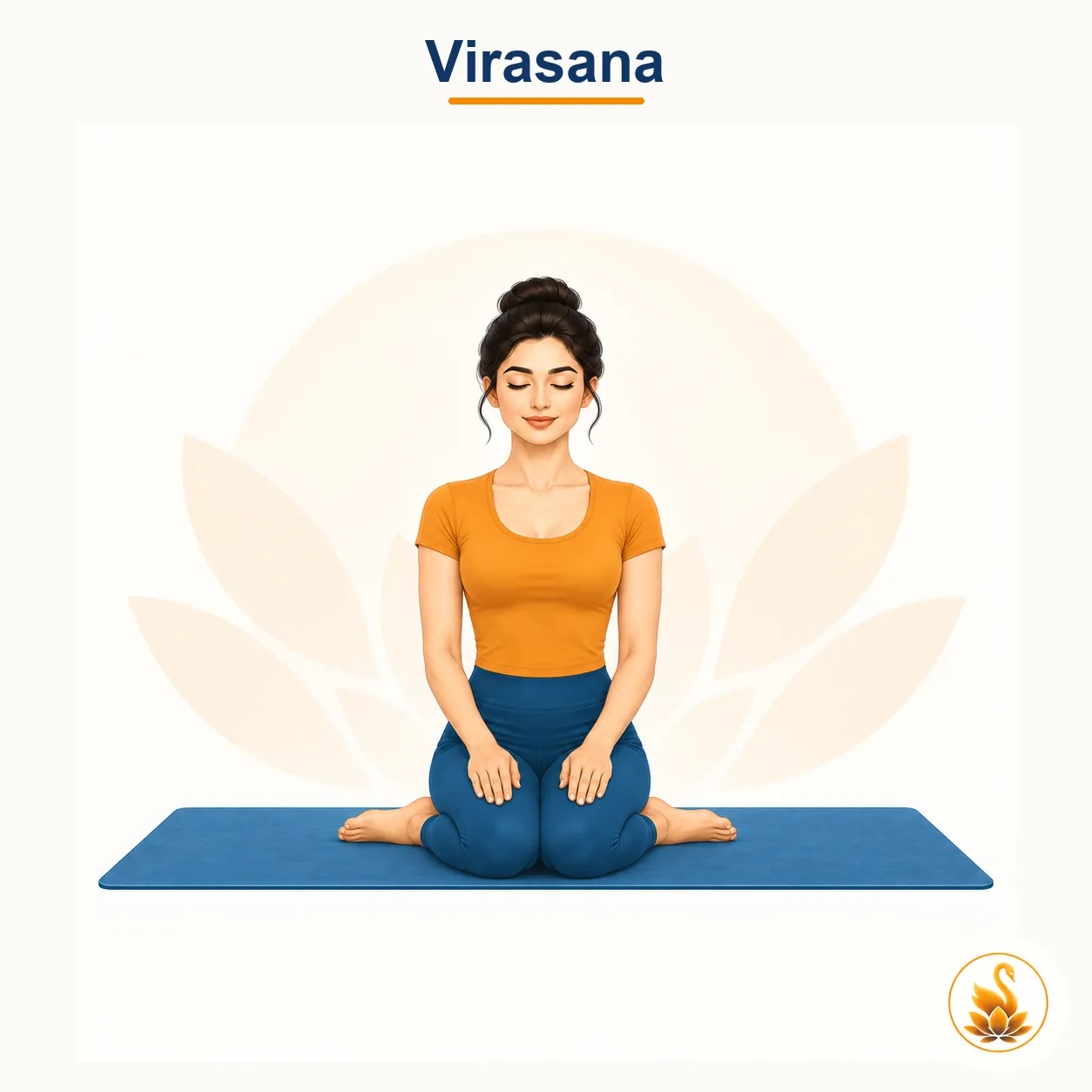
Ananda-X practice guide
How to practise safely
Focus
supported kneeling, upright spine, comfortable ankles
Steps
- Kneel on padding with the knees together or comfortably apart.
- Separate the feet just enough to sit on a block or folded blankets between them.
- Keep the spine tall, hands resting on the thighs and the breath easy.
- Lean forward onto the hands before carefully releasing the legs.
Benefits
- Supports upright postural awareness.
- Encourages comfortable mobility through the hips and legs.
- Provides a steady base for slow, attentive breathing.
Suggested duration
30 seconds to 2 minutes with support.
Important caution
Do not sit between the feet if there is knee or ankle pain. Raise the seat generously and stop with numbness or joint pressure.
Source status: Ananda-X editorial practice guidance. This entry is complete but is not labelled PWA-verified.
Asana 029
Padmasana
Lotus Pose
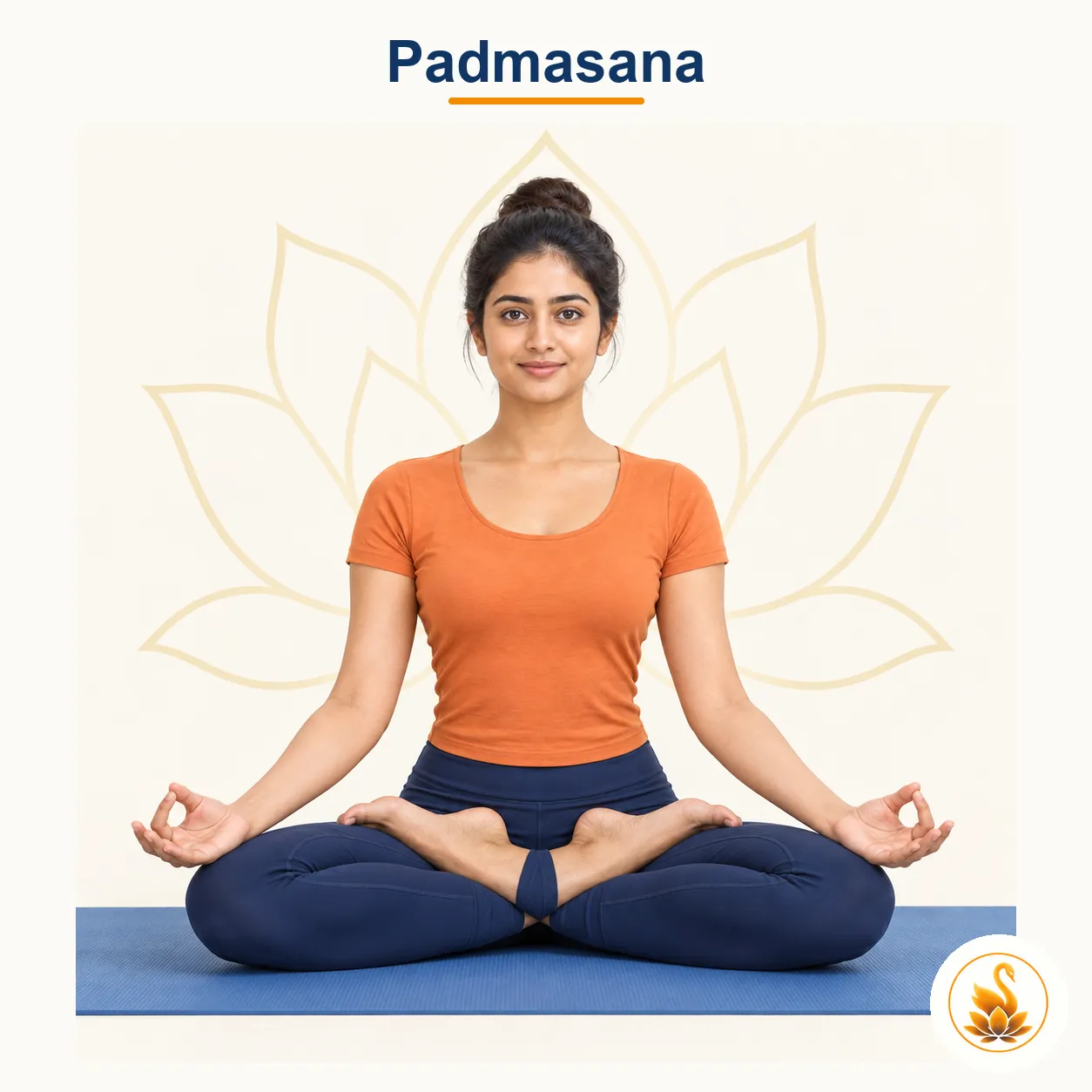
PWA verified guide
How to practise safely
Focus
meditation posture, hip mobility, stillness
Steps
- Sit tall with hips supported.
- Only if the hips are very mobile, place each foot gently on the opposite thigh without forcing the knee.
- Rest hands comfortably and keep the spine relaxed and upright.
- Exit immediately if there is knee or ankle pressure.
Benefits
- Traditional stable seat for meditation.
- Encourages stillness and upright alignment in experienced practitioners.
- Requires substantial hip mobility and is not necessary for meditation.
Suggested duration
Use only if the position is already effortless; otherwise choose Sukhasana.
Important caution
Never force Lotus Pose. Avoid with knee, ankle or hip pain/injury; use Sukhasana or a chair instead.
Asana 030
Siddhasana
Accomplished Pose
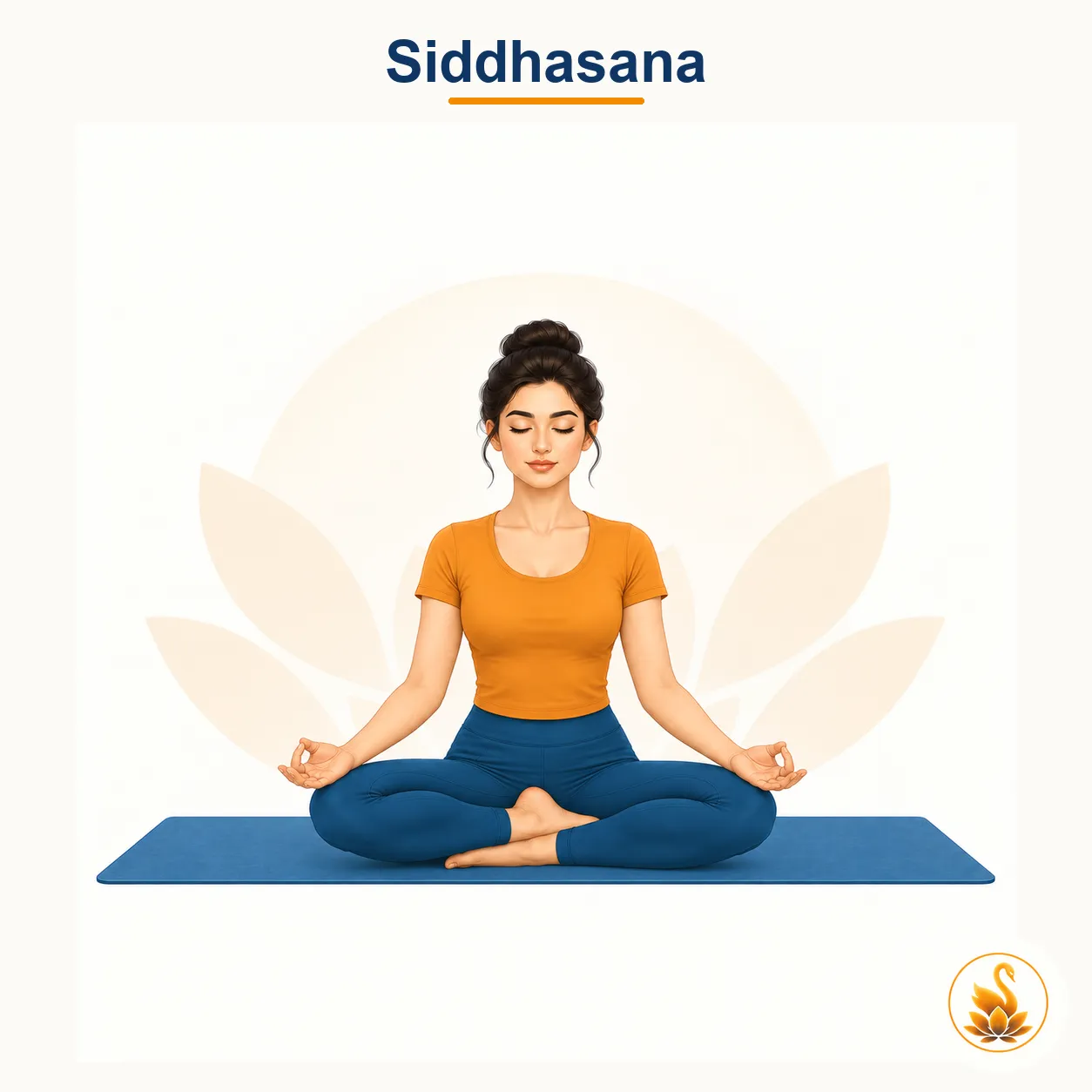
Ananda-X practice guide
How to practise safely
Focus
steady meditation seat, pelvic support, relaxed breathing
Steps
- Sit on a folded blanket with both legs extended.
- Bend the knees and place one heel near the pelvic floor and the other ankle comfortably in front or above it.
- Rest the knees toward the floor without pressing them and lengthen the spine.
- Change the crossing after practice and release slowly.
Benefits
- Supports upright postural awareness.
- Encourages comfortable mobility through the hips and legs.
- Provides a steady base for slow, attentive breathing.
Suggested duration
1 to 5 minutes, changing the leg crossing halfway.
Important caution
Do not force the heels, knees or hips. Use a higher seat or choose an easier cross-legged posture if there is joint pain or numbness.
Source status: Ananda-X editorial practice guidance. This entry is complete but is not labelled PWA-verified.
Asana 031
Swastikasana
Auspicious Pose
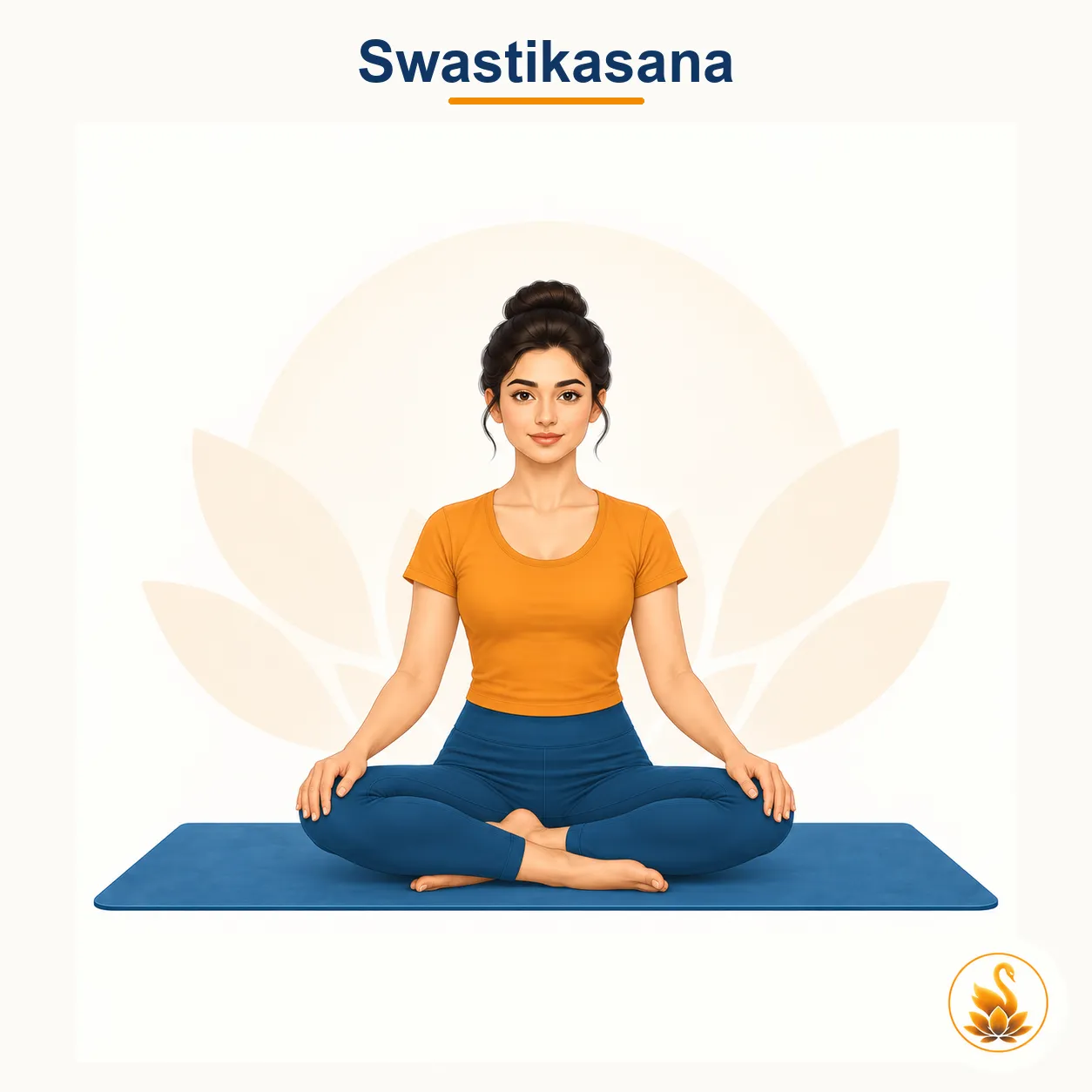
Ananda-X practice guide
How to practise safely
Focus
balanced cross-legged seat, upright posture, breath awareness
Steps
- Sit on a folded blanket with the legs extended.
- Cross the shins and slide each foot gently into the space beneath the opposite knee or thigh.
- Balance the weight across both sitting bones and rest the hands on the thighs.
- Uncross slowly and repeat with the opposite leg in front.
Benefits
- Supports upright postural awareness.
- Encourages comfortable mobility through the hips and legs.
- Provides a steady base for slow, attentive breathing.
Suggested duration
1 to 5 minutes, changing the crossing halfway.
Important caution
Support the knees and raise the seat if the hips are tight. Stop if the knees, ankles or feet become painful or numb.
Source status: Ananda-X editorial practice guidance. This entry is complete but is not labelled PWA-verified.
Asana 032
Bhadrasana / Baddha Konasana
Bound Angle Pose
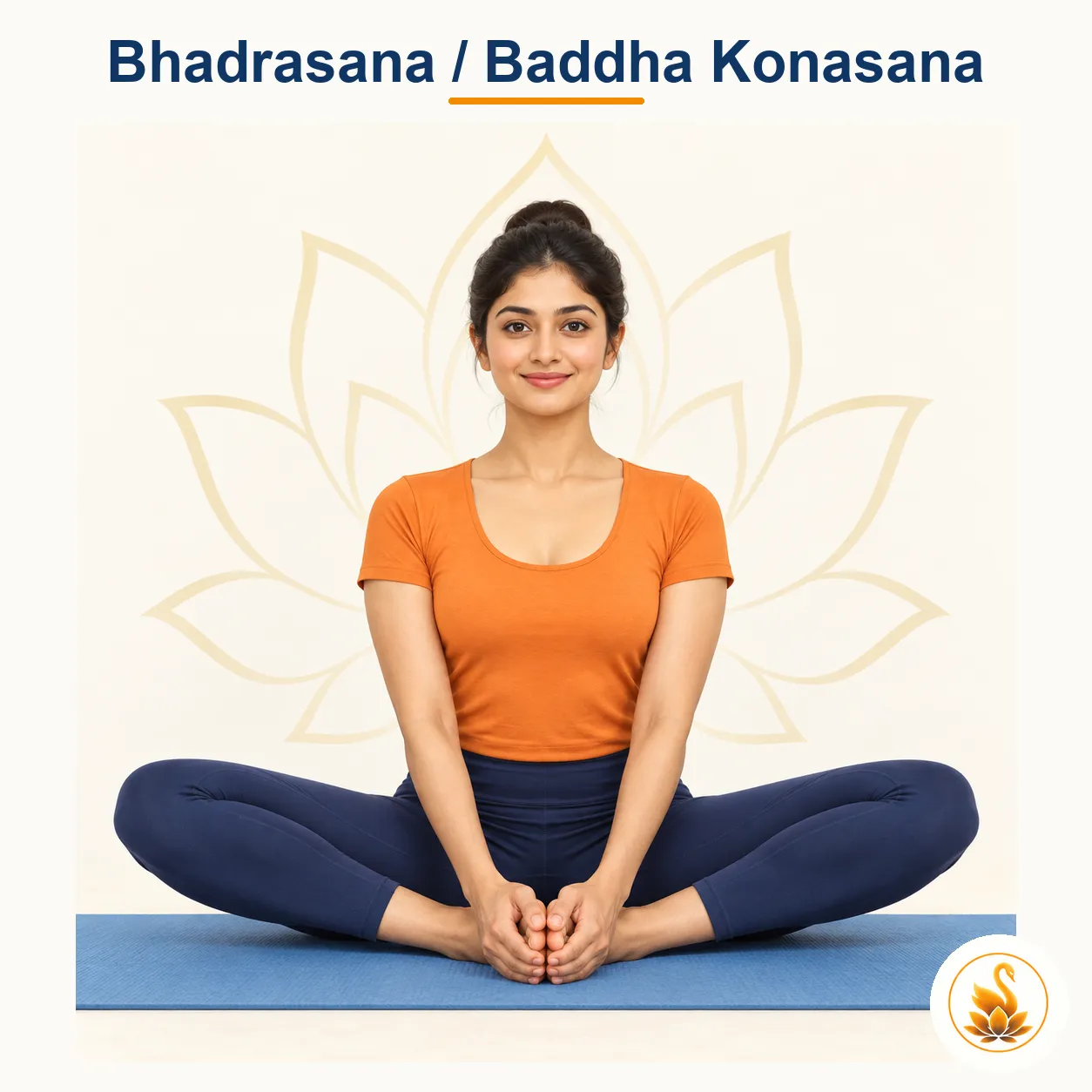
Ananda-X practice guide
How to practise safely
Focus
upright Bound Angle seat, hip mobility, relaxed breathing
Steps
- Sit on a folded blanket with the legs extended, then bend the knees and bring the soles of the feet together.
- Hold the feet or ankles and draw the heels toward the pelvis only as far as the knees remain comfortable.
- Lengthen through the spine and allow the thighs to release without pressing them downward.
- Use the hands to bring the knees together before extending the legs.
Benefits
- Supports upright postural awareness.
- Encourages comfortable mobility through the hips and legs.
- Provides a steady base for slow, attentive breathing.
Suggested duration
5 to 8 slow breaths.
Important caution
Support both outer thighs and sit higher if the pelvis rolls backward. Do not press the knees or force the groins.
Source status: Ananda-X editorial practice guidance. This entry is complete but is not labelled PWA-verified.
Asana 033
Dandasana
Staff Pose
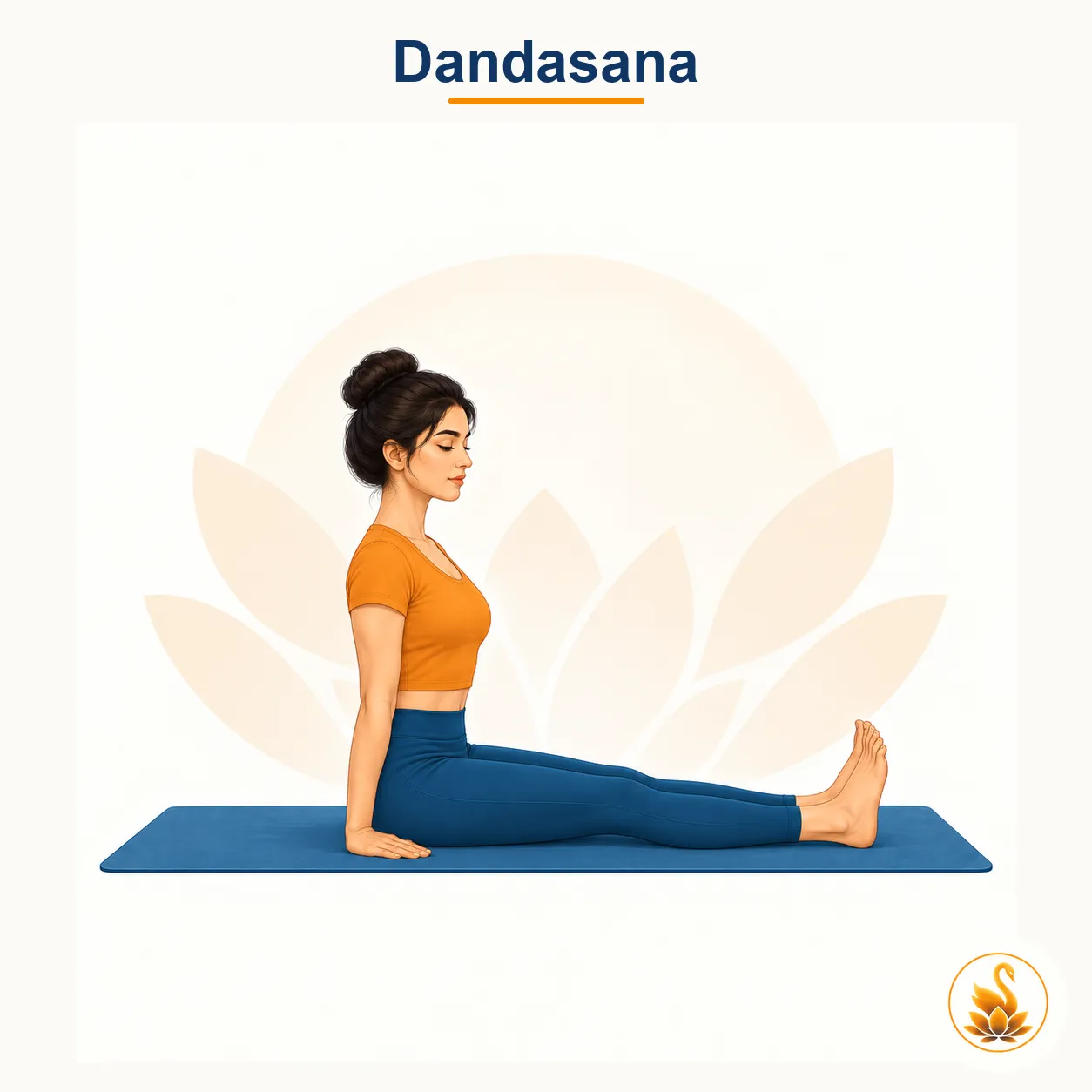
Ananda-X practice guide
How to practise safely
Focus
seated alignment, active legs, spinal length
Steps
- Sit with both legs extended forward and place a folded blanket under the pelvis if needed.
- Bring the feet upright and press the backs of the thighs gently toward the floor.
- Place the hands beside the hips or on blocks and lift through the crown of the head.
- Release the effort without collapsing and bend the knees before changing position.
Benefits
- Supports upright postural awareness.
- Encourages comfortable mobility through the hips and legs.
- Provides a steady base for slow, attentive breathing.
Suggested duration
5 to 8 breaths.
Important caution
Sit higher or bend the knees if the pelvis rolls backward or the lower back strains. Avoid forcing the knees flat.
Source status: Ananda-X editorial practice guidance. This entry is complete but is not labelled PWA-verified.
Asana 034
Paschimottanasana
Seated Forward Bend
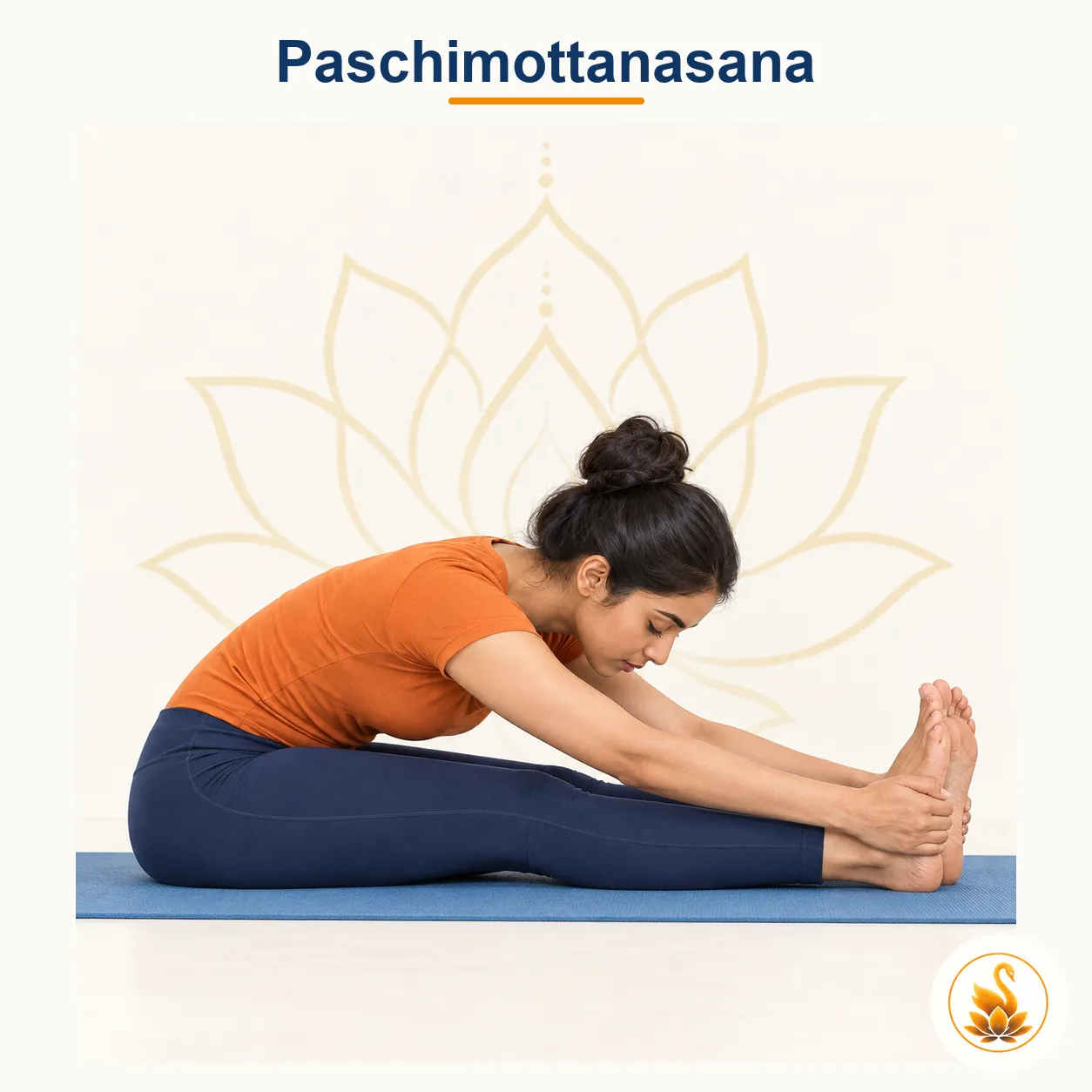
PWA verified guide
How to practise safely
Focus
posterior-chain stretch, quiet focus, mobility
Steps
- Sit with legs extended and spine comfortably tall.
- Inhale to lengthen the torso.
- Exhale and hinge forward from the hips only as far as comfortable.
- Rest hands on legs or feet without pulling; keep breathing easy.
Benefits
- Gently lengthens the back of the body.
- Encourages a slower, inward-focused practice.
- Supports hamstring and hip mobility when performed without force.
Suggested duration
15 to 30 seconds without strain; 1 to 3 gentle rounds.
Important caution
Avoid forcing the forward bend. Modify for acute back pain, severe sciatica, hamstring injury or when a clinician has advised against spinal flexion.
Asana 035
Janu Sirsasana
Head-to-Knee Pose
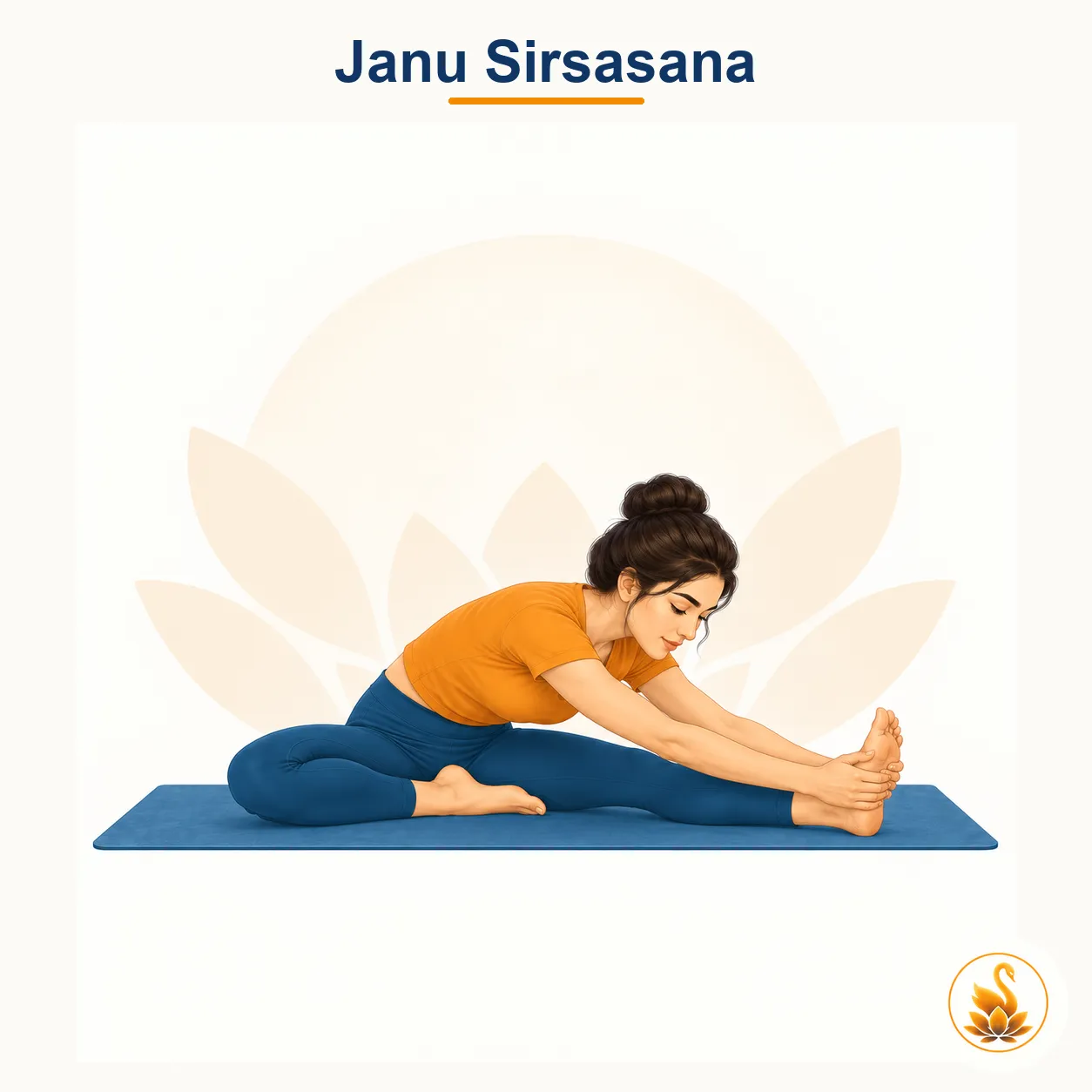
Ananda-X practice guide
How to practise safely
Focus
one-leg forward fold, hip hinge, even breathing
Steps
- Sit with the left leg extended and place the right sole against the inner left thigh.
- Turn the trunk toward the extended leg and inhale to lengthen upward.
- Exhale and hinge forward, holding a strap or resting the hands without pulling.
- Rise slowly and repeat on the other side.
Benefits
- Supports upright postural awareness.
- Encourages comfortable mobility through the hips and legs.
- Provides a steady base for slow, attentive breathing.
Suggested duration
3 to 6 breaths each side.
Important caution
Keep the extended knee soft and support the bent knee. Avoid rounding deeply with acute back or sciatic pain.
Source status: Ananda-X editorial practice guidance. This entry is complete but is not labelled PWA-verified.
Asana 036
Trianga Mukhaikapada Paschimottanasana
Three-Limbed Forward Bend
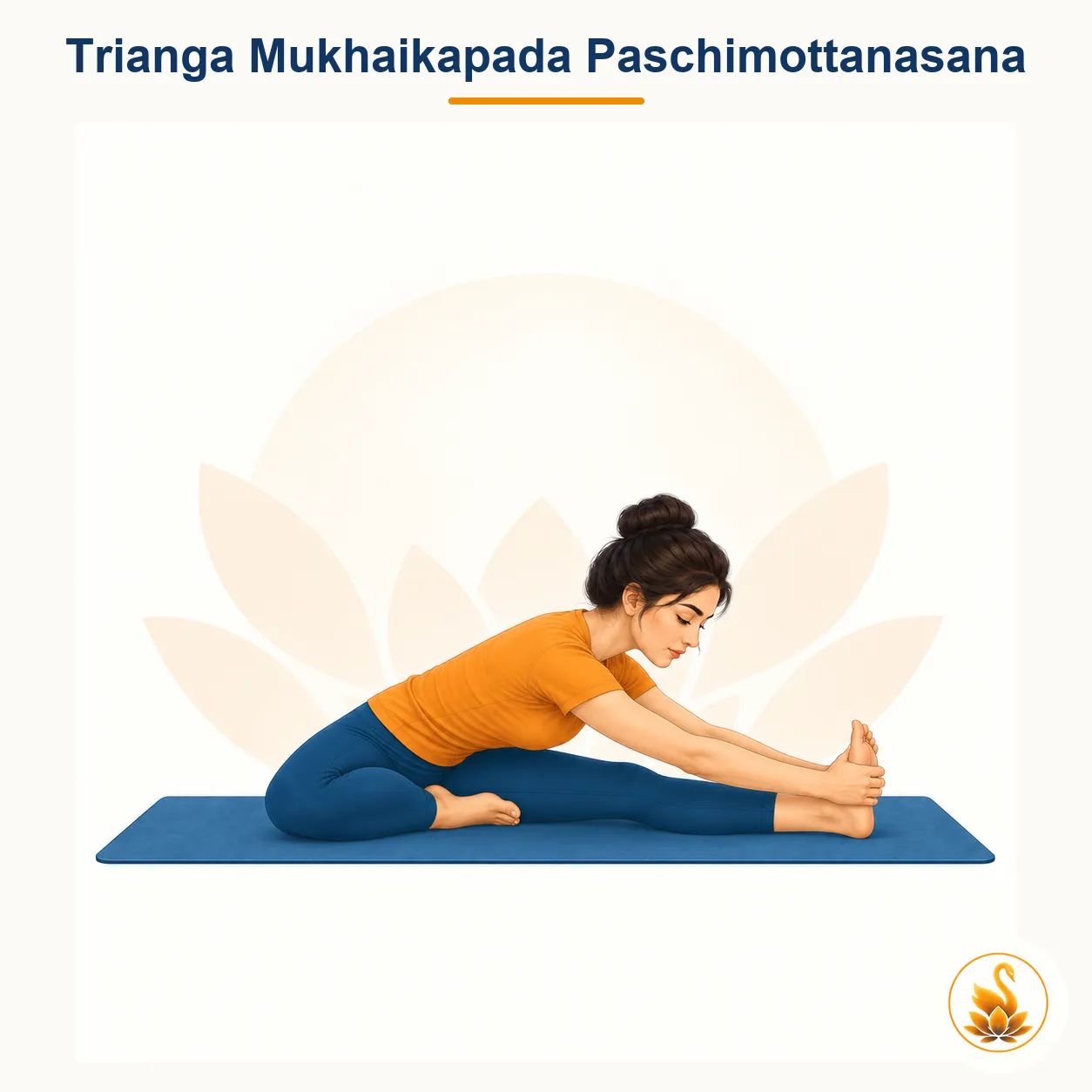
Ananda-X practice guide
How to practise safely
Focus
asymmetrical seated fold, thigh length, pelvic balance
Steps
- Sit with the left leg extended and fold the right lower leg back beside the hip, keeping the knee comfortable.
- Use a folded blanket under the left sitting bone if the pelvis tilts.
- Lengthen the spine, then hinge forward over the extended leg with hands on blocks or a strap.
- Rise, release the folded leg carefully and change sides.
Benefits
- Supports upright postural awareness.
- Encourages comfortable mobility through the hips and legs.
- Provides a steady base for slow, attentive breathing.
Suggested duration
3 to 5 breaths each side.
Important caution
Do not force the folded knee or ankle. Substitute Janu Sirsasana if the knee lifts, twists or hurts.
Source status: Ananda-X editorial practice guidance. This entry is complete but is not labelled PWA-verified.
Asana 037
Upavistha Konasana
Wide-Angle Seated Forward Bend
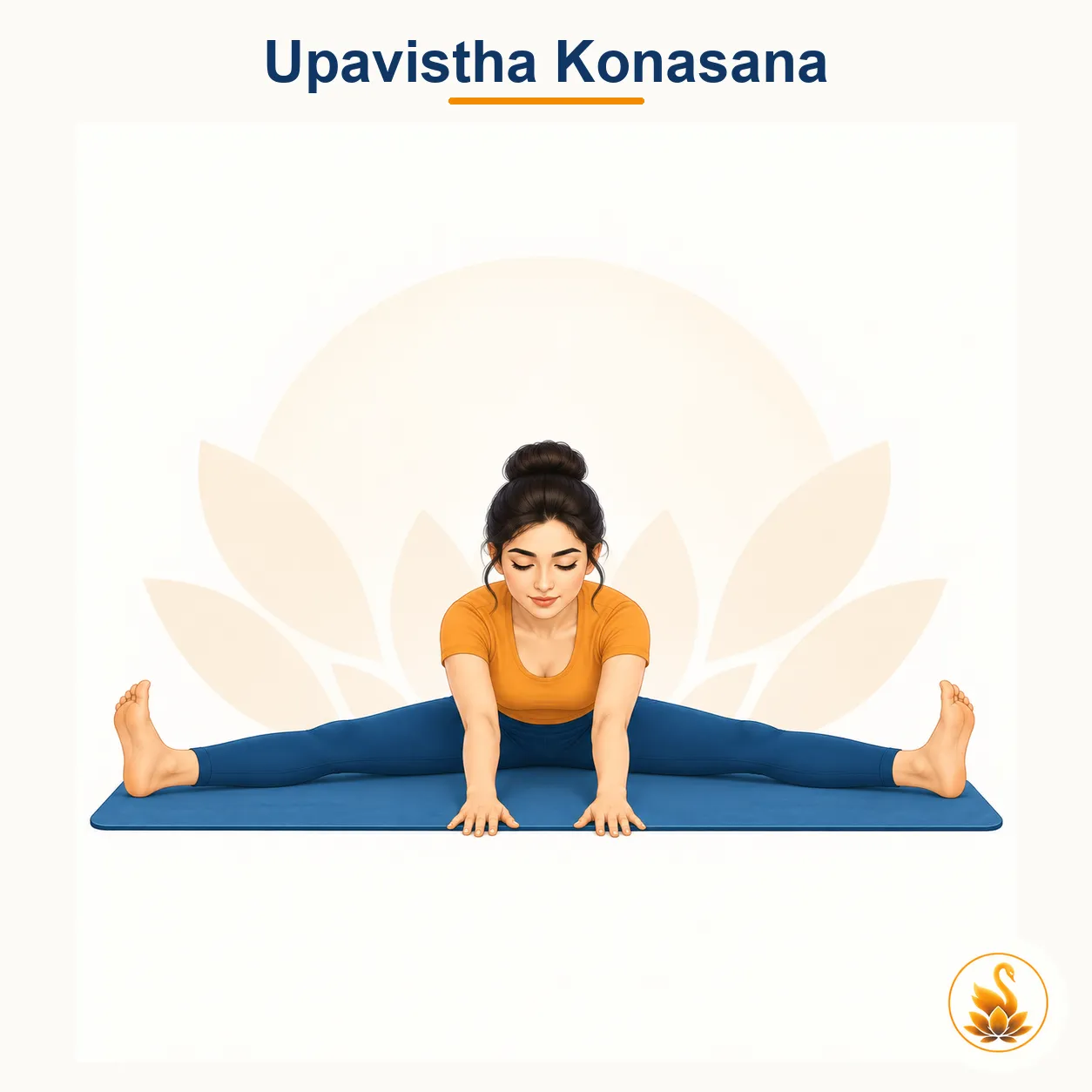
Ananda-X practice guide
How to practise safely
Focus
wide-leg seated stability, inner-leg length, long spine
Steps
- Sit on a folded blanket and open the straight legs to a comfortable angle.
- Point the knees and toes upward and press the backs of the legs gently down.
- Keep the hands behind the pelvis to sit tall, or walk them forward while hinging from the hips.
- Return upright before drawing the legs together with the hands.
Benefits
- Supports upright postural awareness.
- Encourages comfortable mobility through the hips and legs.
- Provides a steady base for slow, attentive breathing.
Suggested duration
4 to 8 breaths.
Important caution
Do not force the legs wider or pull into the fold. Bend the knees or sit higher for hamstring, groin or lower-back sensitivity.
Source status: Ananda-X editorial practice guidance. This entry is complete but is not labelled PWA-verified.
Asana 038
Gomukhasana
Cow Face Pose
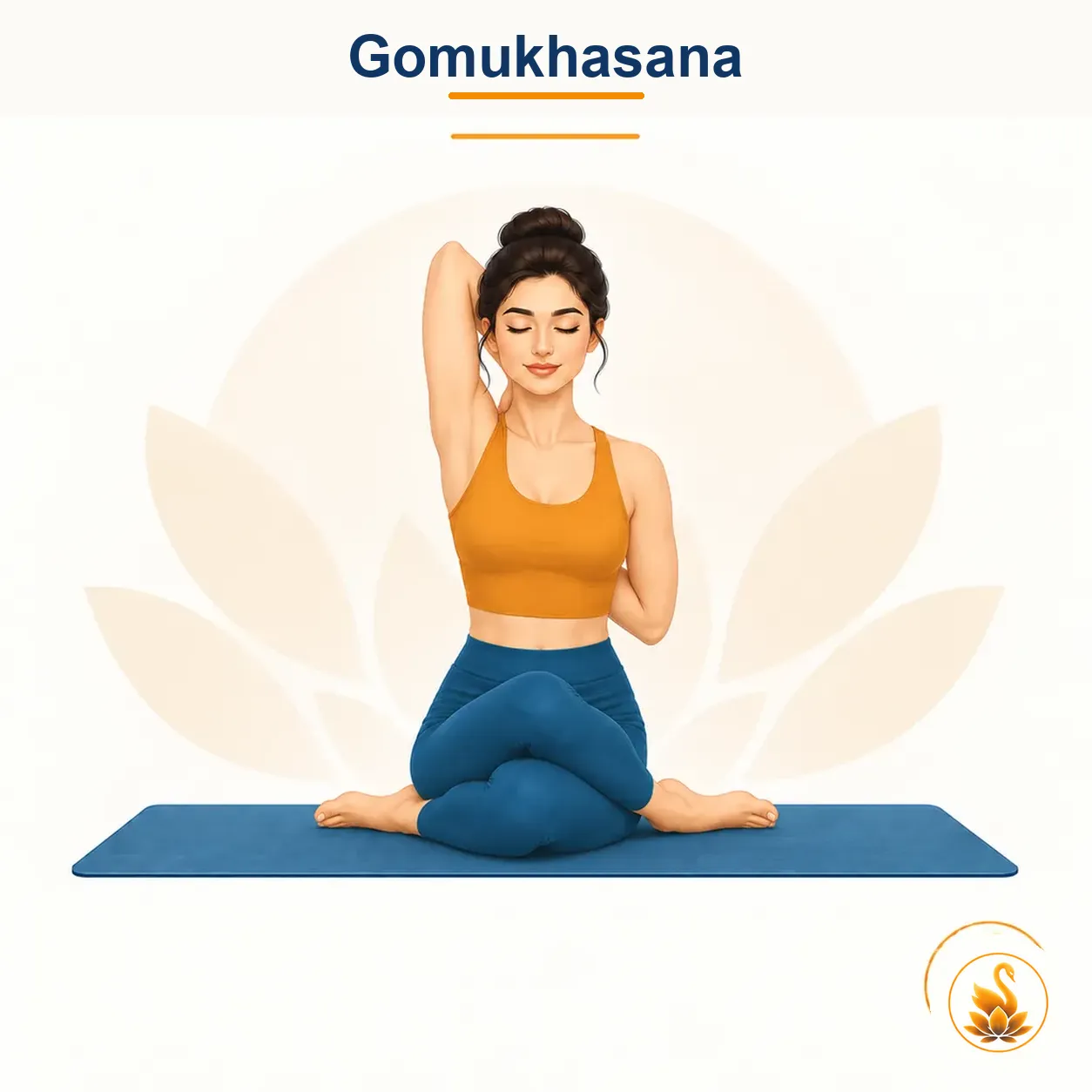
PWA routine source – expert review pending
How to practise safely
Focus
seated, controlled movement, steady breathing
Steps
- Prepare in a stable starting position and keep the breath comfortable.
- From the seated position, take one arm behind from below and the other over the shoulder, clasp the fingers if comfortable, keep the back straight, then repeat the other side.
- Return slowly to a neutral position and pause before repeating.
Benefits
- Supports upright postural awareness.
- Encourages comfortable mobility through the hips and legs.
- Provides a steady base for slow, attentive breathing.
Suggested duration
About 30 to 40 sec each side
Important caution
Do not force the knees, hips or ankles. Add support or choose an alternative position if there is joint pain, numbness or recent injury.
Source: YogaAX1. Practice wording is source-derived; focus, benefits and caution are cautious editorial guidance pending expert review.
Asana 039
Ardha Matsyendrasana
Half Lord of the Fishes
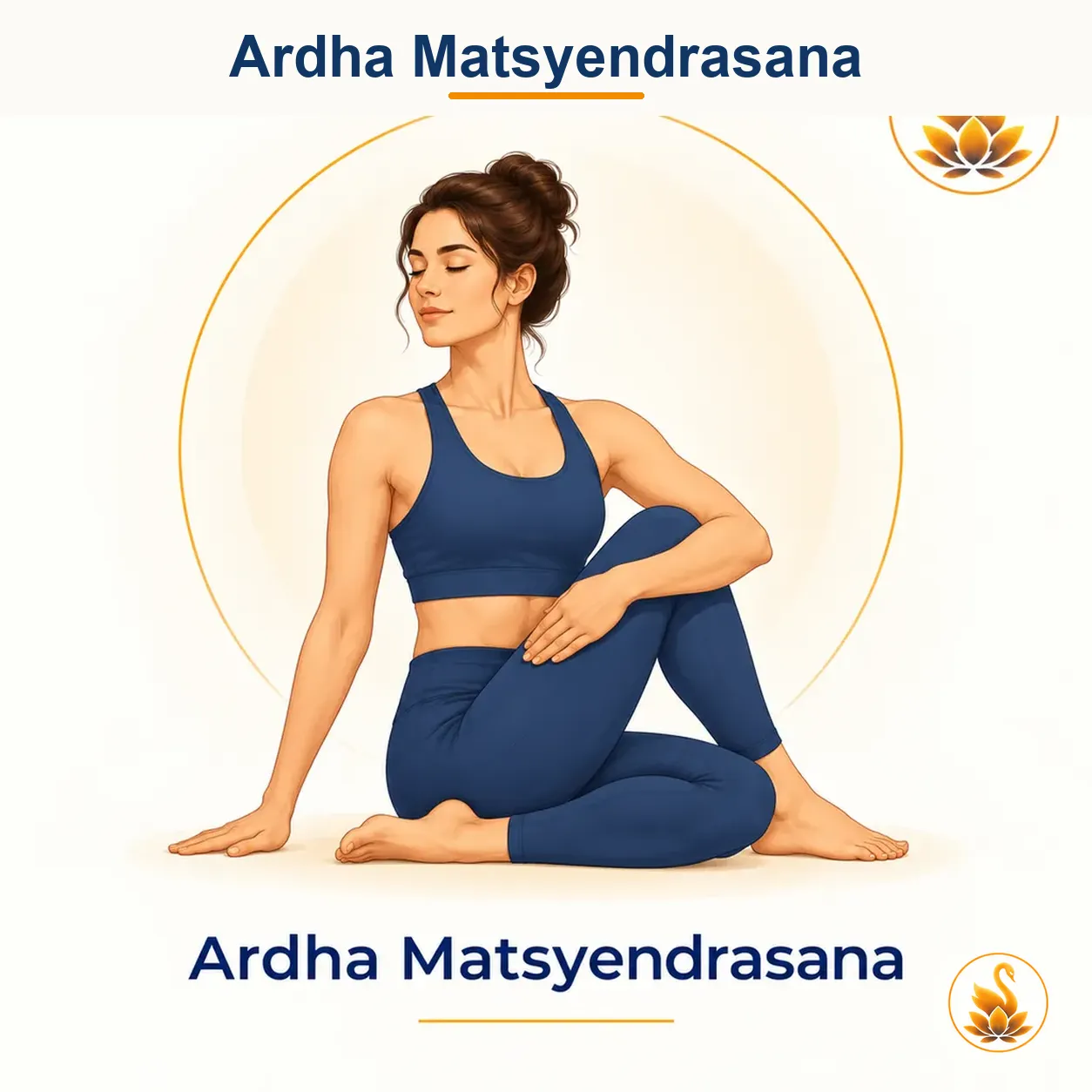
PWA verified guide
How to practise safely
Focus
spinal rotation, posture, mobility
Steps
- Sit tall with one leg folded and the opposite foot placed comfortably across or beside it.
- Lengthen the spine before beginning the twist.
- Rotate gently toward the bent-knee side, using the arms only for light guidance.
- Keep breathing; return to center and repeat on the other side.
Benefits
- Encourages controlled spinal rotation.
- Supports upright seated awareness.
- Promotes gentle trunk mobility when practiced within a pain-free range.
Suggested duration
2 to 4 slow breaths each side; 1 to 2 rounds.
Important caution
Keep the twist mild. Avoid deep rotation with acute disc pain, severe sciatica, recent abdominal/spinal surgery, or when twisting is restricted.
Asana 040
Vakrasana
Simple Spinal Twist
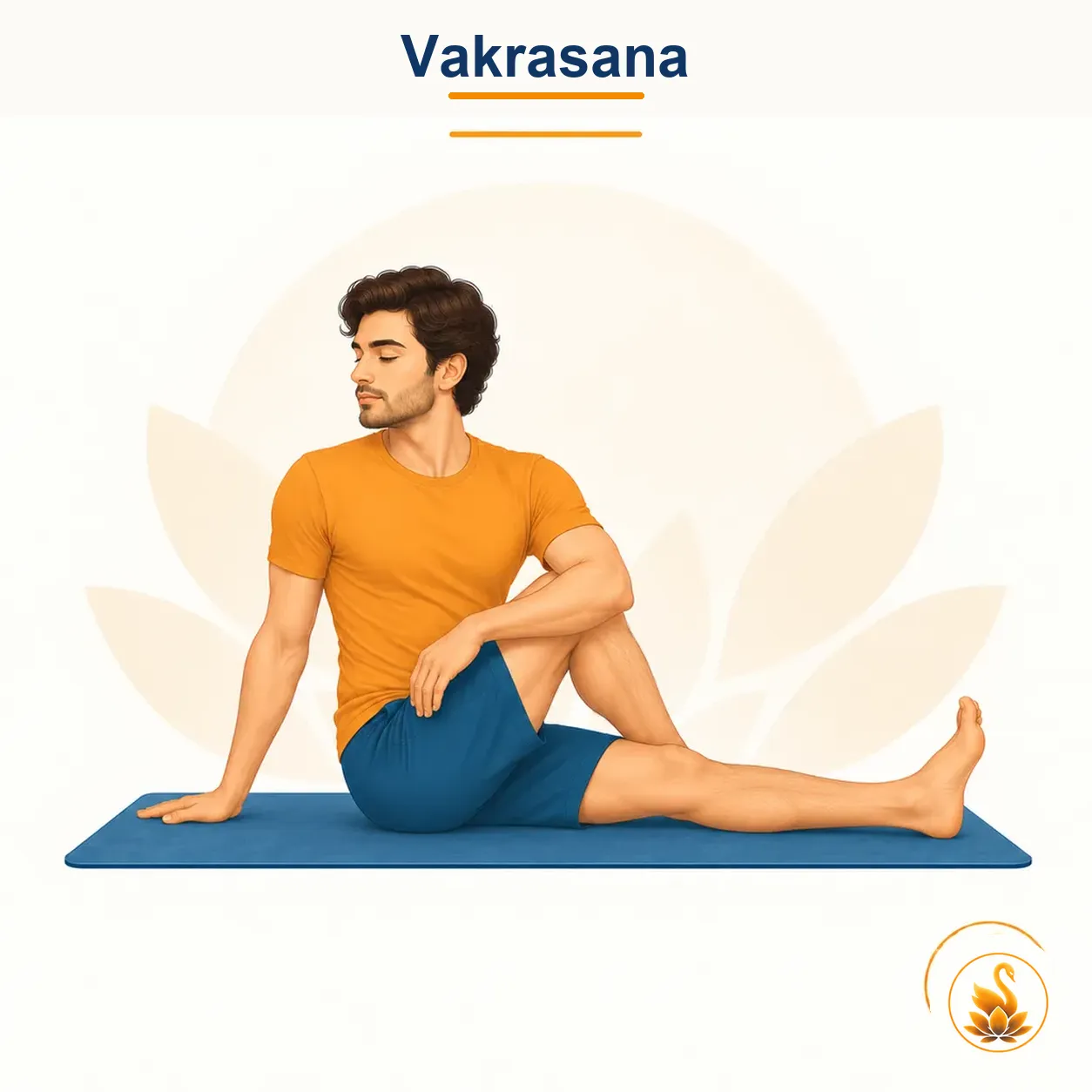
PWA routine source – expert review pending
How to practise safely
Focus
seated twist, controlled movement, steady breathing
Steps
- Prepare in a stable starting position and keep the breath comfortable.
- From legs extended, bend one knee and place the foot near the opposite thigh.
- Use the opposite arm/hand position to turn the trunk and look back.
- Repeat on both sides.
- Return slowly to a neutral position and pause before repeating.
Benefits
- Encourages controlled trunk rotation.
- Supports upright postural awareness.
- Develops mobility without using force or momentum.
Suggested duration
Hold about 40 to 50 sec each side
Important caution
Keep the twist gentle and lengthen before rotating. Avoid deep rotation with acute back pain, disc symptoms, pregnancy or recent abdominal or spinal surgery.
Source: YogaAX1. Practice wording is source-derived; focus, benefits and caution are cautious editorial guidance pending expert review.
Asana 041
Bharadvajasana
Bharadvaja's Twist
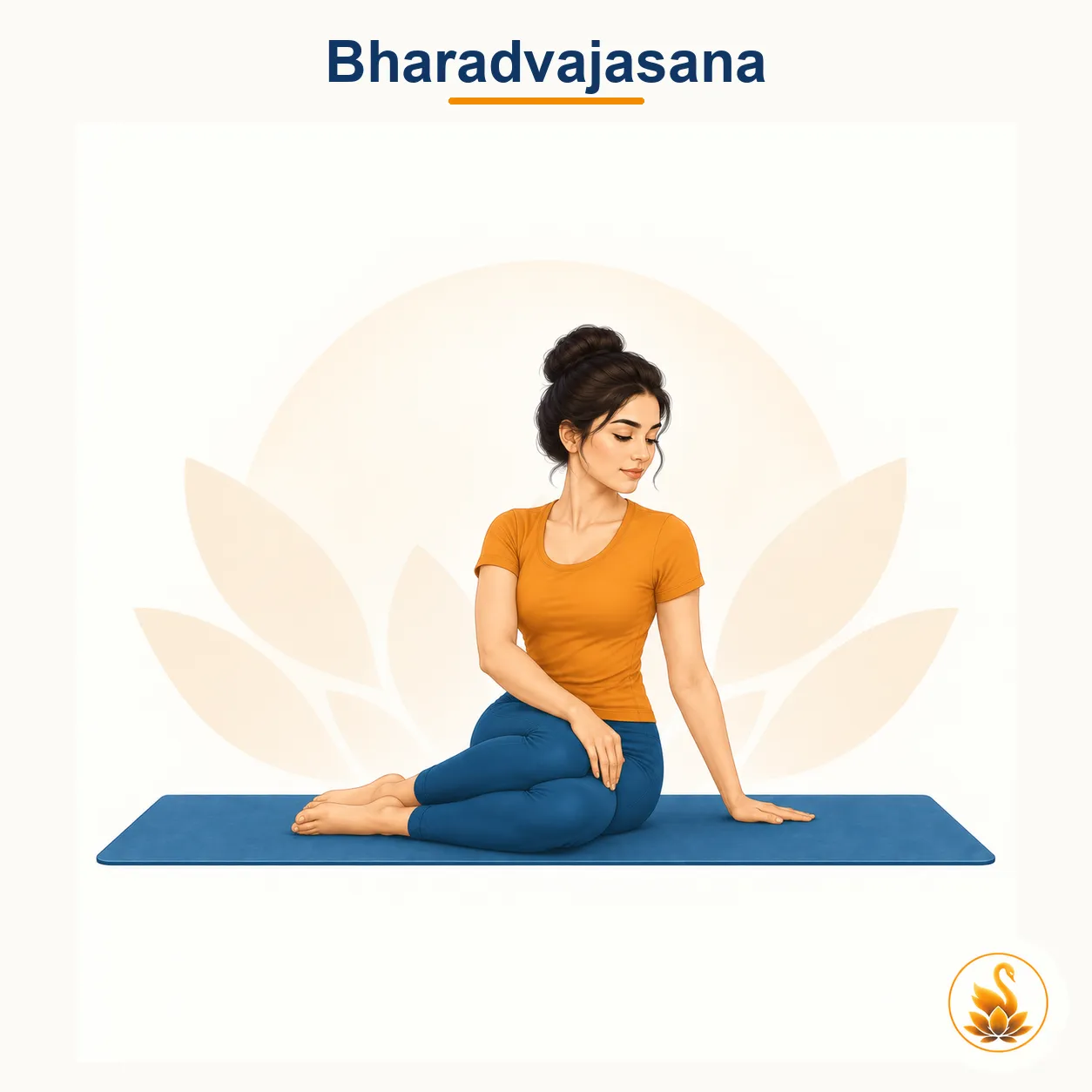
Ananda-X practice guide
How to practise safely
Focus
gentle seated rotation, spinal length, grounded pelvis
Steps
- Sit with the legs folded comfortably to one side on a blanket or chair.
- Inhale and lengthen the spine, keeping both sitting bones supported.
- Exhale and rotate gently toward the opposite side, placing the hands for light support rather than leverage.
- Return to centre and repeat with the legs and twist reversed.
Benefits
- Encourages controlled trunk rotation.
- Supports upright postural awareness.
- Develops mobility without using force or momentum.
Suggested duration
3 to 5 breaths each side.
Important caution
Keep the rotation comfortable and avoid pulling with the arms. Use a chair and avoid deep twisting with acute back pain or pregnancy.
Source status: Ananda-X editorial practice guidance. This entry is complete but is not labelled PWA-verified.
Asana 042
Marichyasana I
Sage Marichi Pose I
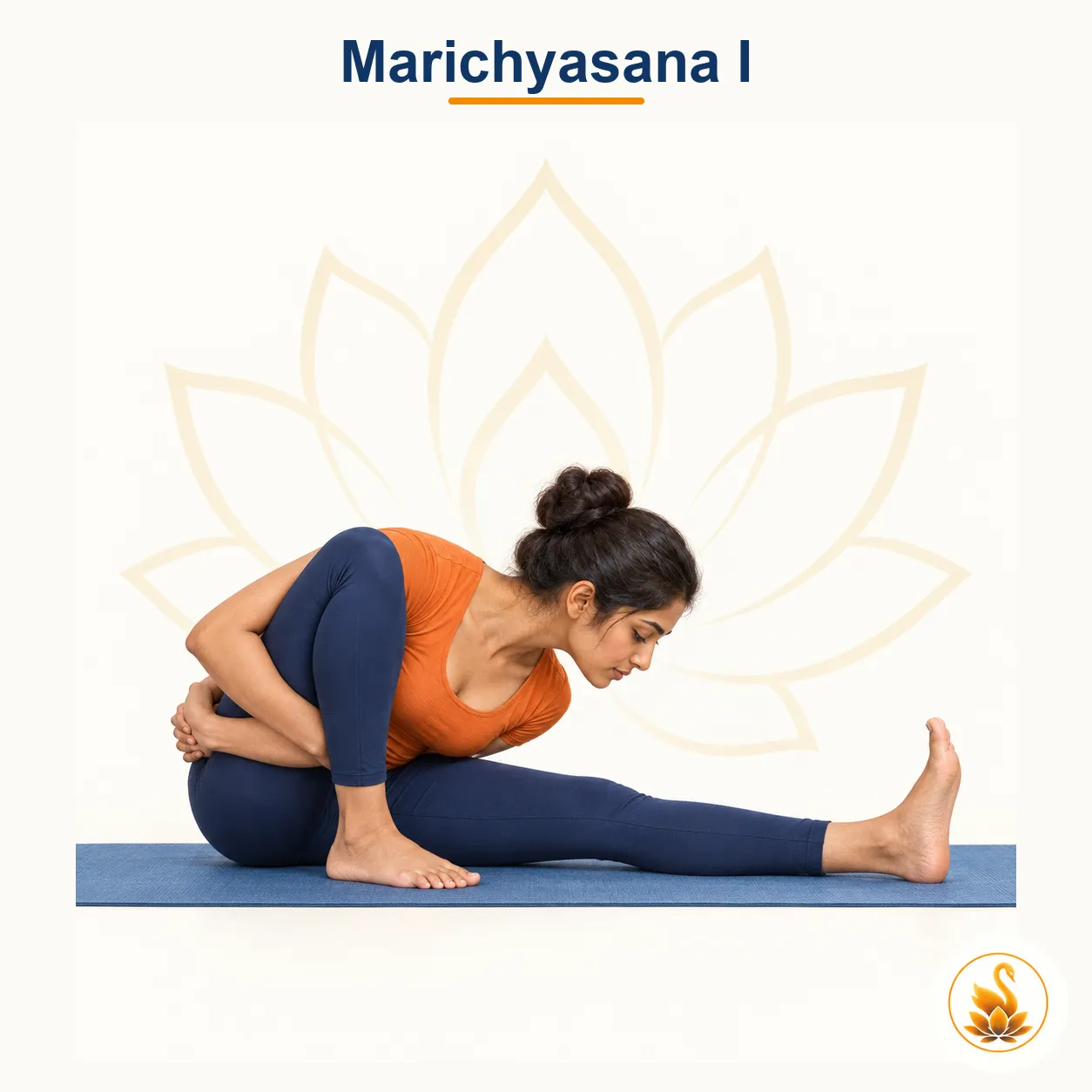
Ananda-X practice guide
How to practise safely
Focus
one-knee seated fold, shoulder position, spinal length
Steps
- Sit with the left leg extended and the right knee bent, foot near the pelvis.
- Lengthen upward, then hinge forward slightly inside the bent knee.
- Keep the hands on the floor, a strap or the shin; attempt a bind only with ample shoulder mobility and supervision.
- Rise and repeat on the other side.
Benefits
- Supports upright postural awareness.
- Encourages comfortable mobility through the hips and legs.
- Provides a steady base for slow, attentive breathing.
Suggested duration
3 to 5 breaths each side.
Important caution
Do not force a bind or round the back aggressively. Use a strap and stop with shoulder, knee, hamstring or lower-back pain.
Source status: Ananda-X editorial practice guidance. This entry is complete but is not labelled PWA-verified.
Asana 043
Mandukasana
Frog Pose
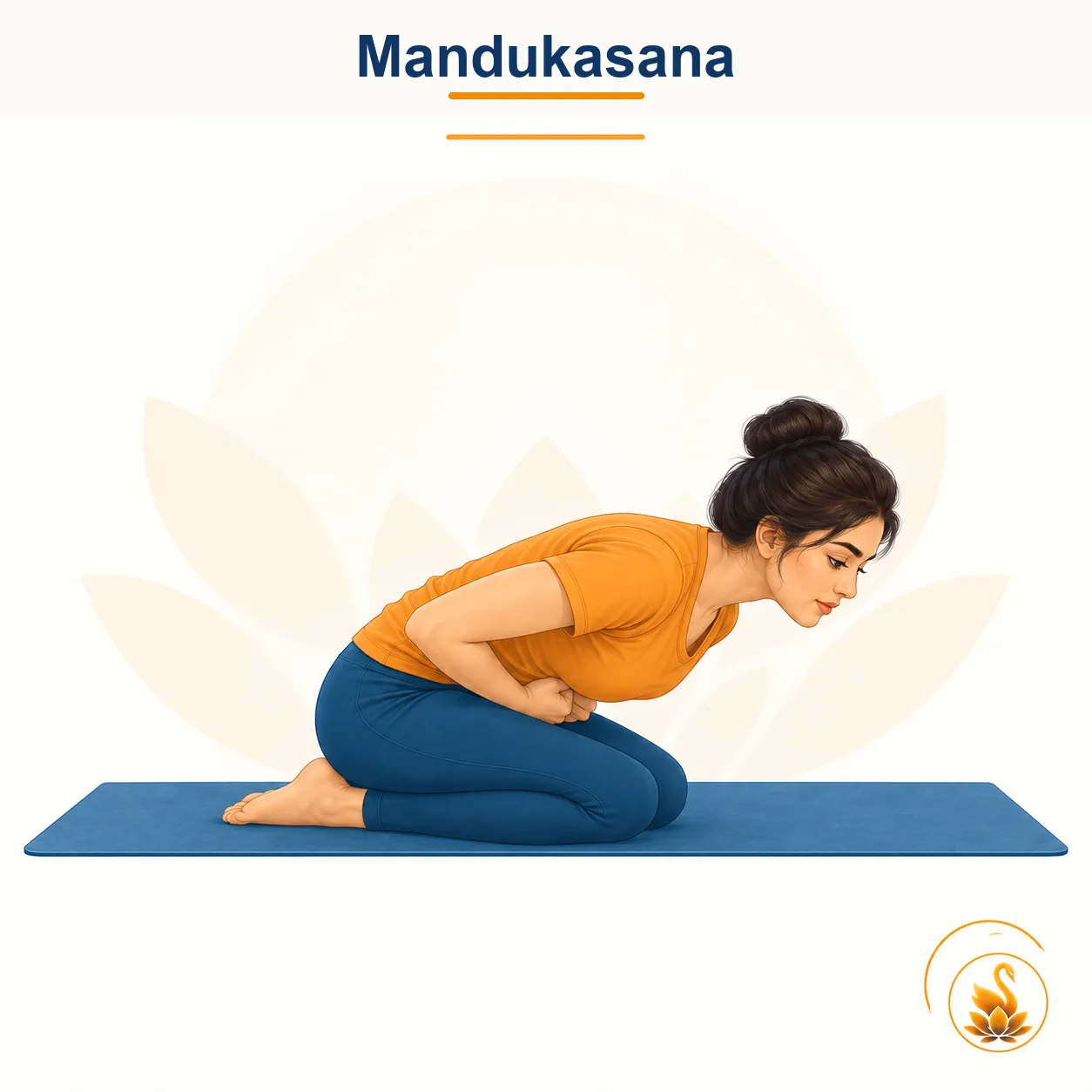
Ananda-X practice guide
How to practise safely
Focus
classical kneeling Frog Pose, abdominal compression, long spine
Steps
- Sit in Vajrasana on padding with the knees together and the spine upright.
- Make fists with the thumbs tucked inside and place them on either side of the navel, matching the illustrated hand position.
- Exhale and hinge forward from the hips, pressing the fists gently into the abdomen while keeping the chest lengthened.
- Inhale, rise slowly and release the hands.
Benefits
- Supports upright postural awareness.
- Encourages comfortable mobility through the hips and legs.
- Provides a steady base for slow, attentive breathing.
Suggested duration
2 to 4 breaths or 2 to 3 gentle repetitions.
Important caution
Use only mild abdominal pressure. Avoid during pregnancy, after abdominal surgery, or with hernia, ulcer, acute abdominal pain, painful knees or ankles.
Source status: Ananda-X editorial practice guidance. This entry is complete but is not labelled PWA-verified.
Asana 044
Uttana Mandukasana
Stretched-Up Frog Pose
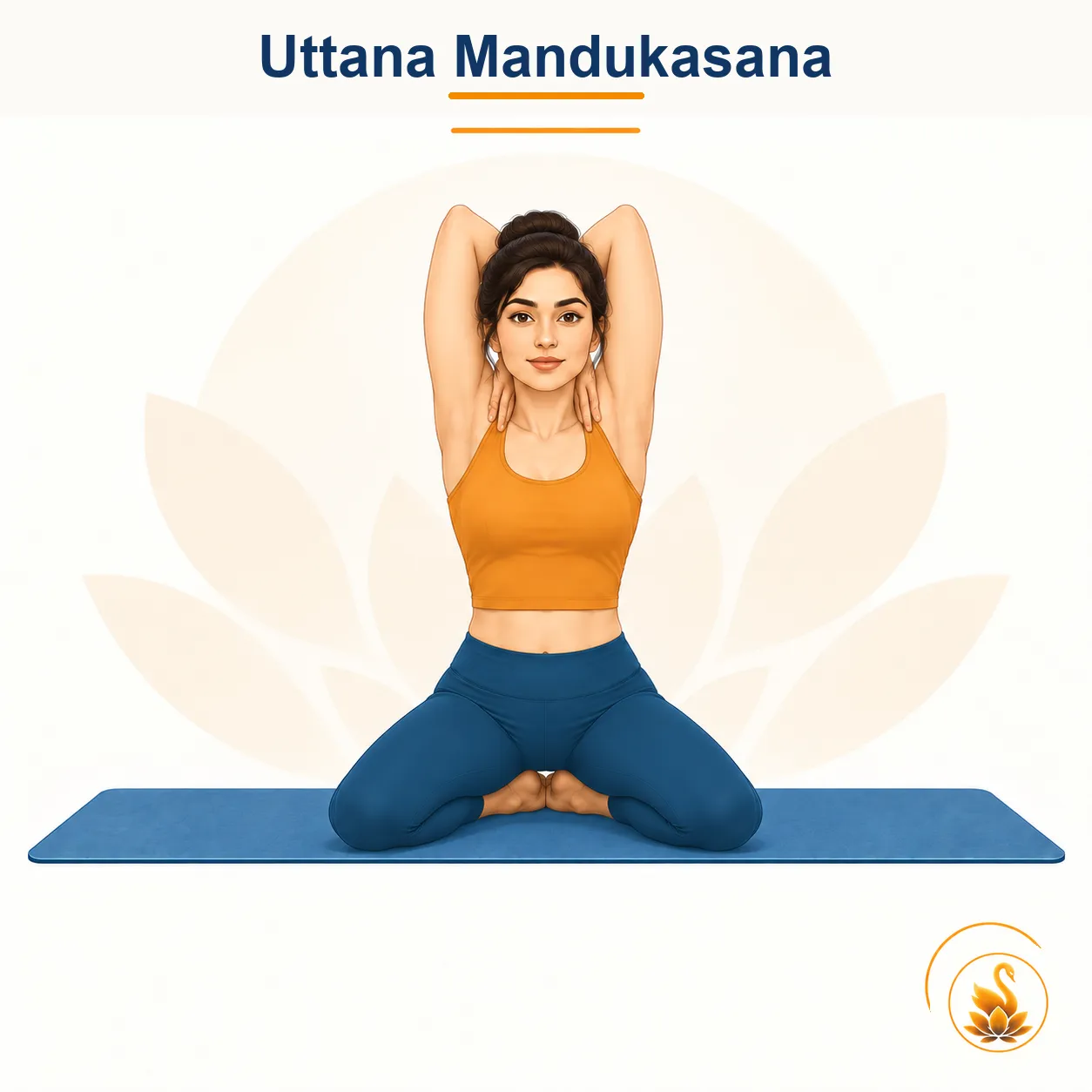
Ananda-X practice guide
How to practise safely
Focus
upright Stretched-Up Frog Pose, shoulder opening, broad chest
Steps
- Sit in a wide-knee Vajrasana variation with the big toes touching and the pelvis supported if needed.
- Raise both arms, bend the elbows and place each palm on the opposite shoulder blade as shown, keeping the elbows pointing upward.
- Lift the breastbone while keeping the lower ribs controlled and the neck neutral.
- Release the arms, bring the knees together with the hands and return to neutral.
Benefits
- Supports upright postural awareness.
- Encourages comfortable mobility through the hips and legs.
- Provides a steady base for slow, attentive breathing.
Suggested duration
3 to 5 breaths.
Important caution
Support the seat and pad the knees. Reduce the arm position for shoulder or neck discomfort, and do not force the knees wider.
Source status: Ananda-X editorial practice guidance. This entry is complete but is not labelled PWA-verified.
Asana 045
Simhasana
Lion Pose
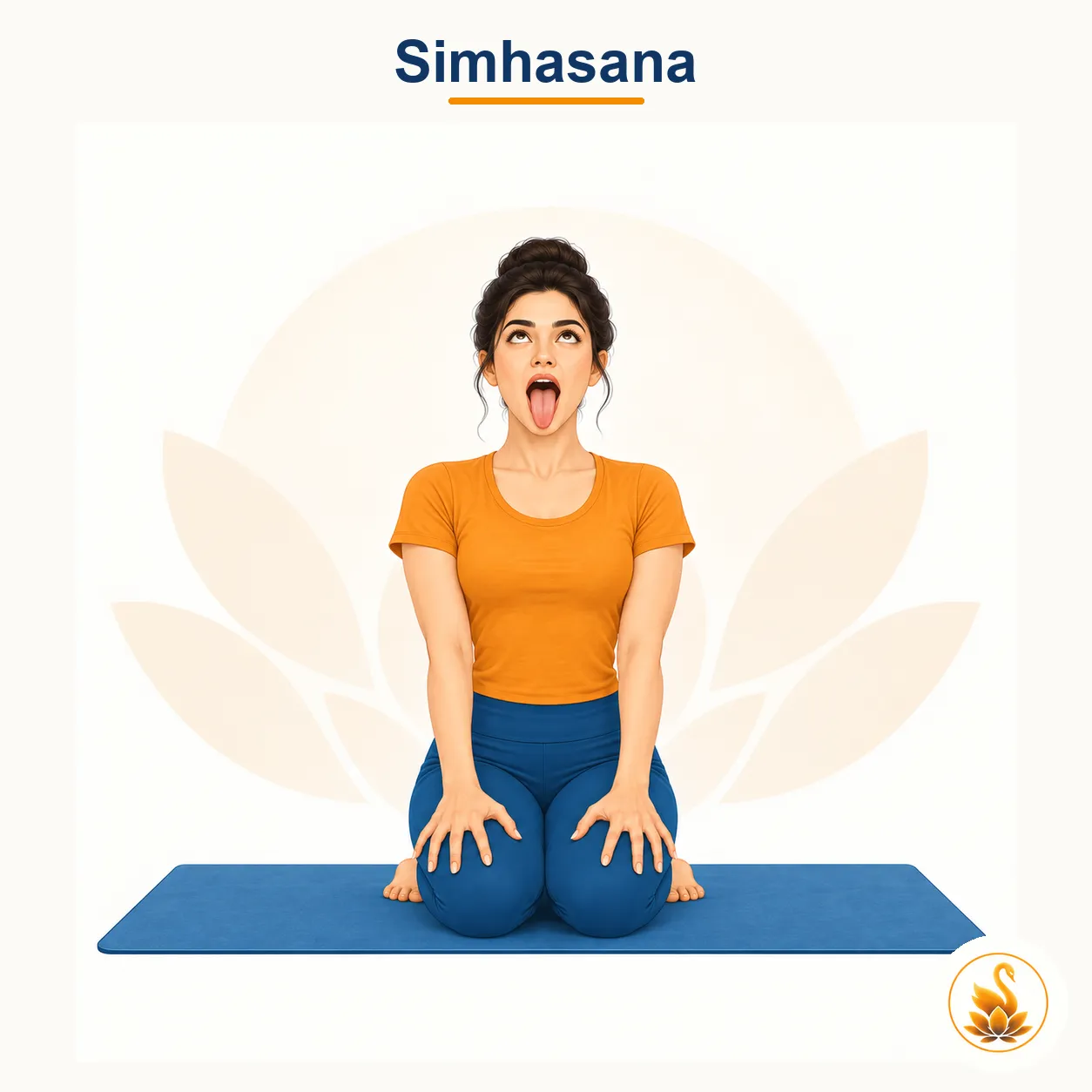
Ananda-X practice guide
How to practise safely
Focus
jaw and throat release, expressive exhalation, steady seat
Steps
- Sit or kneel comfortably with the hands resting on the thighs.
- Lengthen the spine and inhale gently through the nose.
- Open the mouth, extend the tongue and exhale audibly while directing the gaze comfortably forward or slightly upward.
- Relax the face, breathe normally and repeat.
Benefits
- Supports upright postural awareness.
- Encourages comfortable mobility through the hips and legs.
- Provides a steady base for slow, attentive breathing.
Suggested duration
3 to 5 rounds with normal breaths between rounds.
Important caution
Keep the eyes and throat comfortable; do not strain the voice. Use a chair if kneeling is painful.
Source status: Ananda-X editorial practice guidance. This entry is complete but is not labelled PWA-verified.
Asana 046
Parvatasana
Seated Mountain Pose
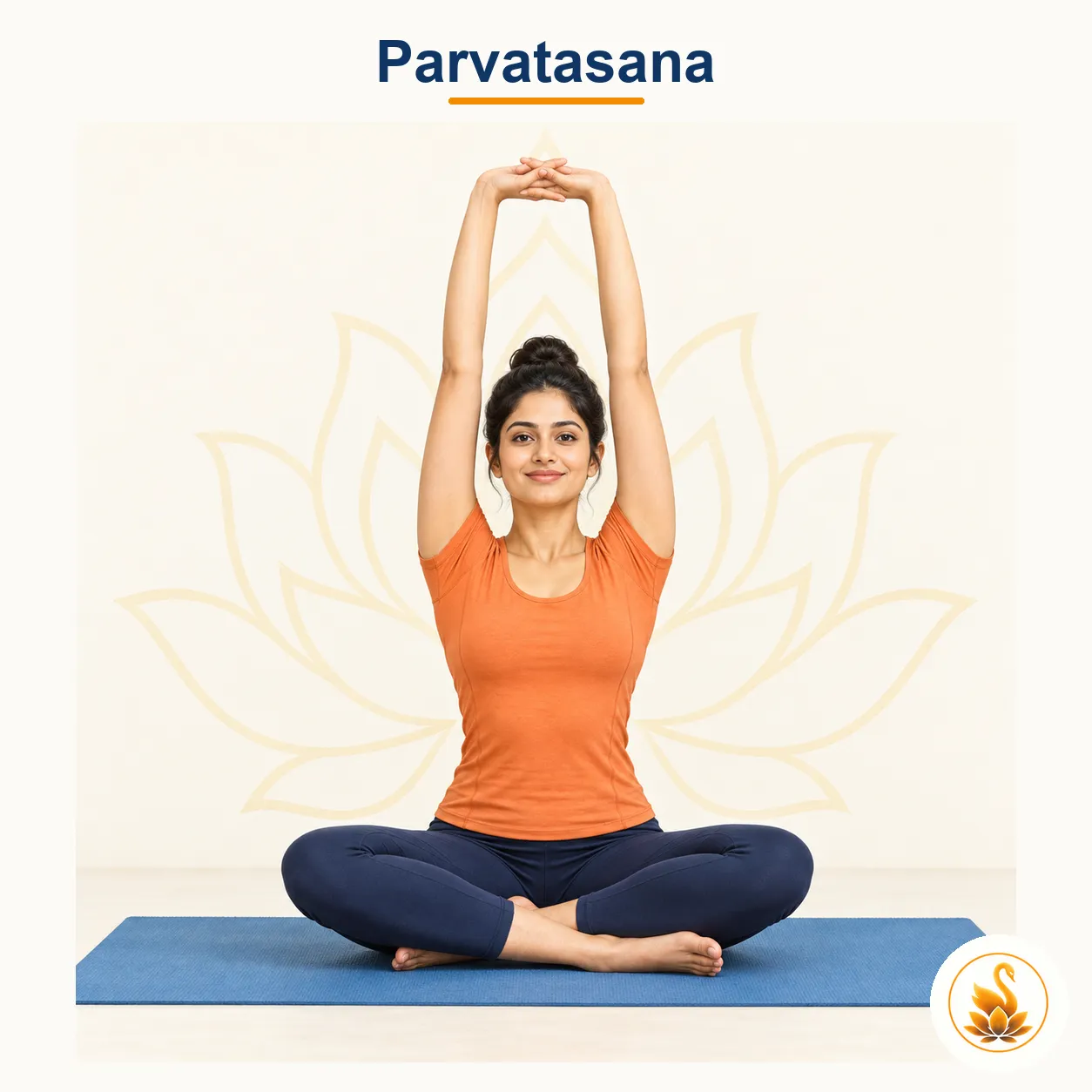
PWA routine source – expert review pending
How to practise safely
Focus
seated, controlled movement, steady breathing
Steps
- Prepare in a stable starting position and keep the breath comfortable.
- From seated, inhale and raise joined hands overhead with the arms close to the ears.
- Breathe normally, then exhale and lower the hands slowly.
- Return slowly to a neutral position and pause before repeating.
Benefits
- Supports upright postural awareness.
- Encourages comfortable mobility through the hips and legs.
- Provides a steady base for slow, attentive breathing.
Suggested duration
About 1 min + 30 sec release
Important caution
Do not force the knees, hips or ankles. Add support or choose an alternative position if there is joint pain, numbness or recent injury.
Source: YogaAX2. Practice wording is source-derived; focus, benefits and caution are cautious editorial guidance pending expert review.
Asana 047
Parighasana
Gate Pose
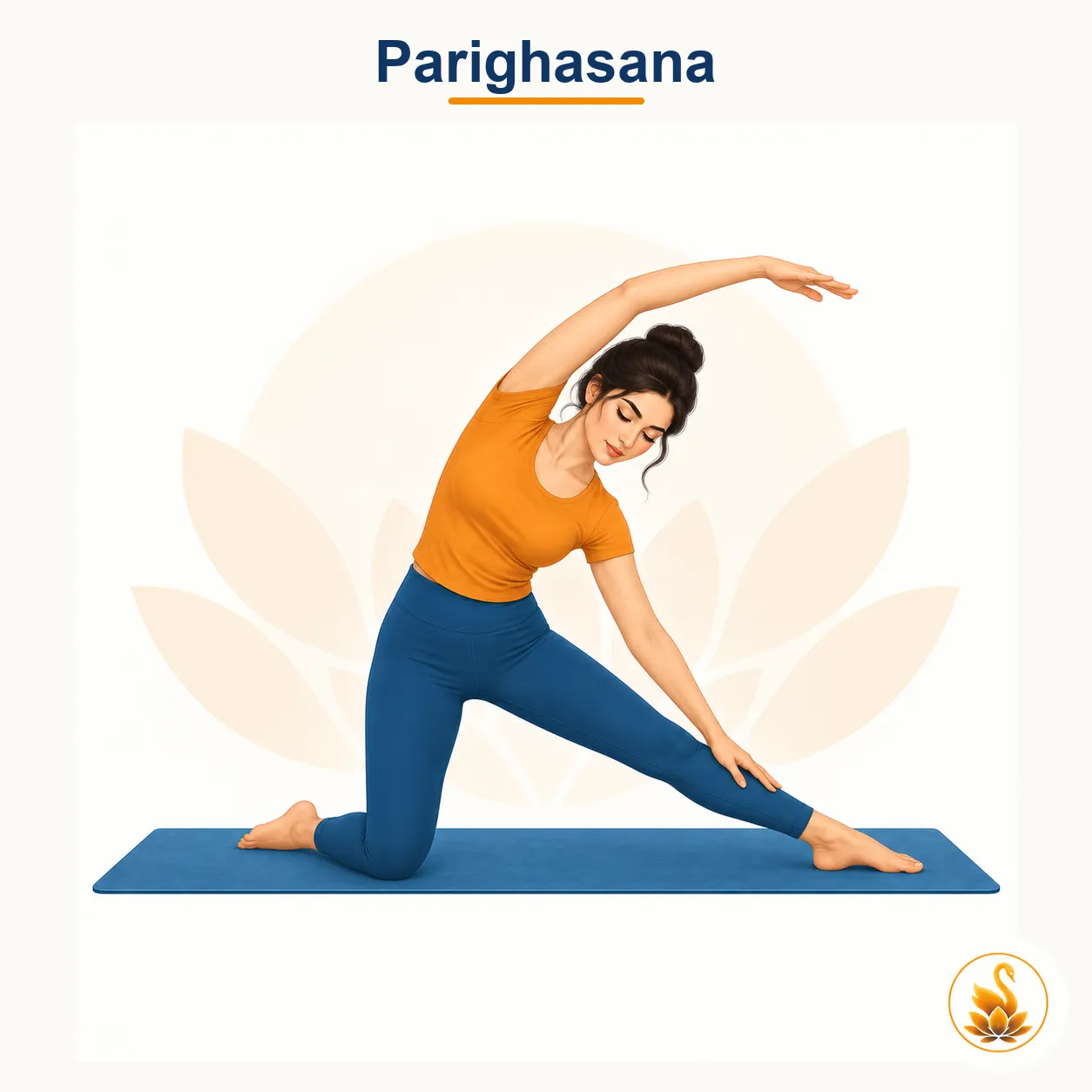
Ananda-X practice guide
How to practise safely
Focus
kneeling side bend, lateral length, stable base
Steps
- Kneel on padding and extend the right leg to the side with the foot grounded.
- Place the right hand lightly on the leg and raise the left arm.
- Lengthen up, then bend gently toward the extended leg without rotating the chest downward.
- Return upright, bring the knee in and repeat on the other side.
Benefits
- Supports upright postural awareness.
- Encourages comfortable mobility through the hips and legs.
- Provides a steady base for slow, attentive breathing.
Suggested duration
3 to 5 breaths each side.
Important caution
Pad the kneeling knee and use a block under the lower hand. Stop with knee, groin, back or shoulder pain.
Source status: Ananda-X editorial practice guidance. This entry is complete but is not labelled PWA-verified.
Asana 048
Yoga Mudrasana
Psychic Union Pose
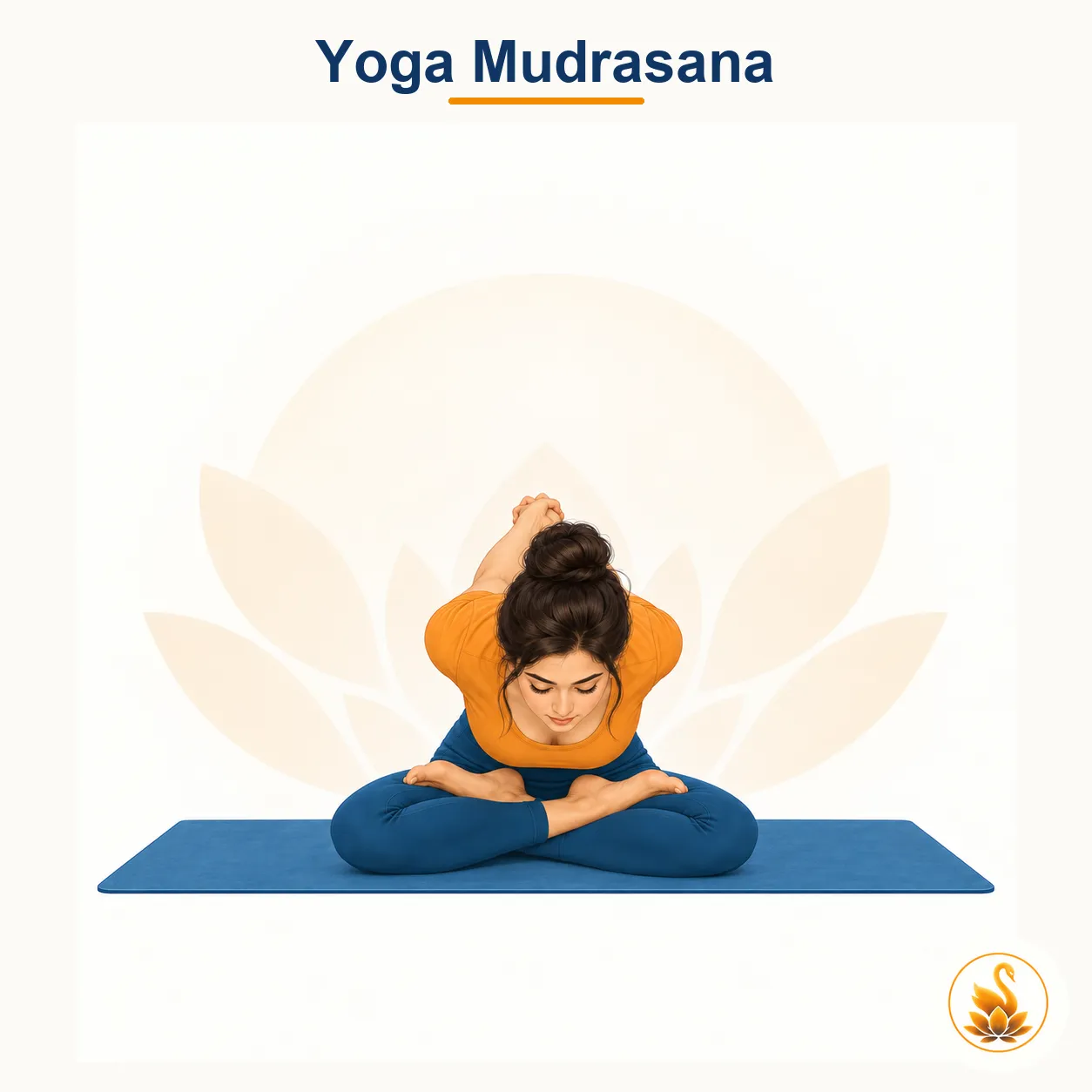
Ananda-X practice guide
How to practise safely
Focus
seated forward release, quiet breathing, supported hips
Steps
- Sit in a comfortable cross-legged or lotus-compatible position on a folded blanket.
- Rest the hands behind the back or on the floor; do not force a bind.
- Exhale and hinge forward from the hips, supporting the forehead on a block if helpful.
- Inhale and rise slowly before changing the leg crossing.
Benefits
- Supports upright postural awareness.
- Encourages comfortable mobility through the hips and legs.
- Provides a steady base for slow, attentive breathing.
Suggested duration
3 to 6 breaths.
Important caution
Choose an easy leg position and avoid pressing the knees. Do not practise a deep fold with acute back, hip or knee pain.
Source status: Ananda-X editorial practice guidance. This entry is complete but is not labelled PWA-verified.
Asana 049
Kurmasana
Tortoise Pose
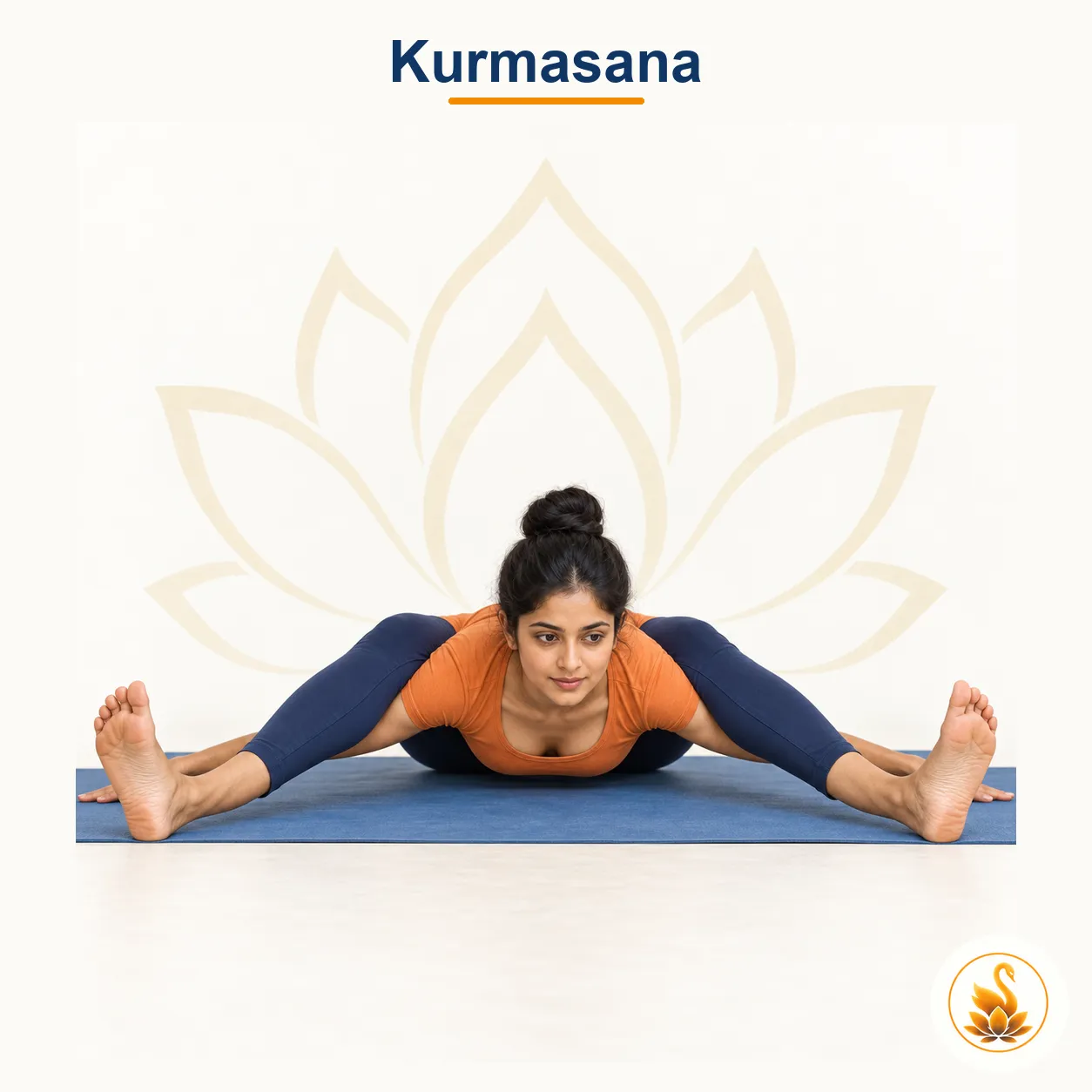
Ananda-X practice guide
How to practise safely
Focus
deep seated fold, hip mobility, calm unsupported effort
Steps
- Sit with the legs wide and knees slightly bent.
- Lean forward from the hips and slide the arms beneath or inside the legs only as far as comfortable.
- Lengthen the legs gradually without forcing the shoulders or spine toward the floor.
- Bend the knees, free the arms and rise slowly.
Benefits
- Supports upright postural awareness.
- Encourages comfortable mobility through the hips and legs.
- Provides a steady base for slow, attentive breathing.
Suggested duration
2 to 4 breaths with qualified supervision.
Important caution
Advanced posture: do not force depth or use momentum. Avoid with hamstring, hip, shoulder, disc or sciatic symptoms.
Source status: Ananda-X editorial practice guidance. This entry is complete but is not labelled PWA-verified.
Asana 050
Vajrasana Forward Relaxation
Forward Relaxation in Vajrasana
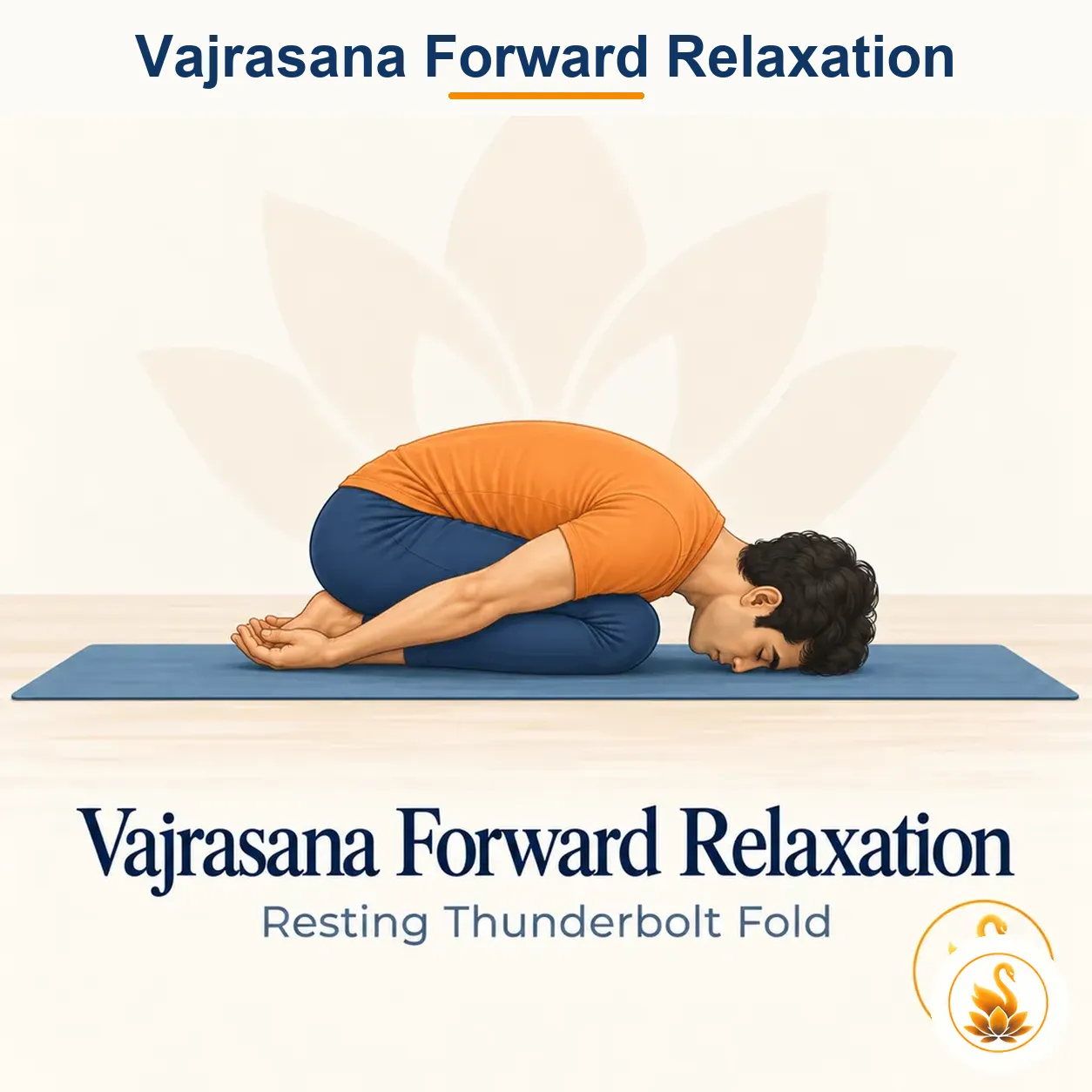
PWA routine source – expert review pending
How to practise safely
Focus
kneeling, controlled movement, steady breathing
Steps
- Prepare in a stable starting position and keep the breath comfortable.
- From Vajrasana, fold forward until the head approaches the floor and hold the feet as shown, breathing normally.
- Return slowly to a neutral position and pause before repeating.
Benefits
- Supports upright postural awareness.
- Encourages comfortable mobility through the hips and legs.
- Provides a steady base for slow, attentive breathing.
Suggested duration
About 30 to 40 sec
Important caution
Do not force the knees, hips or ankles. Add support or choose an alternative position if there is joint pain, numbness or recent injury.
Source: YogaAX2. Practice wording is source-derived; focus, benefits and caution are cautious editorial guidance pending expert review.
Asana 051
Shashankasana
Hare Pose
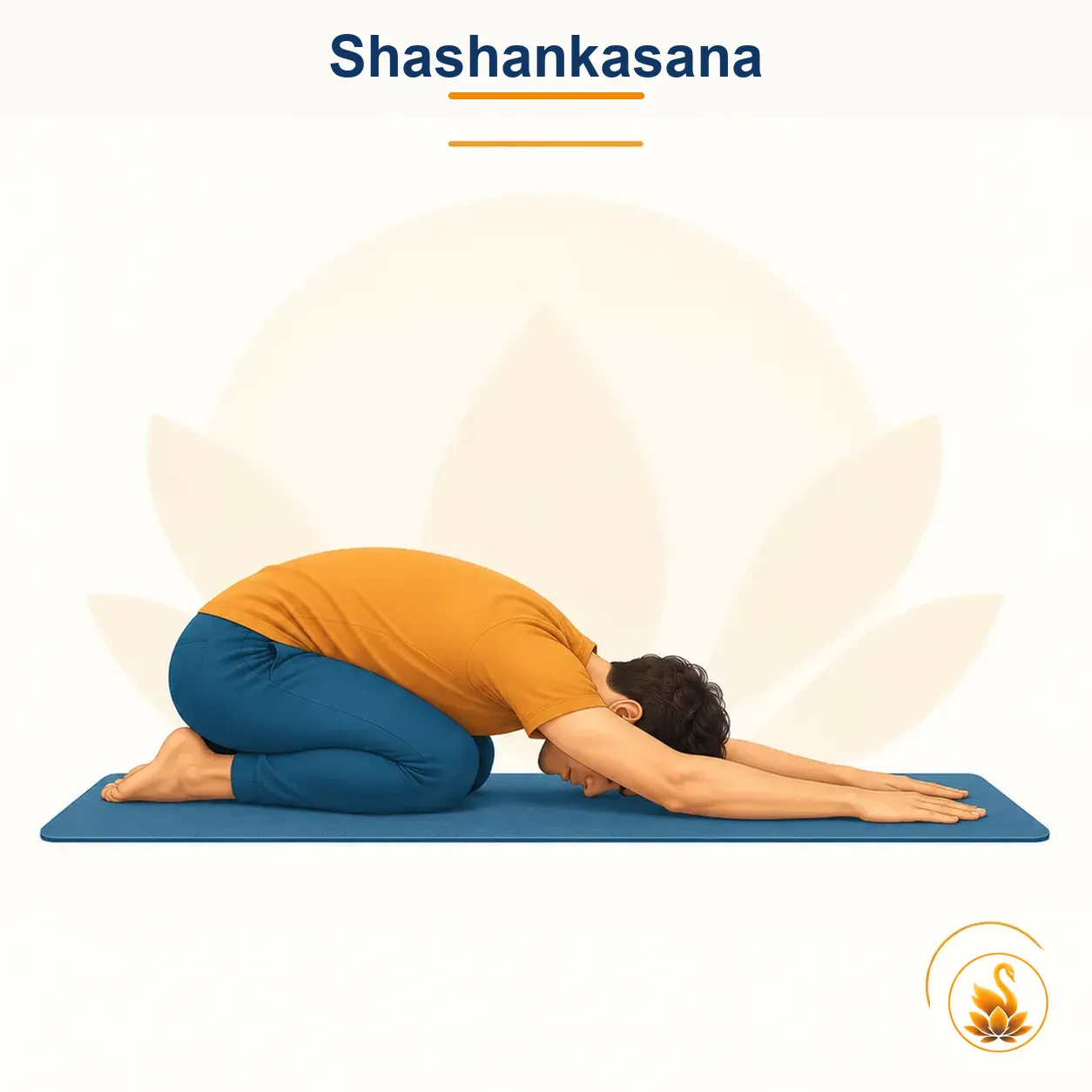
PWA routine source – expert review pending
How to practise safely
Focus
kneeling, controlled movement, steady breathing
Steps
- Prepare in a stable starting position and keep the breath comfortable.
- From Vajrasana, inhale and raise the arms; exhale and bend forward, allowing the elbows/arms to rest toward the floor.
- Return slowly.
Benefits
- Supports upright postural awareness.
- Encourages comfortable mobility through the hips and legs.
- Provides a steady base for slow, attentive breathing.
Suggested duration
About 1 min + short return pause
Important caution
Do not force the knees, hips or ankles. Add support or choose an alternative position if there is joint pain, numbness or recent injury.
Source: YogaAX1. Practice wording is source-derived; focus, benefits and caution are cautious editorial guidance pending expert review.
Asana 052
Balasana
Child's Pose
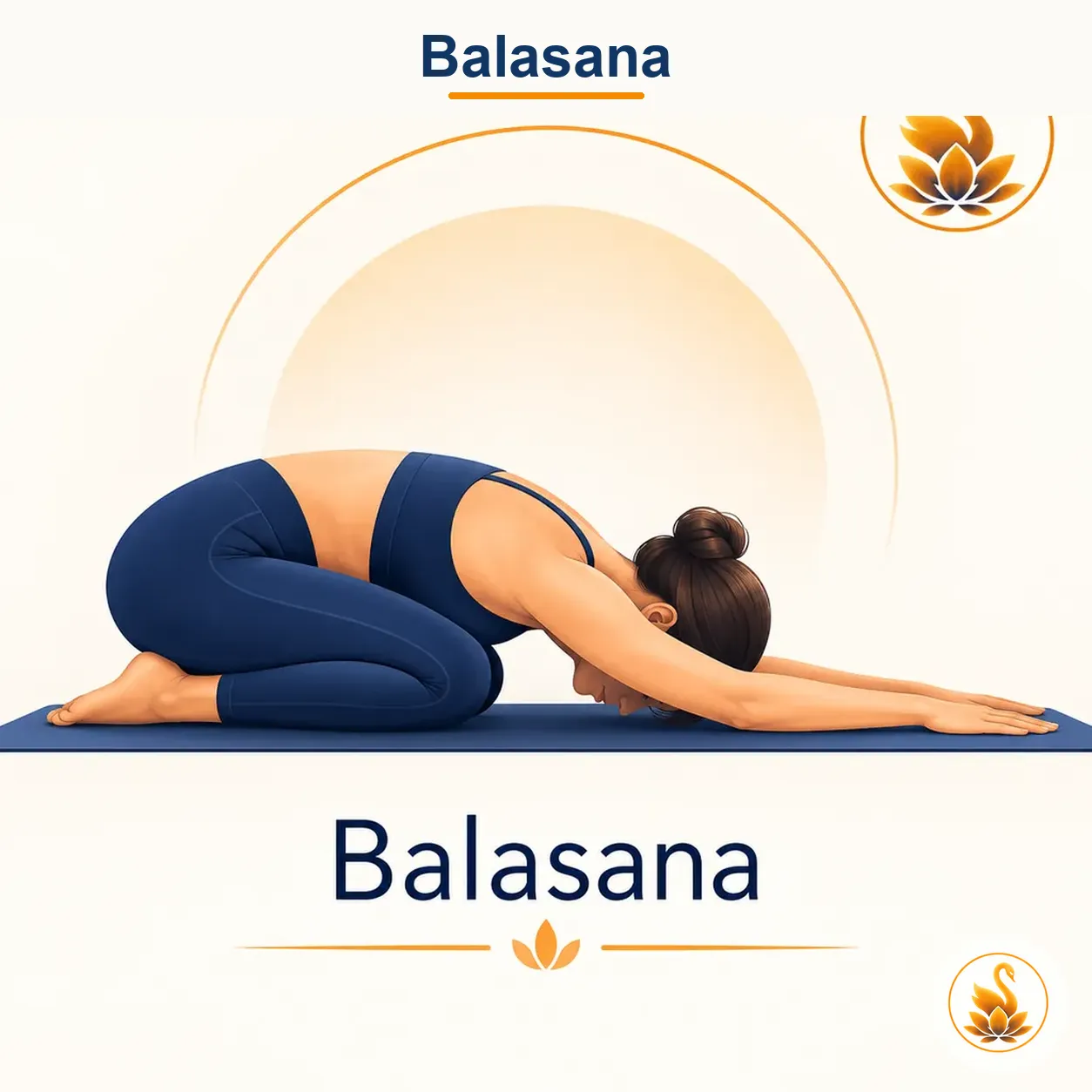
PWA verified guide
How to practise safely
Focus
rest, back relaxation, breath awareness
Steps
- Kneel and sit the hips back toward the heels as comfort allows.
- Fold the torso forward and rest the forehead on a support or mat.
- Reach the arms forward or rest them alongside the body.
- Breathe gently into the back and ribs; come up slowly.
Benefits
- Provides a quiet resting position.
- Encourages gentle length through the back and hips.
- Supports slow, relaxed breathing.
Suggested duration
20 to 60 seconds with easy breathing; repeat as comfortable.
Important caution
Modify or avoid if kneeling is painful, after recent knee injury, or when deep hip/knee flexion is not appropriate.
Asana 053
Dhyana Virasana
Meditative Hero Pose
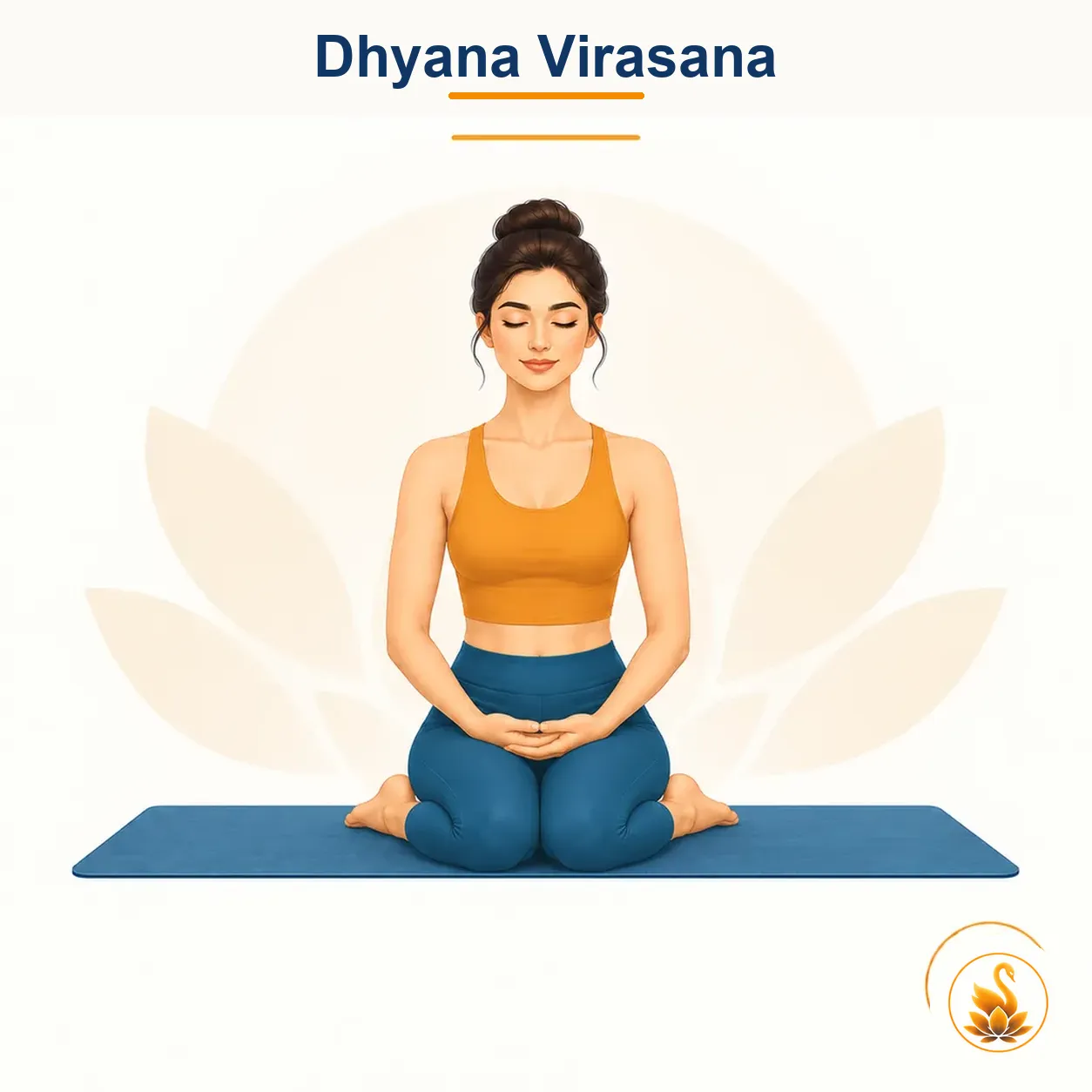
PWA routine source – expert review pending
How to practise safely
Focus
seated, controlled movement, steady breathing
Steps
- Prepare in a stable starting position and keep the breath comfortable.
- Arrange the legs in the source Veerasana position, keep the back and head upright, close the eyes and breathe normally.
- Then hold the feet while staying upright.
- Return slowly to a neutral position and pause before repeating.
Benefits
- Supports upright postural awareness.
- Encourages comfortable mobility through the hips and legs.
- Provides a steady base for slow, attentive breathing.
Suggested duration
About 1 min + 1 min
Important caution
Do not force the knees, hips or ankles. Add support or choose an alternative position if there is joint pain, numbness or recent injury.
Source: YogaAX1. Practice wording is source-derived; focus, benefits and caution are cautious editorial guidance pending expert review.
Asana 054
Padadhirasana
Breath-Balancing Pose
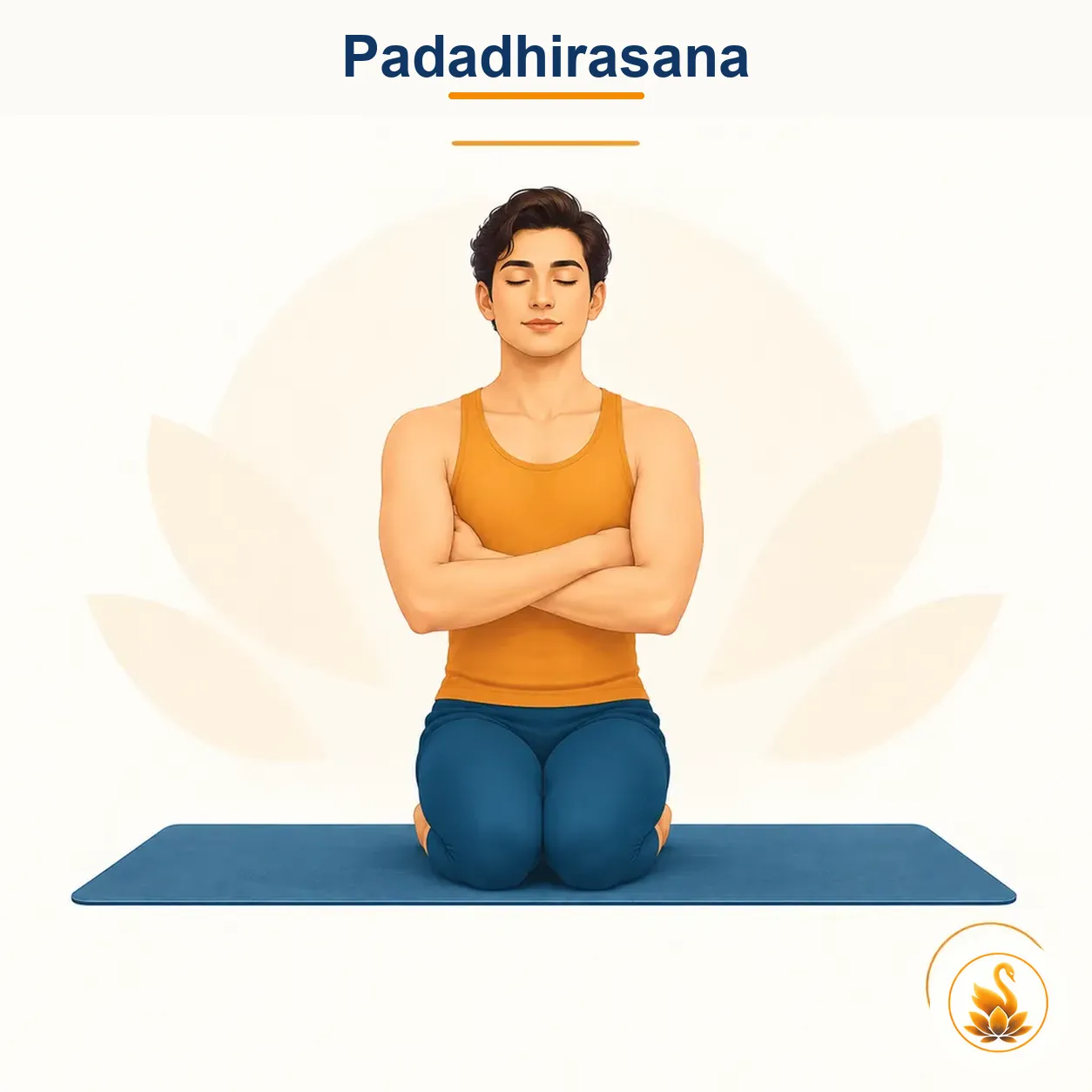
PWA routine source – expert review pending
How to practise safely
Focus
seated, controlled movement, steady breathing
Steps
- Prepare in a stable starting position and keep the breath comfortable.
- Sit in Vajrasana with the back and head upright.
- Cross the arms in front of the chest and place each palm under the opposite armpit; breathe normally.
- Return slowly to a neutral position and pause before repeating.
Benefits
- Supports upright postural awareness.
- Encourages comfortable mobility through the hips and legs.
- Provides a steady base for slow, attentive breathing.
Suggested duration
About 1 min
Important caution
Do not force the knees, hips or ankles. Add support or choose an alternative position if there is joint pain, numbness or recent injury.
Source: YogaAX1. Practice wording is source-derived; focus, benefits and caution are cautious editorial guidance pending expert review.
Asana 055
Makarasana
Crocodile Pose
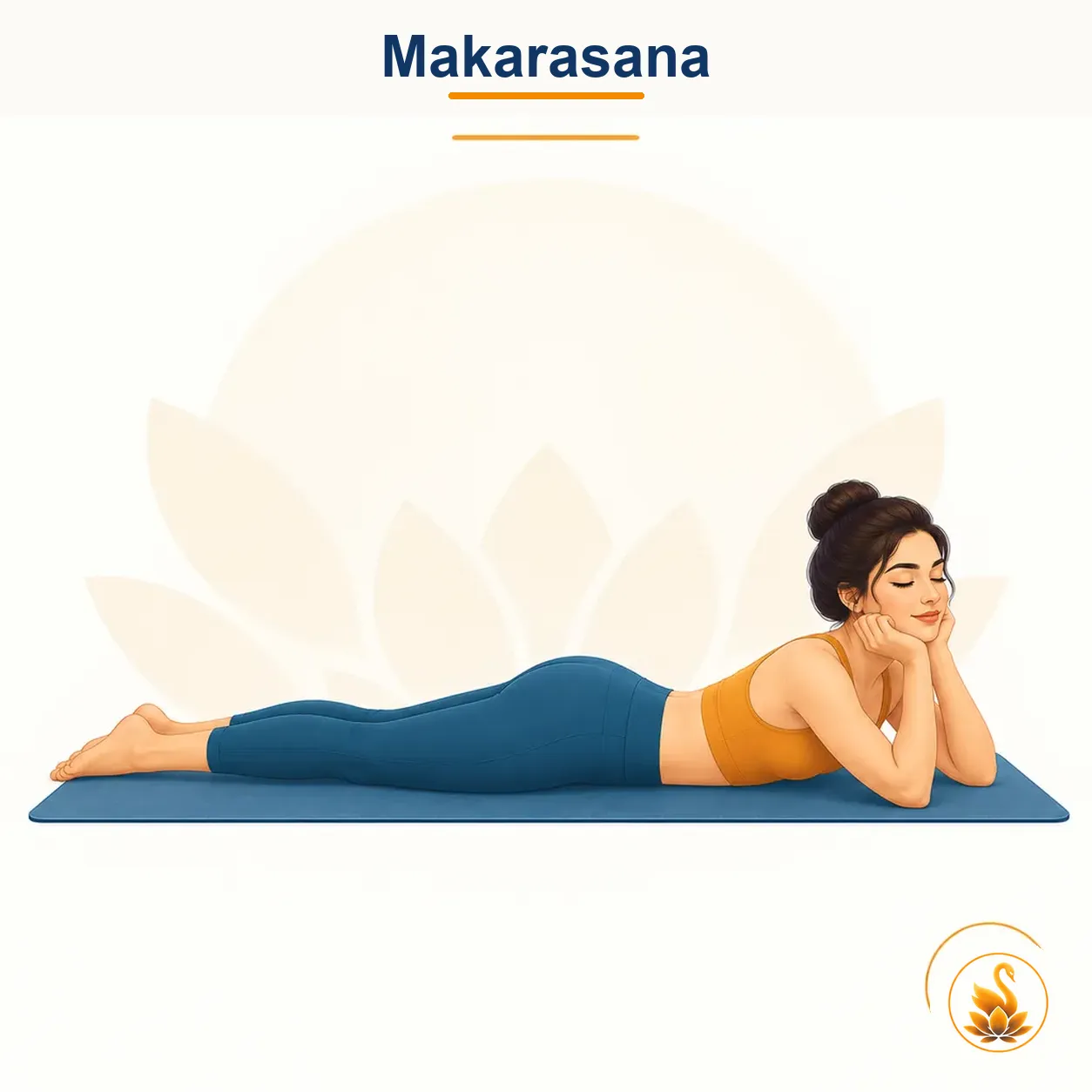
PWA routine source – expert review pending
How to practise safely
Focus
prone, controlled movement, steady breathing
Steps
- Prepare in a stable starting position and keep the breath comfortable.
- Lie prone with feet apart, raise the head/shoulders and rest the chin in the hands with elbows on the floor.
- Relax the body.
- Return slowly to a neutral position and pause before repeating.
Benefits
- Encourages controlled engagement through the back of the body.
- Supports awareness of spinal extension without forcing range.
- Can open the front of the chest and hips when practised comfortably.
Suggested duration
About 40 to 50 sec
Important caution
Keep the movement modest. Stop if back, neck, shoulder or abdominal discomfort increases; modify during pregnancy or after recent surgery.
Source: YogaAX2. Practice wording is source-derived; focus, benefits and caution are cautious editorial guidance pending expert review.
Asana 056
Bhujangasana
Cobra Pose
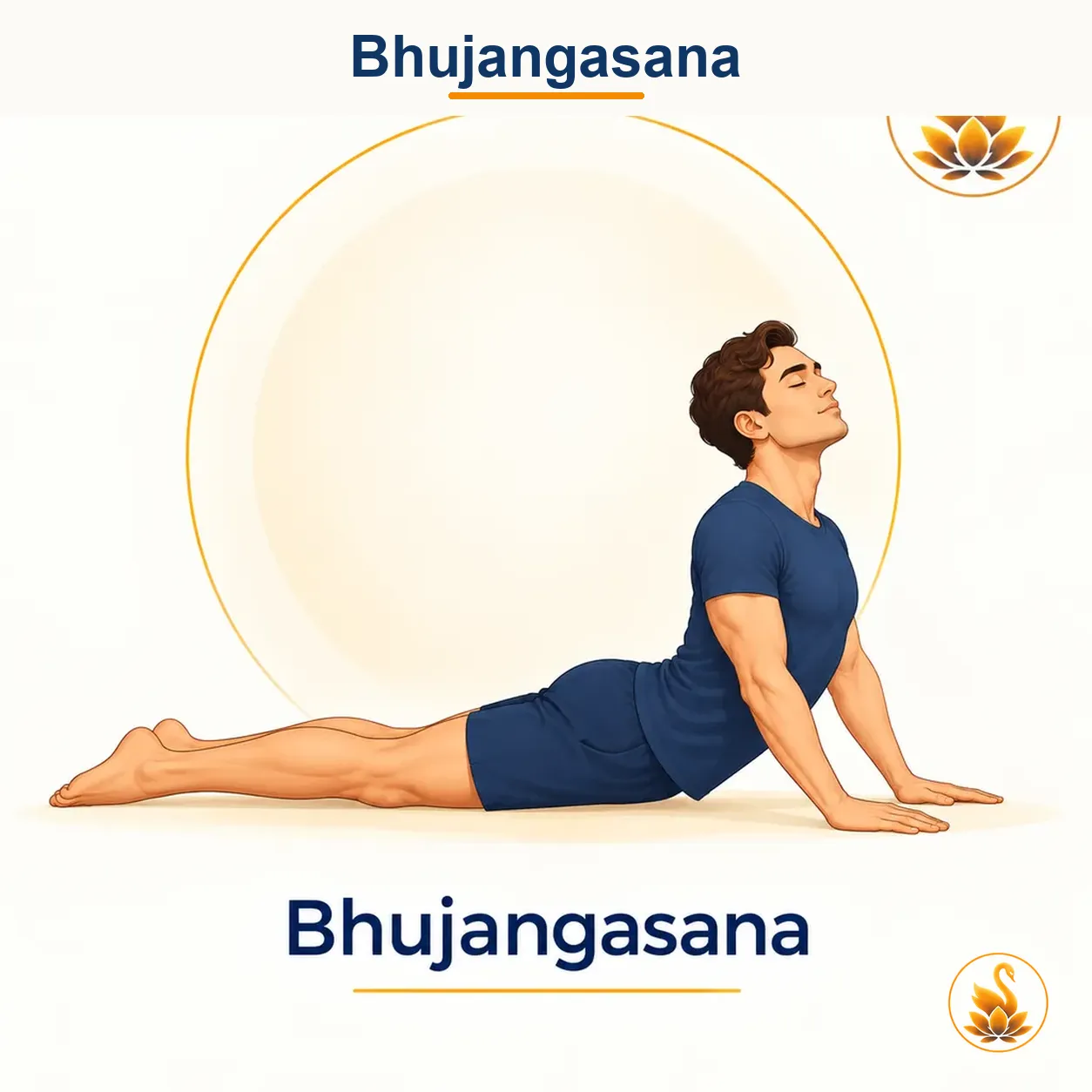
PWA verified guide
How to practise safely
Focus
gentle backbend, chest opening, spinal extension
Steps
- Lie on the abdomen with hands beside the lower ribs.
- Keep legs active and elbows close to the body.
- Lift the chest gently using the back muscles, with only light pressure through the hands.
- Keep the neck long and lower slowly.
Benefits
- Encourages gentle spinal extension.
- Opens the front of the chest and shoulders.
- Strengthens postural back muscles when performed lightly.
Suggested duration
2 to 4 breaths; repeat 2 to 3 times without strain.
Important caution
Do not push into a deep backbend. Modify or avoid with acute back pain, pregnancy, recent abdominal surgery or pain that increases in extension.
Asana 057
Sarala Bhujangasana
Simple Cobra Pose
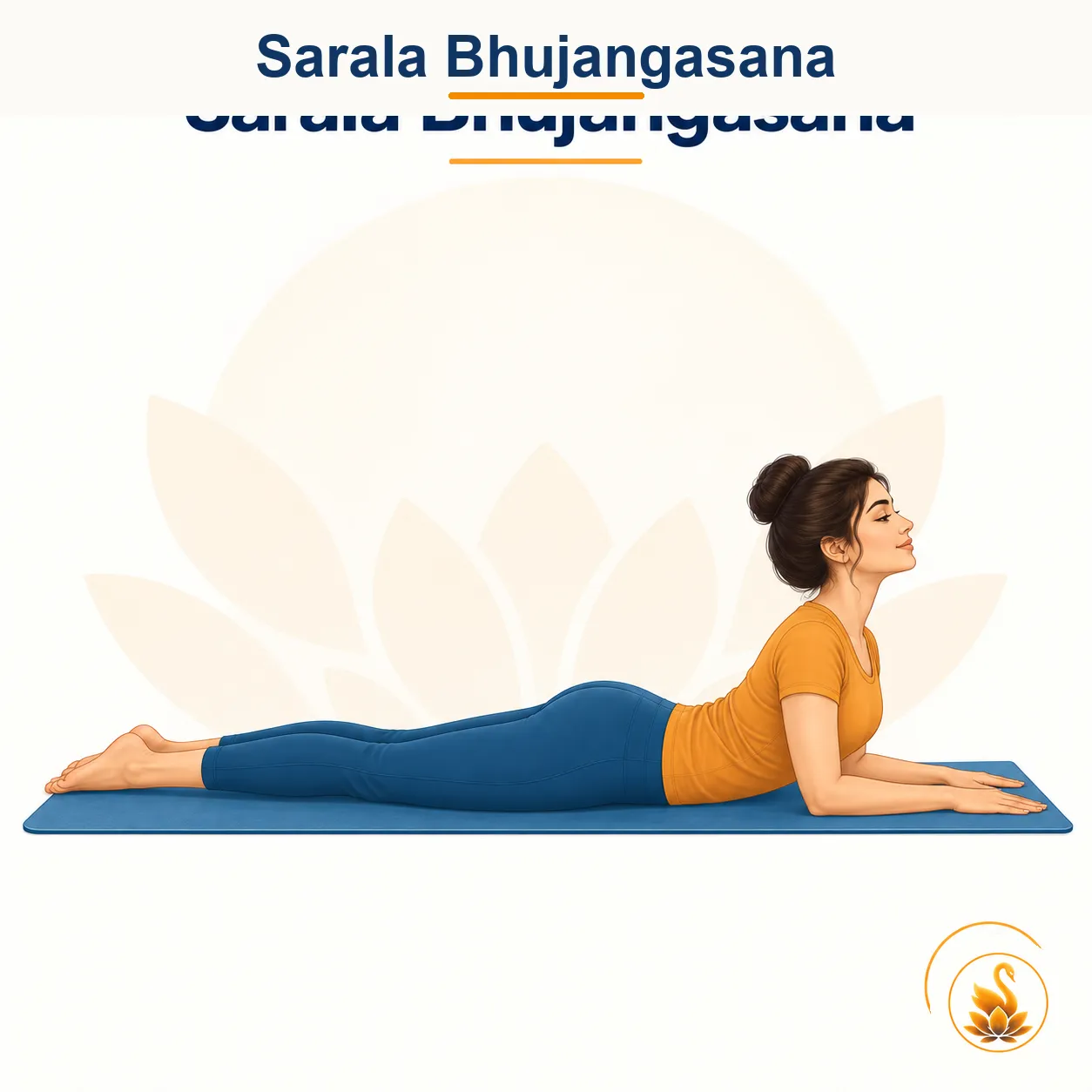
Ananda-X practice guide
How to practise safely
Focus
gentle cobra preparation, upper-back engagement, easy neck
Steps
- Lie on the abdomen with the legs comfortable and place the forearms or hands under the shoulders.
- Lengthen the tailbone back and draw the shoulder blades gently toward the spine.
- Inhale and lift the chest a small distance using the back muscles while keeping the pelvis grounded.
- Exhale and lower slowly, turning the head to rest if needed.
Benefits
- Encourages controlled engagement through the back of the body.
- Supports awareness of spinal extension without forcing range.
- Can open the front of the chest and hips when practised comfortably.
Suggested duration
3 to 5 breaths or 3 slow repetitions.
Important caution
Keep the lift low and pain-free. Avoid pressing hard into the hands or compressing the lower back or neck.
Source status: Ananda-X editorial practice guidance. This entry is complete but is not labelled PWA-verified.
Asana 058
Shalabhasana
Locust Pose
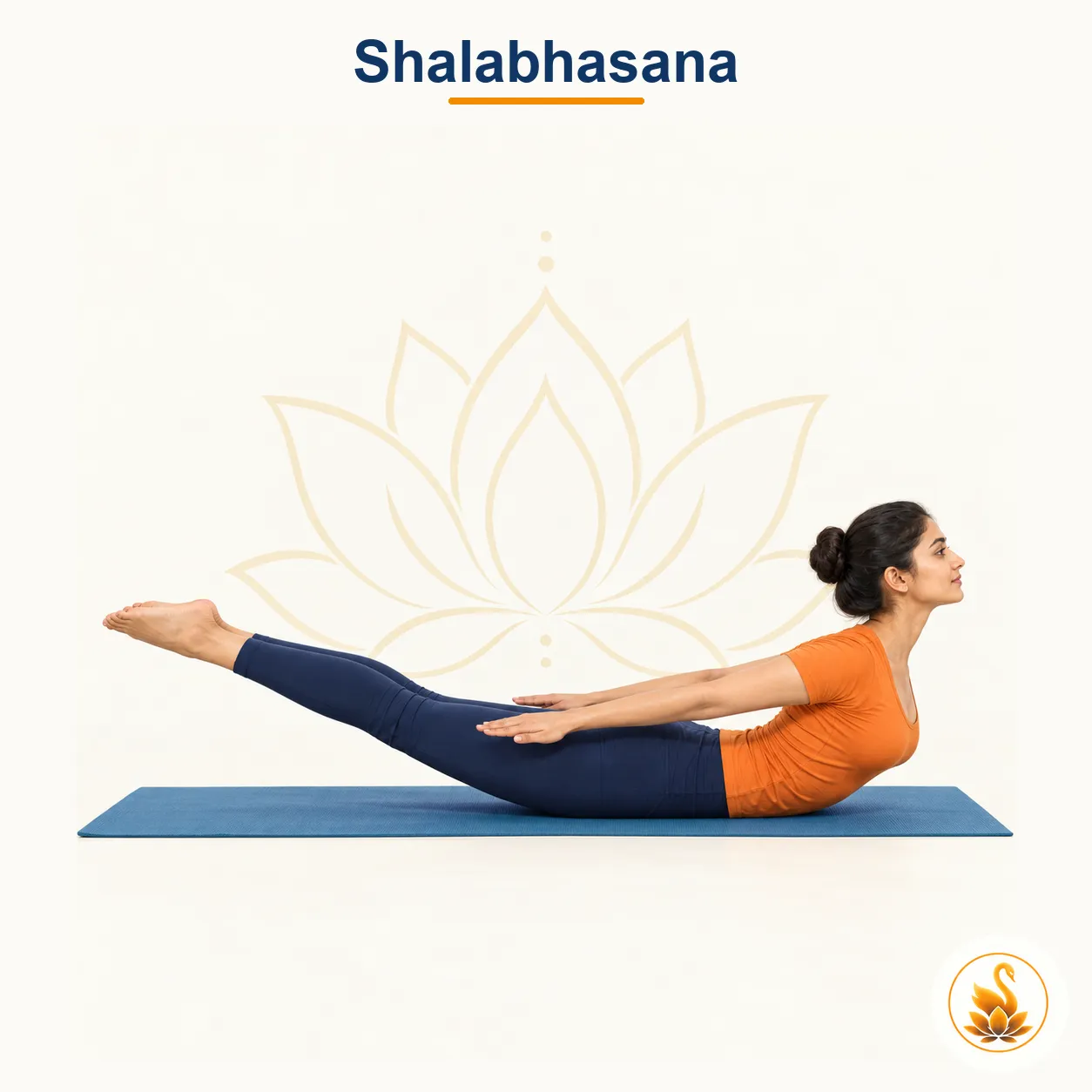
PWA verified guide
How to practise safely
Focus
back-body strength, posture, hip extension
Steps
- Lie on the abdomen with arms alongside the body.
- Lengthen the legs and gently engage the back of the body.
- Lift the chest and/or legs only a small comfortable amount.
- Keep the neck long and lower slowly.
Benefits
- Strengthens the back-body and hip extensors.
- Supports postural endurance.
- Encourages controlled extension without relying heavily on the arms.
Suggested duration
2 to 4 breaths; repeat 2 to 3 gentle rounds.
Important caution
Keep the lift small. Avoid with acute back pain, pregnancy, recent abdominal surgery, hernia or if extension increases symptoms.
Asana 059
Ardha Shalabhasana
Half Locust Pose
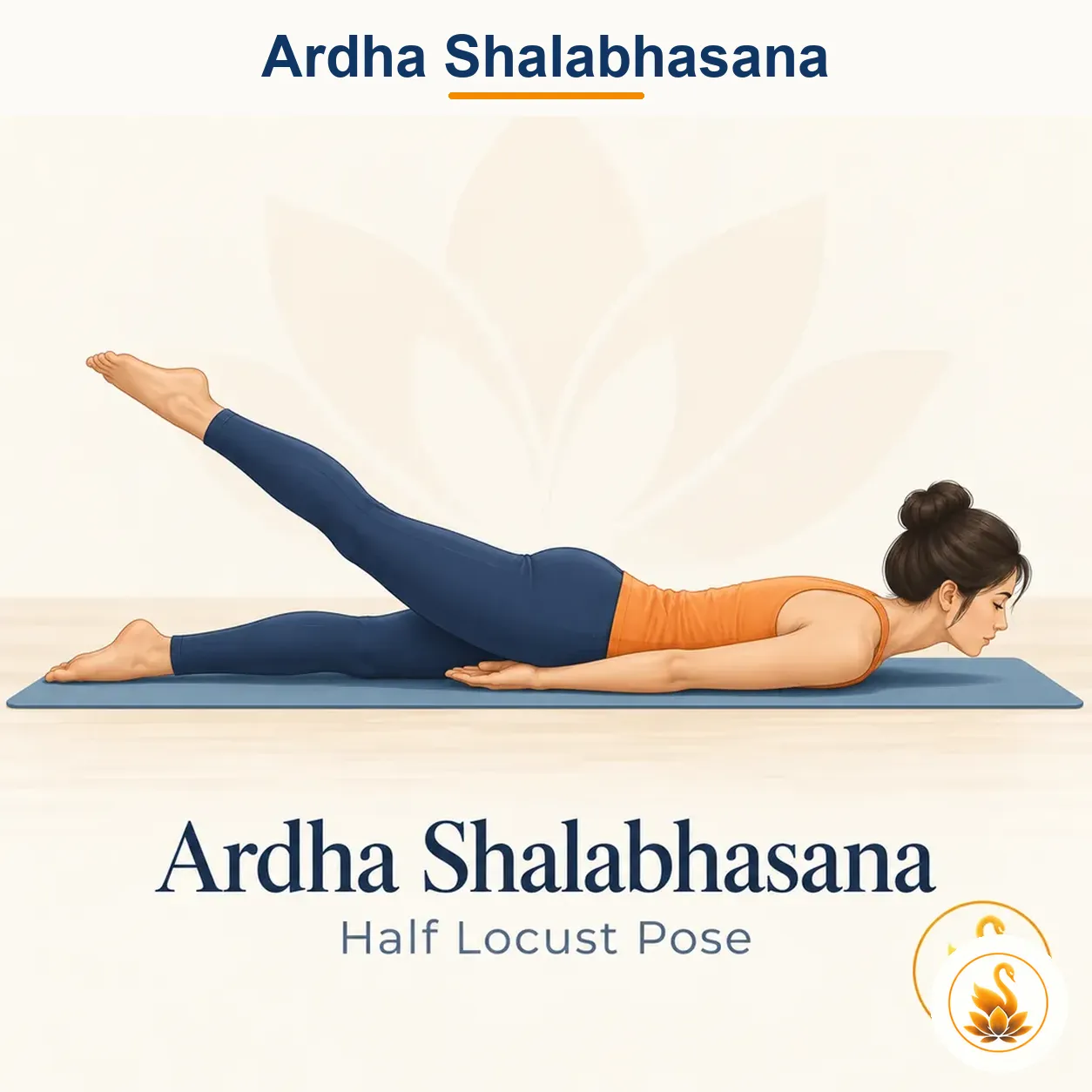
PWA routine source – expert review pending
How to practise safely
Focus
prone backbend, controlled movement, steady breathing
Steps
- Prepare in a stable starting position and keep the breath comfortable.
- Lie prone with arms alongside.
- Raise one leg from the ground, hold briefly, lower and repeat with the other leg.
- Return slowly to a neutral position and pause before repeating.
Benefits
- Encourages controlled engagement through the back of the body.
- Supports awareness of spinal extension without forcing range.
- Can open the front of the chest and hips when practised comfortably.
Suggested duration
About 20 to 30 sec each side; 2 rounds
Important caution
Keep the movement modest. Stop if back, neck, shoulder or abdominal discomfort increases; modify during pregnancy or after recent surgery.
Source: YogaAX2. Practice wording is source-derived; focus, benefits and caution are cautious editorial guidance pending expert review.
Asana 060
Supta Shalabhasana
Two-Leg Raised Locust Variation
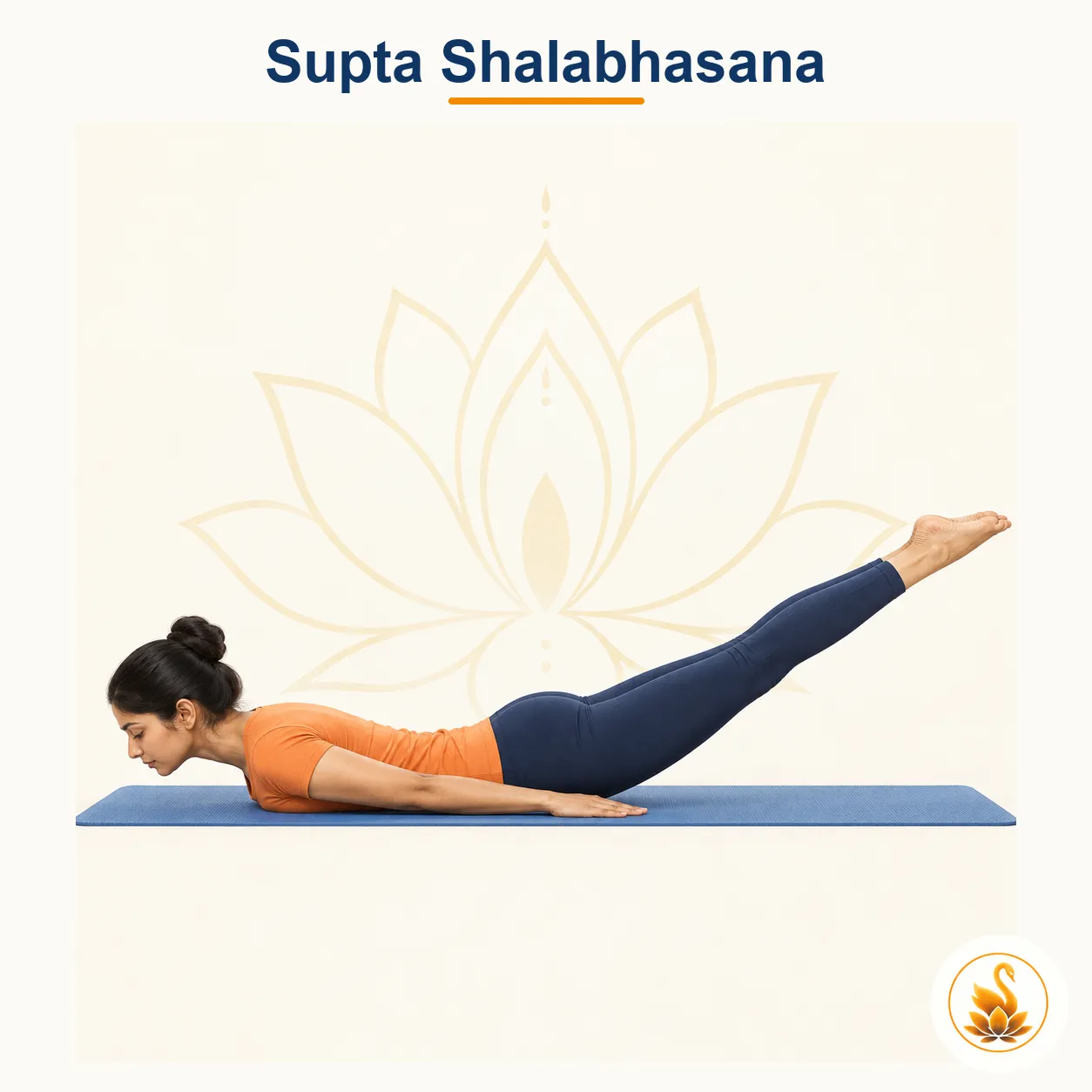
PWA routine source – expert review pending
How to practise safely
Focus
prone backbend, controlled movement, steady breathing
Steps
- Prepare in a stable starting position and keep the breath comfortable.
- From prone, join the legs and raise both legs together as shown, hold briefly, then lower and relax.
- Return slowly to a neutral position and pause before repeating.
Benefits
- Encourages controlled engagement through the back of the body.
- Supports awareness of spinal extension without forcing range.
- Can open the front of the chest and hips when practised comfortably.
Suggested duration
About 20 to 30 sec; 2 rounds
Important caution
Keep the movement modest. Stop if back, neck, shoulder or abdominal discomfort increases; modify during pregnancy or after recent surgery.
Source: YogaAX2. Practice wording is source-derived; focus, benefits and caution are cautious editorial guidance pending expert review.
Asana 061
Dhanurasana
Bow Pose
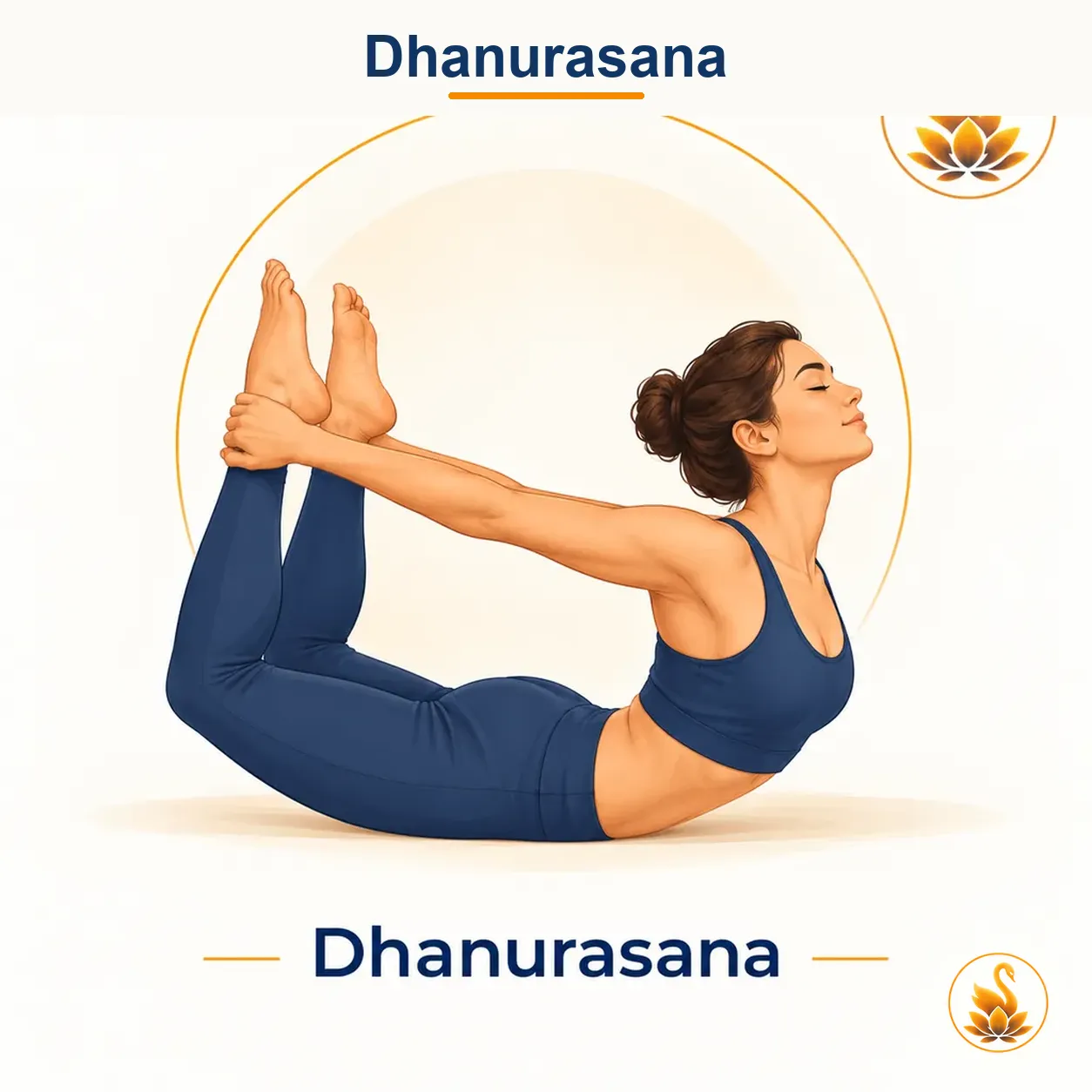
PWA verified guide
How to practise safely
Focus
back-body strength, front-body opening, mobility
Steps
- Lie on the abdomen and bend the knees.
- Reach back and hold the ankles without twisting the knees.
- On an inhale, gently lift the chest and thighs while keeping the breath smooth.
- Release slowly and rest.
Benefits
- Combines back-body engagement with front-body opening.
- Challenges controlled spinal extension and shoulder mobility.
- Builds whole-body coordination.
Suggested duration
1 to 3 gentle holds of 2 to 4 breaths, only if already comfortable with the pose.
Important caution
This is a stronger backbend. Avoid or seek qualified guidance with back/neck injury, abdominal surgery, pregnancy, uncontrolled blood pressure, hernia or significant joint pain.
Asana 062
Ardha Dhanurasana
Half Bow Pose
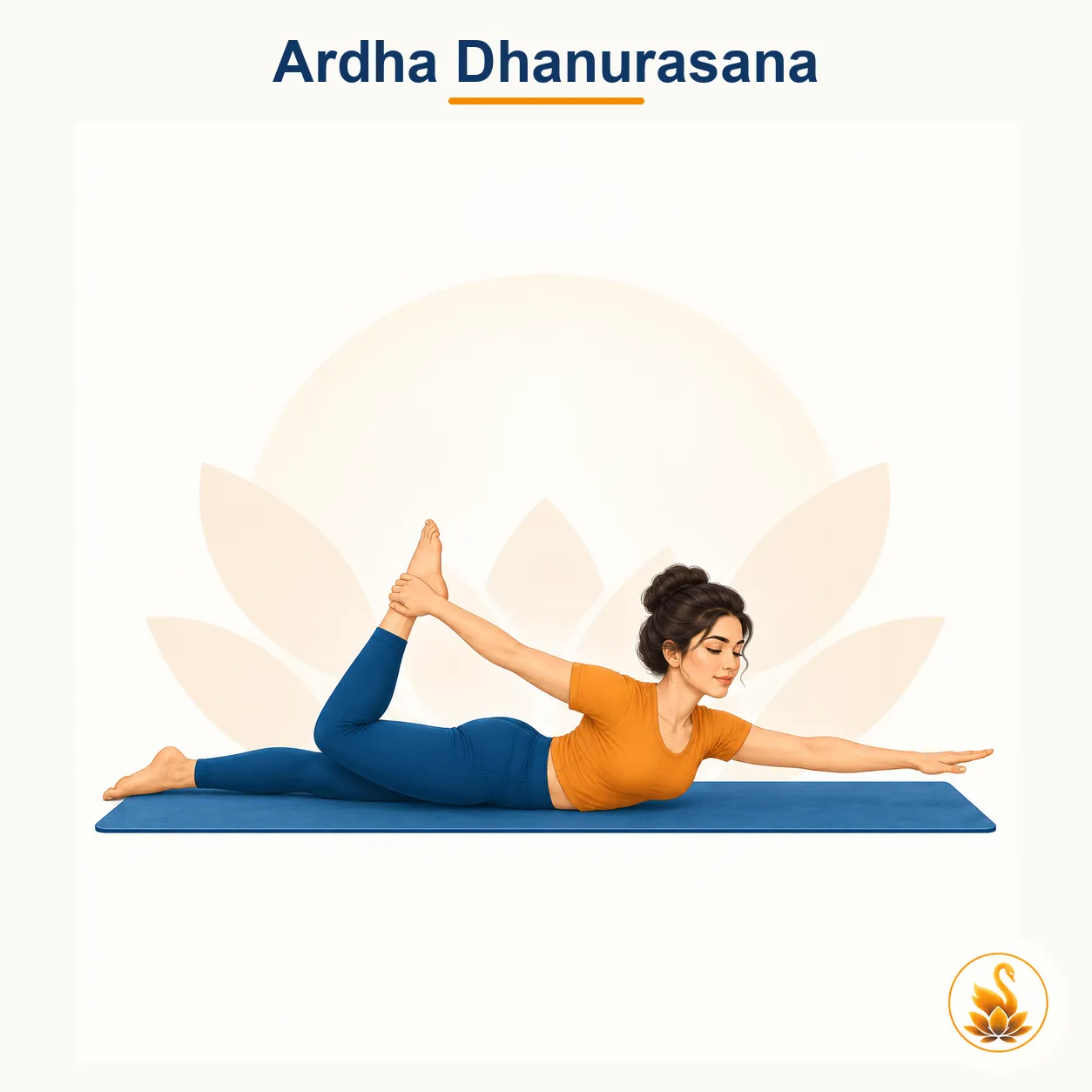
Ananda-X practice guide
How to practise safely
Focus
one-sided prone backbend, thigh engagement, steady pelvis
Steps
- Lie on the abdomen, bend the right knee and hold the ankle with the right hand or a strap.
- Keep both hips grounded and lengthen the tailbone back.
- Inhale and press the foot gently into the hand to lift the chest and thigh only as comfortable.
- Exhale, release slowly and repeat on the other side.
Benefits
- Encourages controlled engagement through the back of the body.
- Supports awareness of spinal extension without forcing range.
- Can open the front of the chest and hips when practised comfortably.
Suggested duration
2 to 4 breaths each side.
Important caution
Do not pull the foot toward the buttock or twist the knee. Avoid with acute back, knee, shoulder or abdominal pain.
Source status: Ananda-X editorial practice guidance. This entry is complete but is not labelled PWA-verified.
Asana 063
Ustrasana
Camel Pose
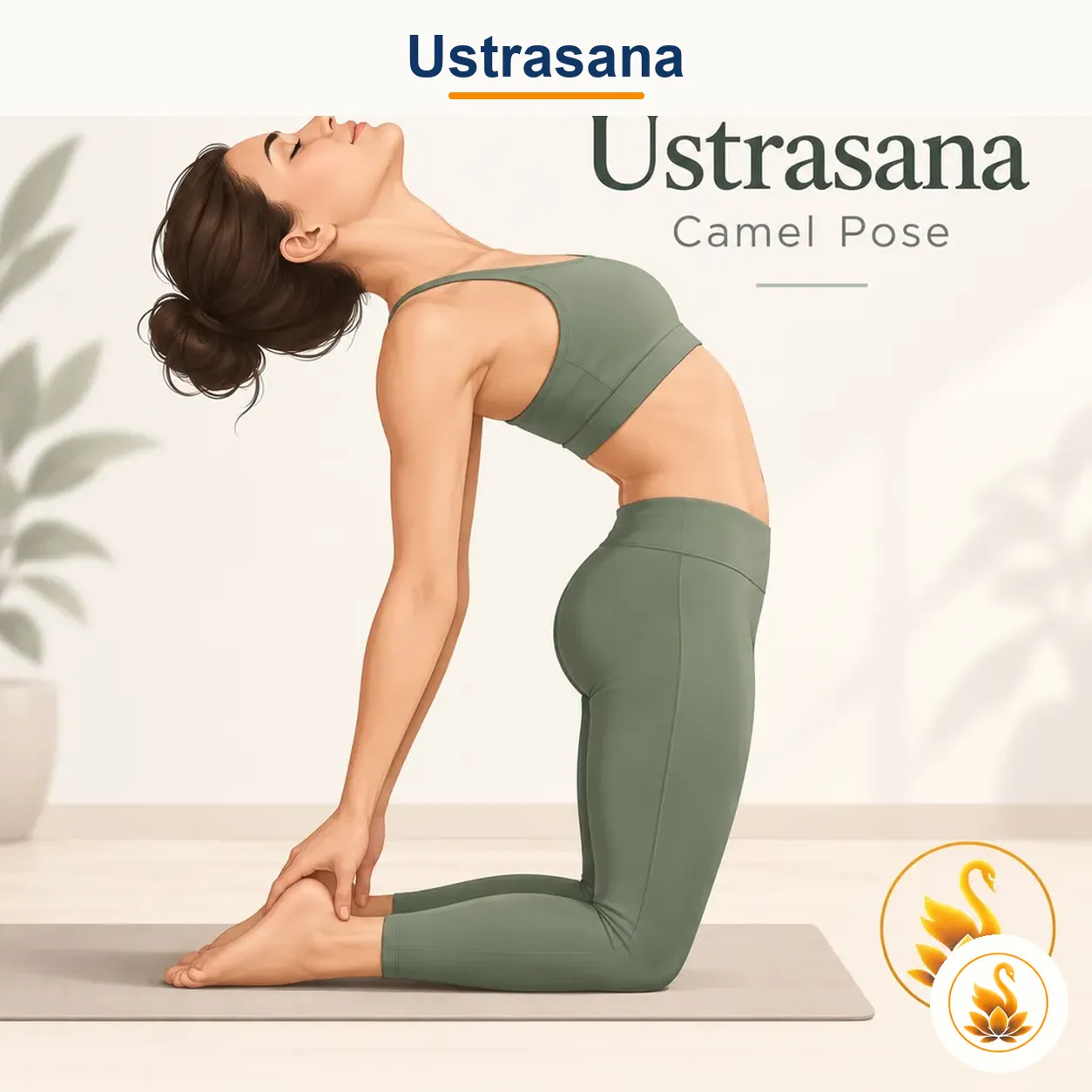
PWA verified guide
How to practise safely
Focus
front-body opening, hip extension, backbend
Steps
- Kneel with thighs upright and place hands on the pelvis or heels as comfortable.
- Lengthen upward through the chest before leaning back.
- Keep hips over the knees and the neck comfortable.
- Return upright slowly and rest.
Benefits
- Opens the front of the hips and chest.
- Strengthens postural back-body engagement.
- Challenges controlled extension and shoulder mobility.
Suggested duration
2 to 3 breaths; 1 to 3 gentle rounds.
Important caution
Keep the backbend modest. Modify or avoid with acute back/neck pain, dizziness, knee pain or if extension worsens symptoms.
Asana 064
Ardha Ustrasana
Half Camel Pose
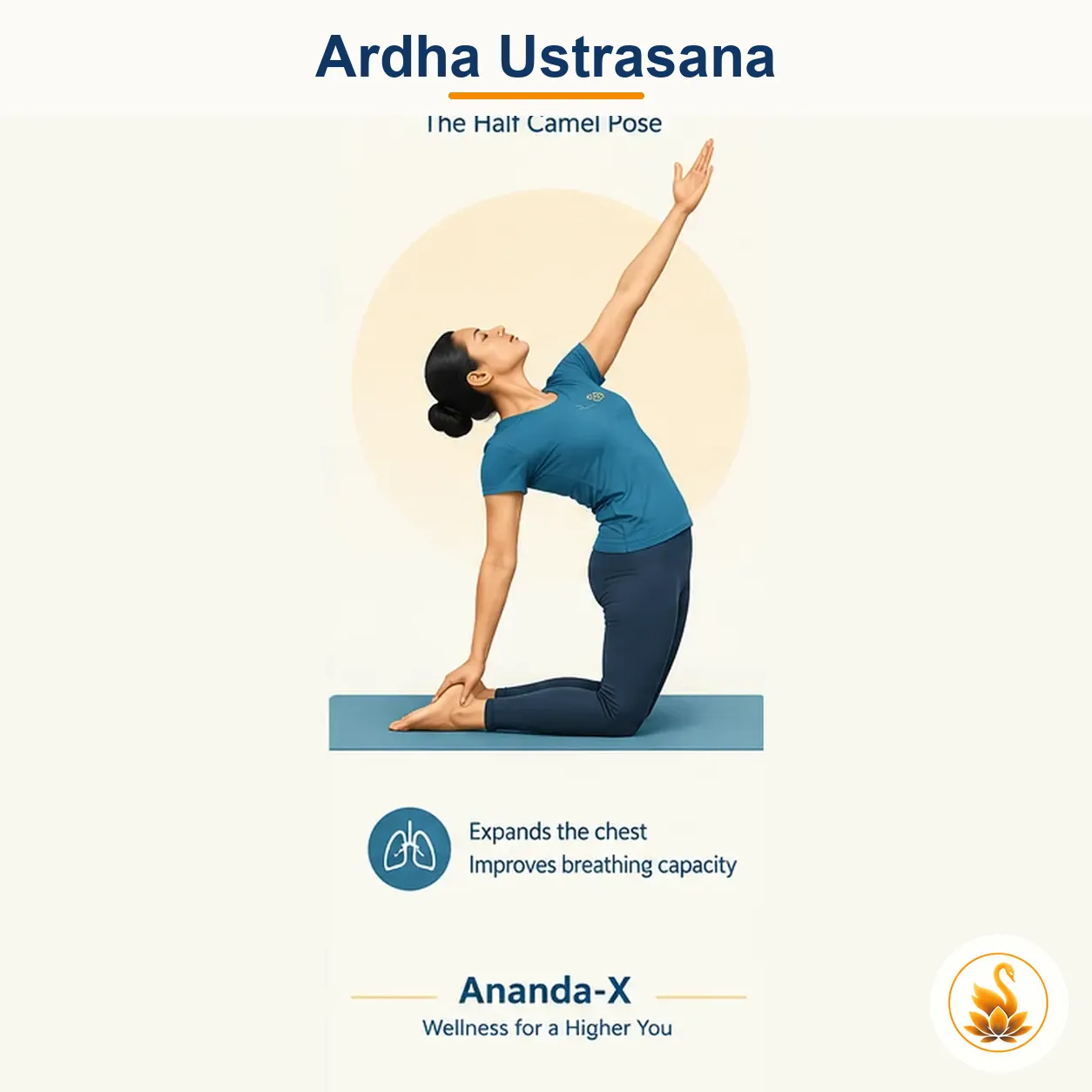
PWA routine source – expert review pending
How to practise safely
Focus
kneeling backbend, controlled movement, steady breathing
Steps
- Prepare in a stable starting position and keep the breath comfortable.
- From kneeling, support one side with the hand/foot position shown in the source and bend backward gently; return and repeat on the other side.
Benefits
- Encourages controlled engagement through the back of the body.
- Supports awareness of spinal extension without forcing range.
- Can open the front of the chest and hips when practised comfortably.
Suggested duration
About 30 sec each side; source says 4 repetitions
Important caution
Keep the movement modest. Stop if back, neck, shoulder or abdominal discomfort increases; modify during pregnancy or after recent surgery.
Source: YogaAX1. Practice wording is source-derived; focus, benefits and caution are cautious editorial guidance pending expert review.
Asana 065
Marjariasana
Cat Pose
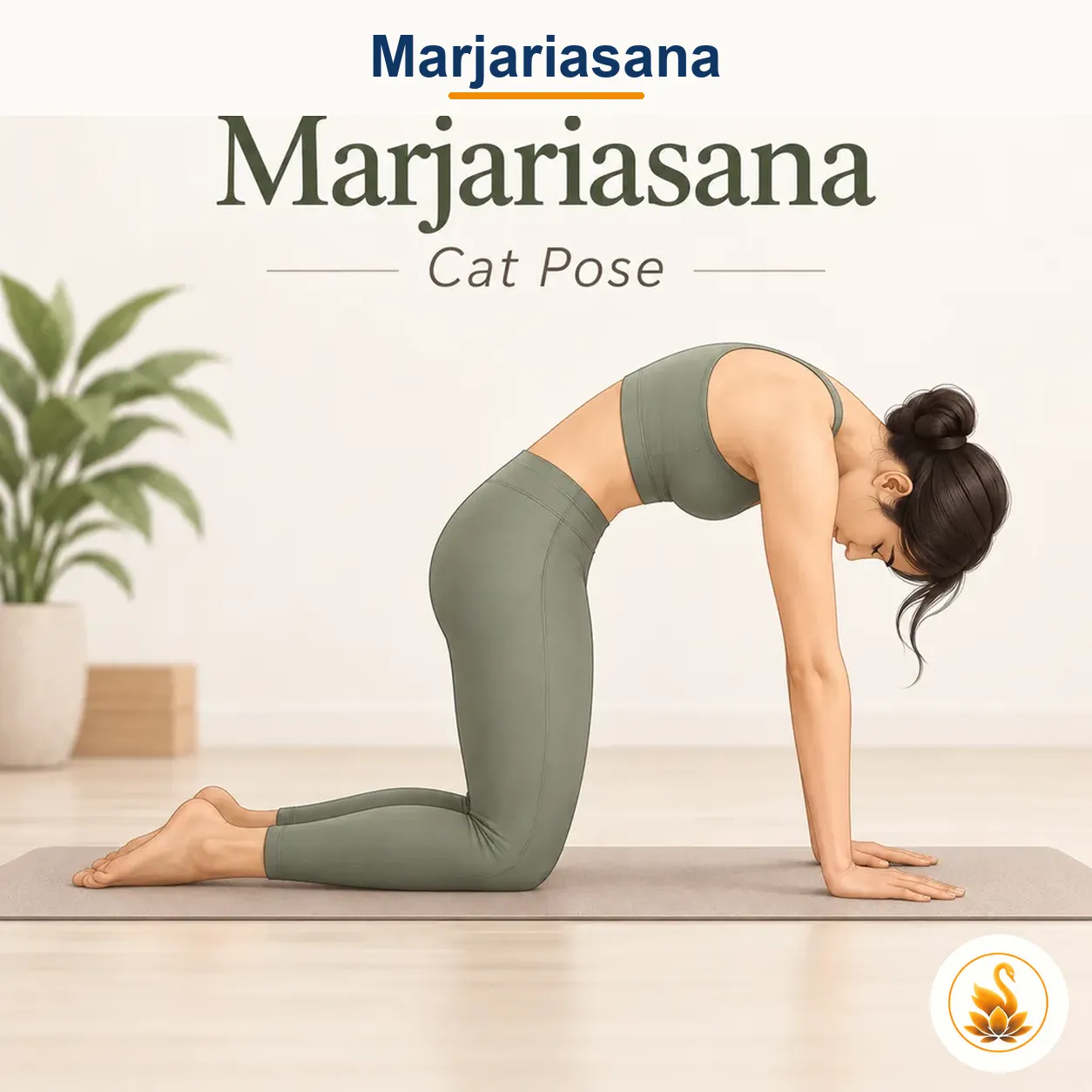
PWA verified guide
How to practise safely
Focus
spinal mobility, breath coordination, back awareness
Steps
- Come to hands and knees with hands under shoulders and knees under hips.
- Exhale and gently round the spine, allowing the head to follow naturally.
- Return toward neutral on the inhale; do not force the opposite direction.
- Move slowly through a comfortable range.
Benefits
- Encourages gentle segmental spinal movement.
- Pairs movement with breath awareness.
- Useful for exploring comfortable back mobility.
Suggested duration
5 to 8 slow repetitions coordinated with breathing.
Important caution
Keep wrists, knees and spine comfortable. Use padding/support and reduce the range with acute back, wrist or knee pain.
Asana 066
Bitilasana
Cow Pose
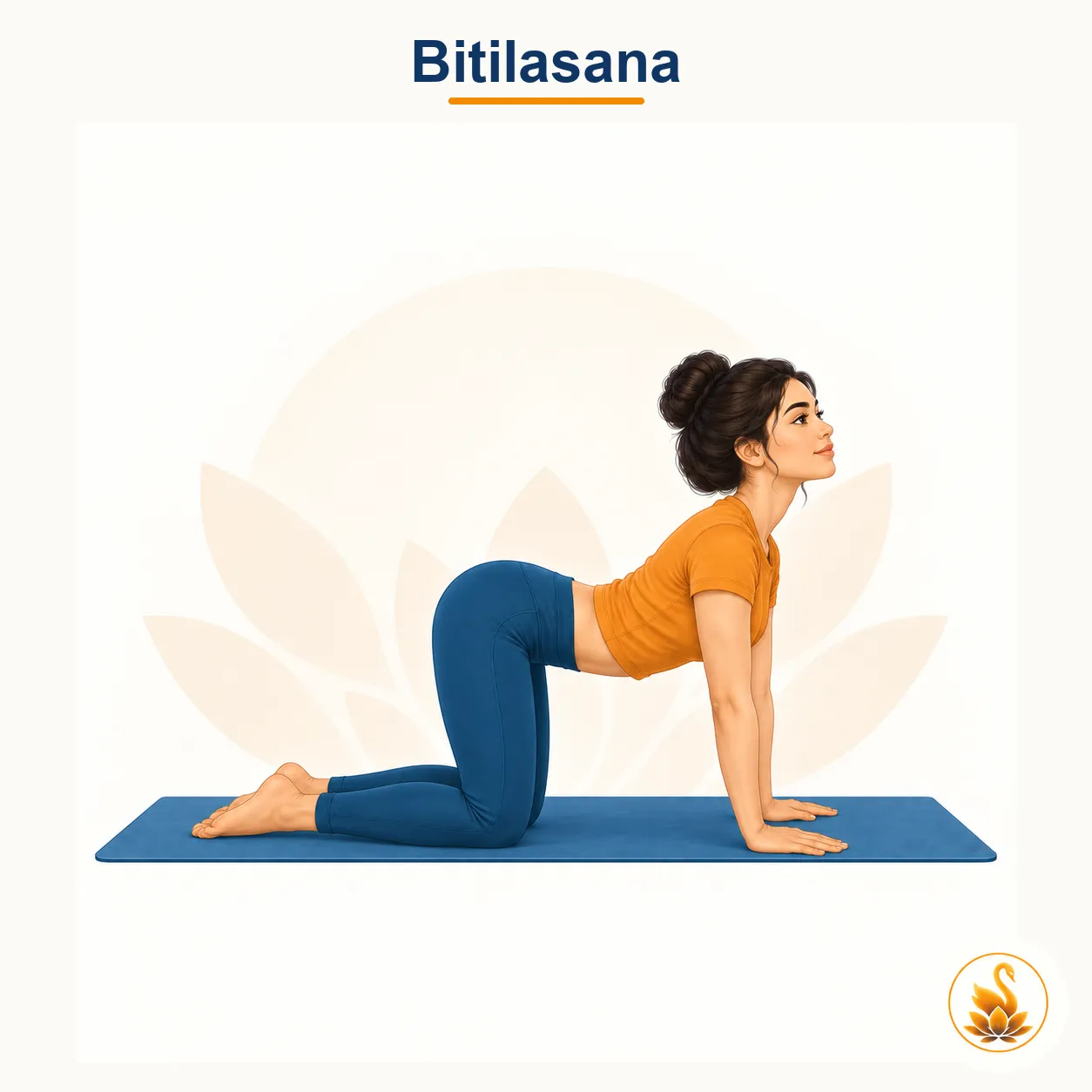
Ananda-X practice guide
How to practise safely
Focus
gentle spinal extension, shoulder stability, breath-led movement
Steps
- Begin on hands and knees with wrists under shoulders and knees under hips.
- Inhale, tip the sitting bones upward and let the chest move forward between the arms.
- Keep the abdomen gently supported and look forward without throwing the head back.
- Exhale back to a neutral spine or flow into Cat Pose.
Benefits
- Develops standing awareness and controlled movement.
- Supports balance, coordination and postural organization.
- Encourages steady breathing while the body remains attentive.
Suggested duration
5 to 8 slow breath-led repetitions.
Important caution
Keep the neck in a comfortable line and reduce wrist load with fists or forearm support if needed.
Source status: Ananda-X editorial practice guidance. This entry is complete but is not labelled PWA-verified.
Asana 067
Vyaghrasana
Tiger Pose
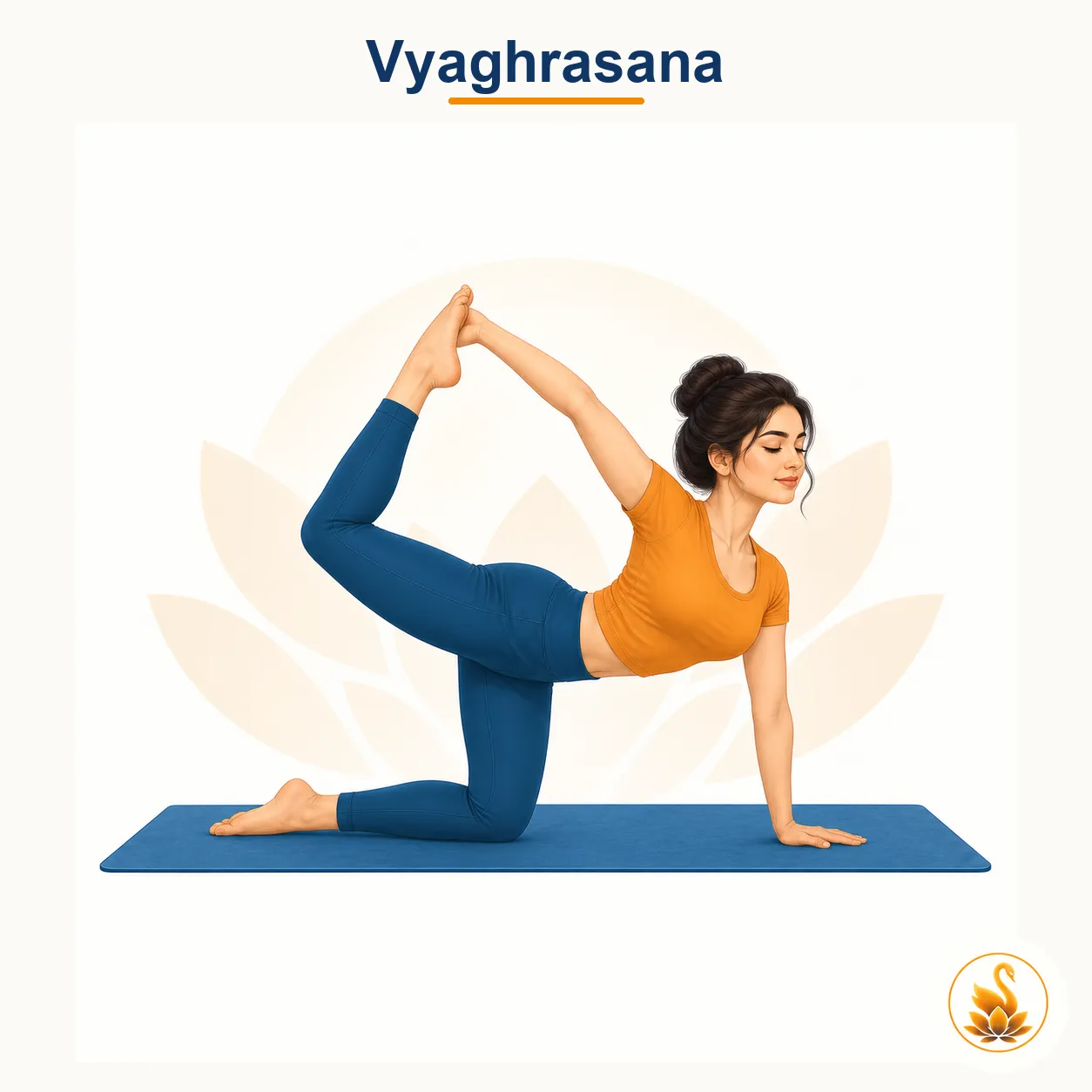
Ananda-X practice guide
How to practise safely
Focus
quadruped balance, hip extension, coordinated trunk control
Steps
- Begin on hands and knees with a steady neutral spine.
- Extend the right leg back, keeping the pelvis level; lift it only if the lower back stays comfortable.
- Optionally bend the knee or reach the opposite arm forward while maintaining balance.
- Return to all fours and repeat on the other side.
Benefits
- Develops standing awareness and controlled movement.
- Supports balance, coordination and postural organization.
- Encourages steady breathing while the body remains attentive.
Suggested duration
3 to 5 breaths each side or 4 slow alternating rounds.
Important caution
Avoid arching or twisting the lower back. Keep both hands down and the toes on the floor if balance, wrists or back are sensitive.
Source status: Ananda-X editorial practice guidance. This entry is complete but is not labelled PWA-verified.
Asana 068
Adho Mukha Svanasana
Downward-Facing Dog
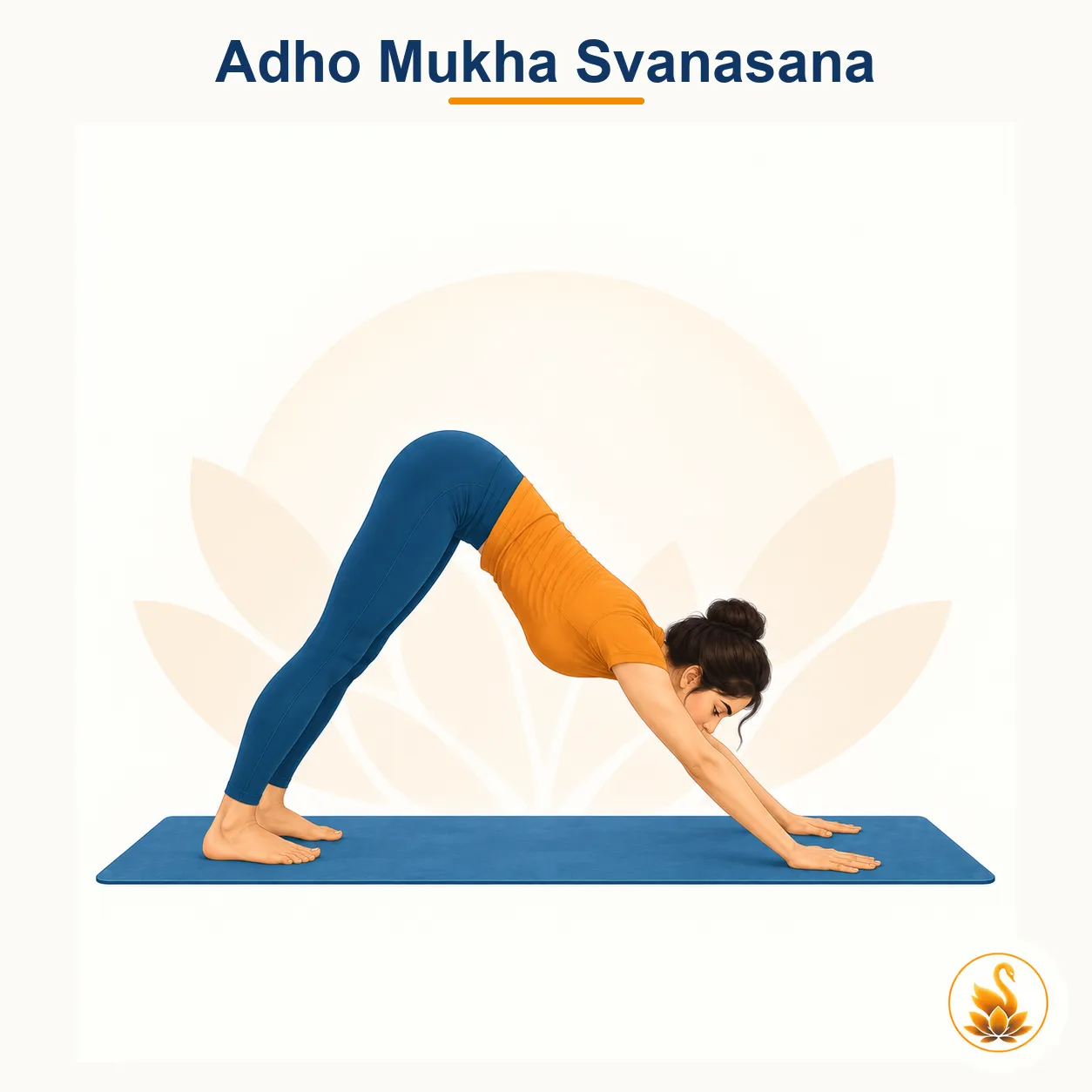
Ananda-X practice guide
How to practise safely
Focus
whole-body length, shoulder stability, even breathing
Steps
- Start on hands and knees with the hands spread and toes tucked.
- Lift the knees and move the pelvis up and back, keeping the knees bent initially.
- Press evenly through the hands, lengthen the spine and let the heels descend only as comfortable.
- Lower the knees to return to all fours.
Benefits
- Develops whole-body coordination and focused attention.
- Builds controlled upper-body and trunk engagement.
- Challenges balance and body awareness when appropriately supervised.
Suggested duration
3 to 6 breaths.
Important caution
Keep the knees bent for hamstring or back tightness. Modify or avoid with painful wrists, uncontrolled blood pressure, glaucoma or dizziness.
Source status: Ananda-X editorial practice guidance. This entry is complete but is not labelled PWA-verified.
Asana 069
Urdhva Mukha Svanasana
Upward-Facing Dog
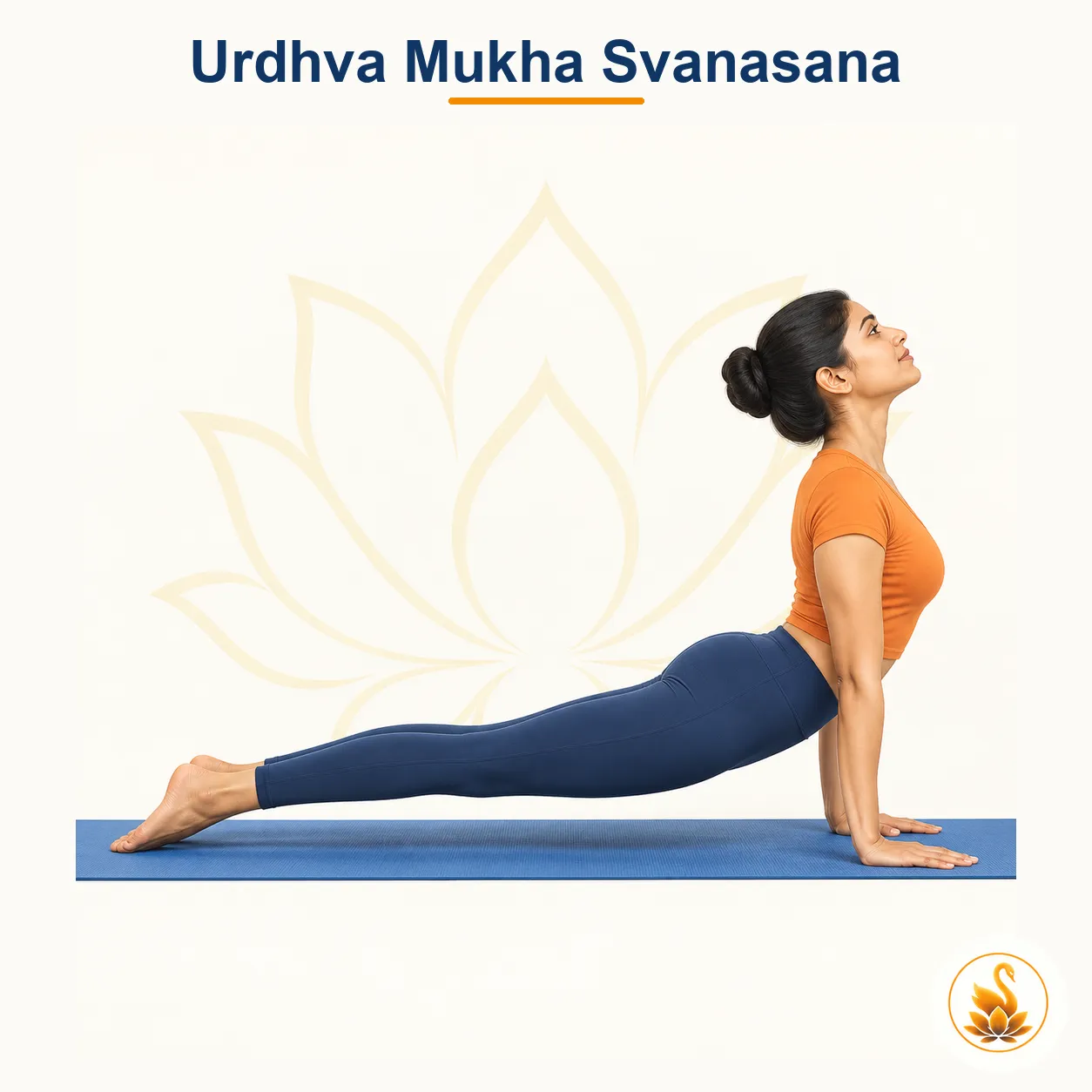
Ananda-X practice guide
How to practise safely
Focus
arm-supported backbend, chest opening, active legs
Steps
- Lie face down with the hands beside the lower ribs and the tops of the feet grounded.
- Press through the hands and feet, straighten the arms only as far as the shoulders stay away from the ears.
- Lift the thighs and chest while lengthening forward through the crown of the head.
- Bend the elbows and lower with control or return through hands and knees.
Benefits
- Encourages controlled engagement through the back of the body.
- Supports awareness of spinal extension without forcing range.
- Can open the front of the chest and hips when practised comfortably.
Suggested duration
2 to 4 breaths or 2 slow repetitions.
Important caution
Intermediate backbend: avoid hanging in the lower back. Substitute a low cobra for wrist, shoulder or back sensitivity.
Source status: Ananda-X editorial practice guidance. This entry is complete but is not labelled PWA-verified.
Asana 070
Eka Pada Rajakapotasana
One-Legged King Pigeon
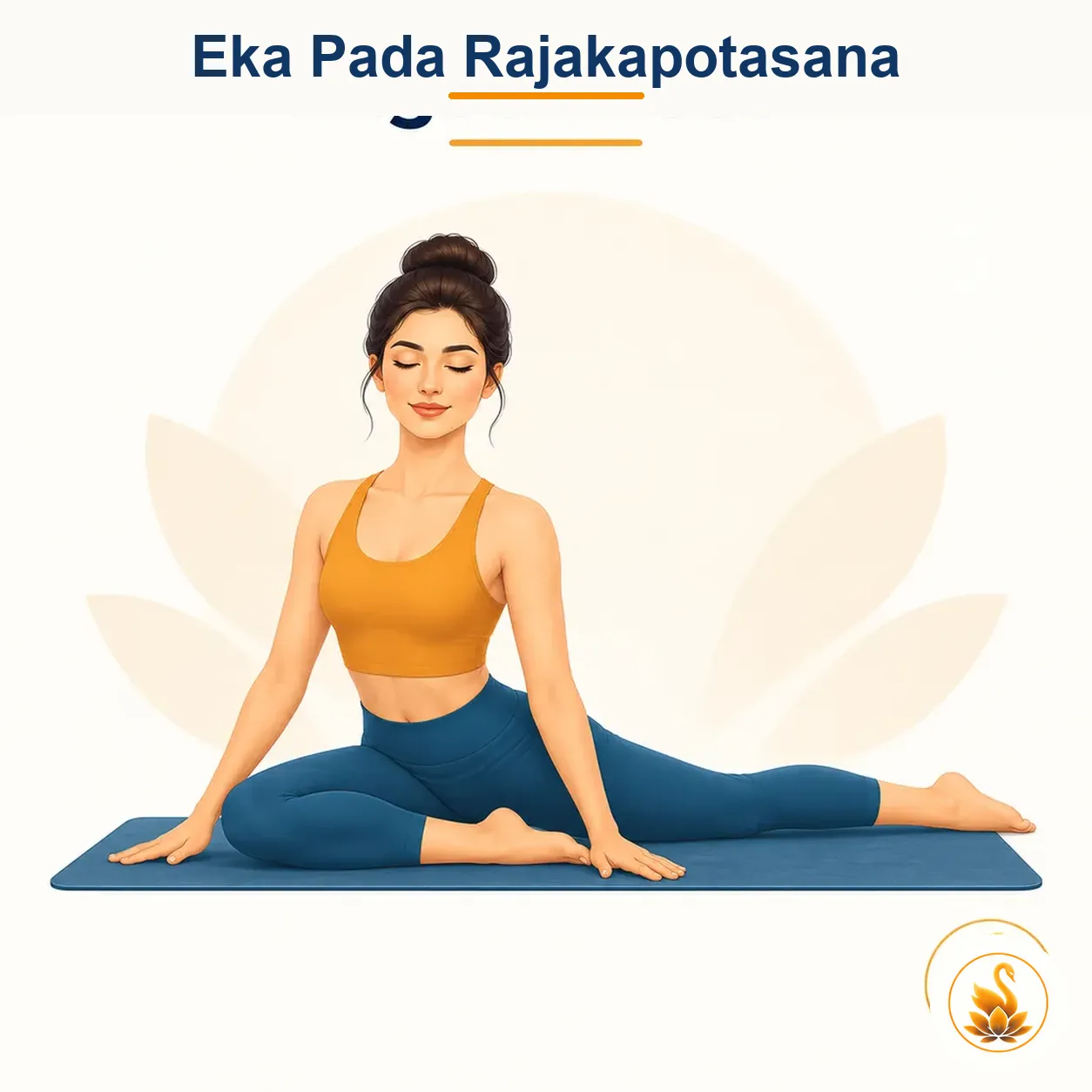
PWA routine source – expert review pending
How to practise safely
Focus
hip opener, controlled movement, steady breathing
Steps
- Prepare in a stable starting position and keep the breath comfortable.
- From the downward-facing transition shown in the source, step one leg forward between the hands and settle into the pigeon-position variation.
- Repeat the other side.
- Return slowly to a neutral position and pause before repeating.
Benefits
- Supports upright postural awareness.
- Encourages comfortable mobility through the hips and legs.
- Provides a steady base for slow, attentive breathing.
Suggested duration
About 30 sec each side
Important caution
Do not force the knees, hips or ankles. Add support or choose an alternative position if there is joint pain, numbness or recent injury.
Source: YogaAX1. Practice wording is source-derived; focus, benefits and caution are cautious editorial guidance pending expert review.
Asana 071
Rajakapotasana
King Pigeon Pose
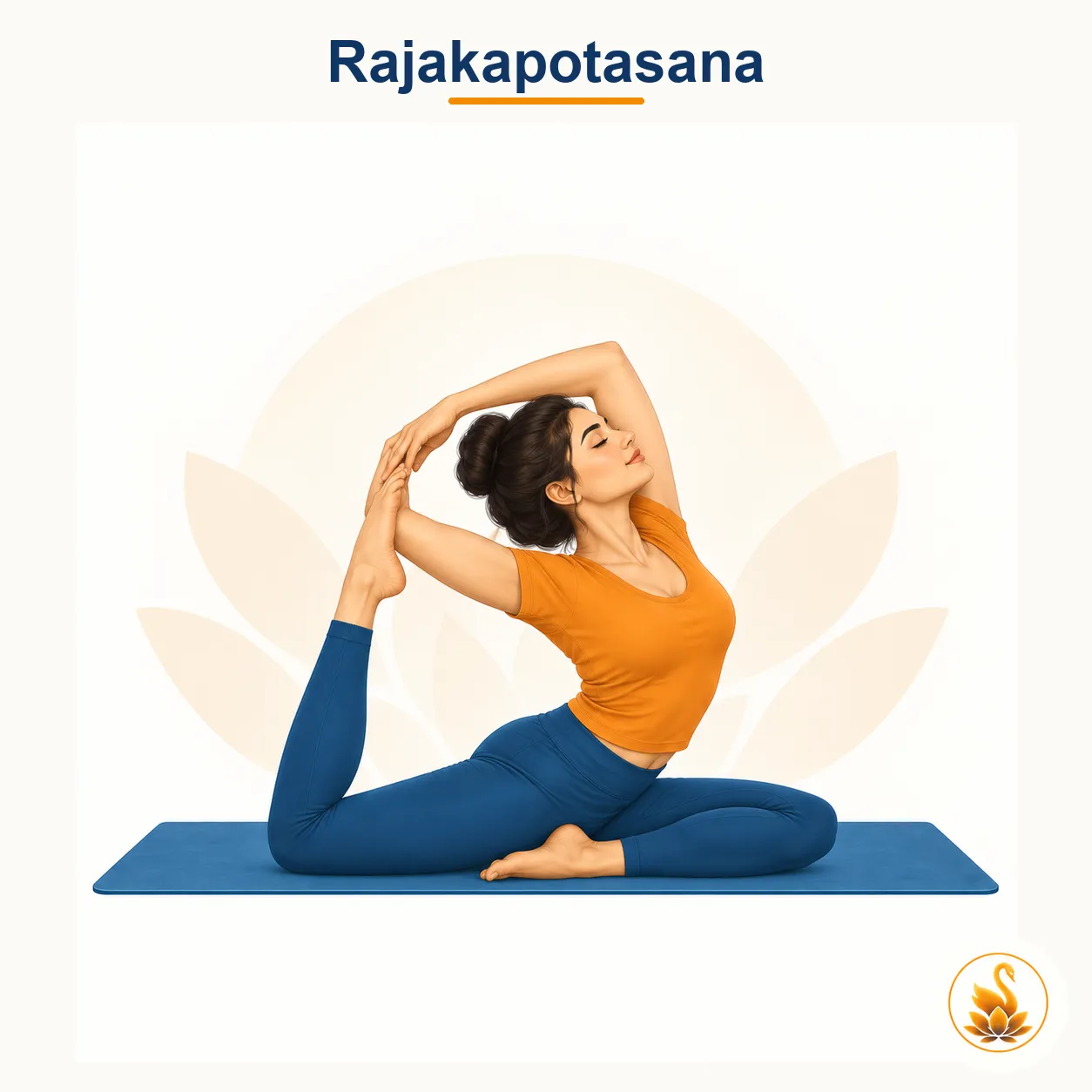
Ananda-X practice guide
How to practise safely
Focus
deep backbend preparation, hip extension, supported chest
Steps
- Begin in a well-supported pigeon or low-lunge preparation with the pelvis level on props.
- Keep the front knee comfortable and lengthen the back leg behind.
- Lift the chest and bend the back knee only under qualified supervision, using a strap rather than forcing the foot toward the head.
- Release the foot first, support the hands and exit carefully before changing sides.
Benefits
- Encourages controlled engagement through the back of the body.
- Supports awareness of spinal extension without forcing range.
- Can open the front of the chest and hips when practised comfortably.
Suggested duration
2 to 3 breaths each side under qualified supervision.
Important caution
Advanced posture: requires substantial hip, spine and shoulder preparation. Avoid with knee, hip, back or shoulder injury and never force the back foot.
Source status: Ananda-X editorial practice guidance. This entry is complete but is not labelled PWA-verified.
Asana 072
Kapotasana
Pigeon Pose
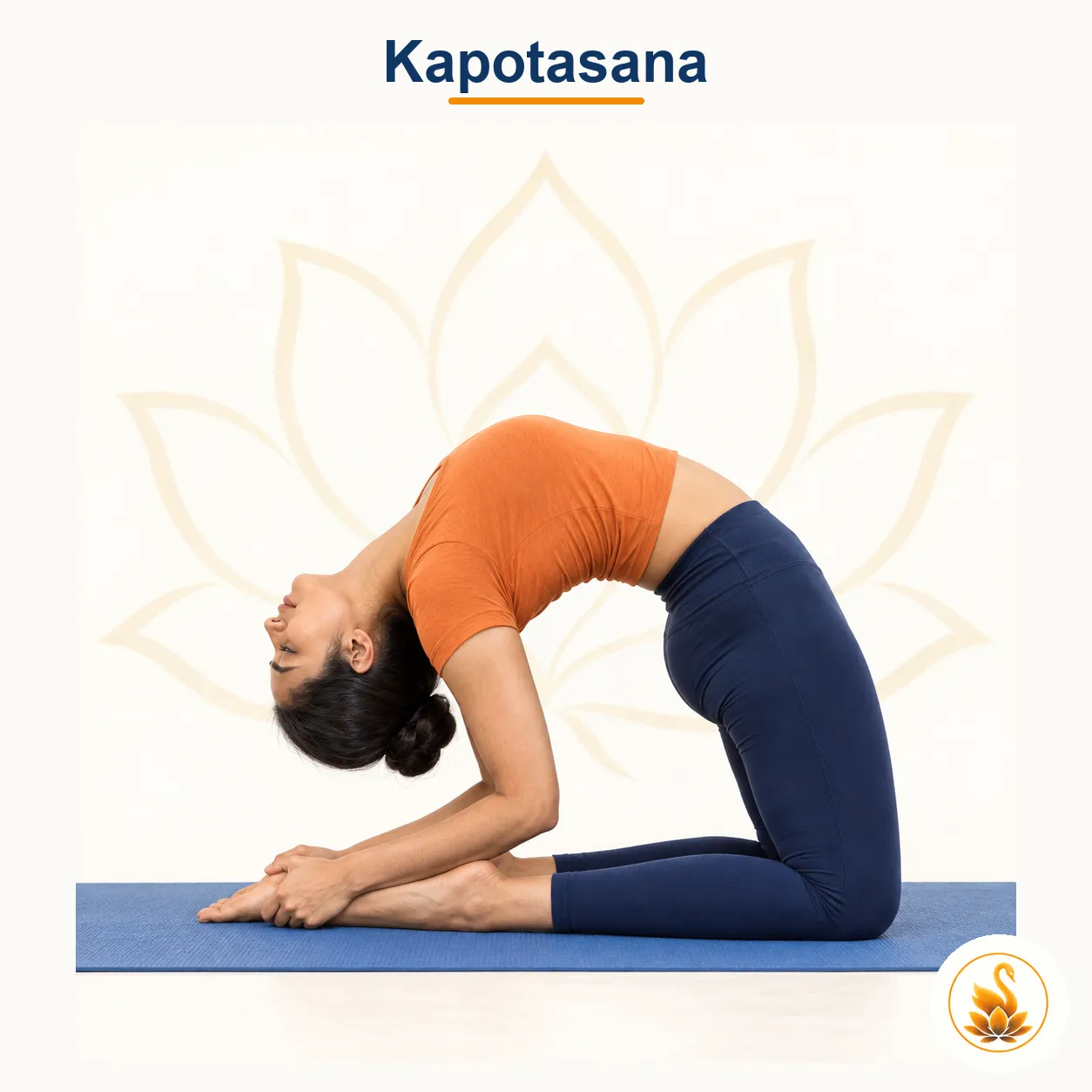
Ananda-X practice guide
How to practise safely
Focus
advanced kneeling pigeon backbend, thigh control, shoulder opening
Steps
- Kneel with the knees hip-width apart and establish a tall, steady trunk.
- Lift the breastbone and begin a controlled backward arc while the thighs remain as vertical as possible.
- With qualified supervision, reach toward the heels or feet as illustrated; keep the elbows and forearms supported only if the neck remains completely free of load.
- Release the feet, lead with the chest to return upright and rest in a neutral position.
Benefits
- Encourages controlled engagement through the back of the body.
- Supports awareness of spinal extension without forcing range.
- Can open the front of the chest and hips when practised comfortably.
Suggested duration
1 to 3 breaths under qualified supervision.
Important caution
Advanced backbend: do not attempt without expert instruction and progressive preparation. Never bear weight through the head or neck; avoid with back, neck, shoulder, wrist or knee injury, dizziness or uncontrolled blood pressure.
Source status: Ananda-X editorial practice guidance. This entry is complete but is not labelled PWA-verified.
Asana 073
Setubandhasana
Bridge Pose
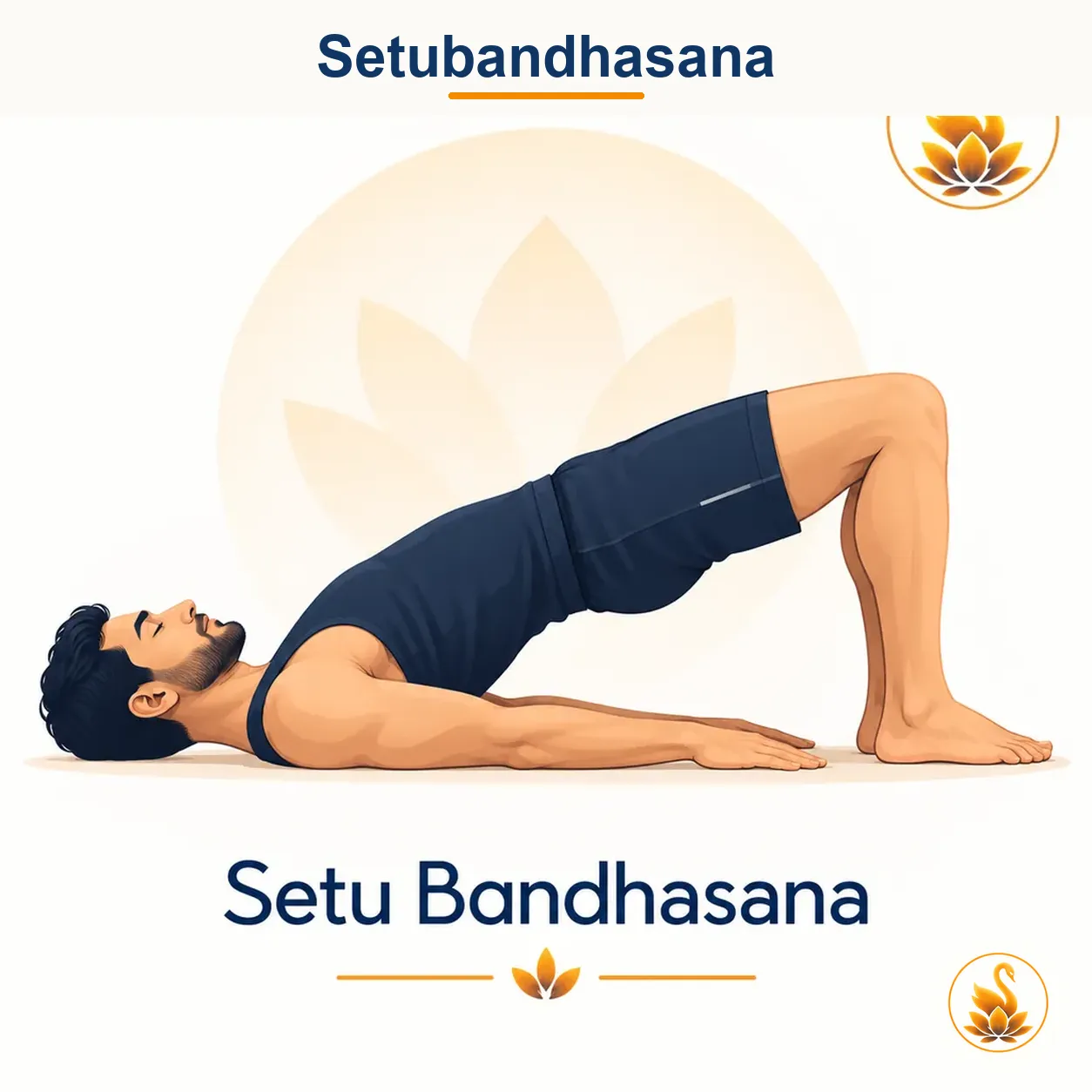
PWA verified guide
How to practise safely
Focus
hip extension, back-body strength, chest opening
Steps
- Lie on the back with knees bent and feet hip-width apart.
- Press through the feet and gently lift the pelvis.
- Keep knees tracking forward and neck relaxed.
- Lower the spine and pelvis slowly on an exhale.
Benefits
- Engages hips and the back of the body.
- Creates a gentle opening across the front of the hips and chest.
- Can support controlled spinal movement when comfortable.
Suggested duration
3 to 5 breaths; repeat 2 to 4 gentle rounds.
Important caution
Avoid loading the neck. Modify or skip with acute back/neck pain, recent surgery, or if lifting the pelvis increases symptoms.
Asana 074
Urdhva Dhanurasana
Upward Bow / Wheel Pose
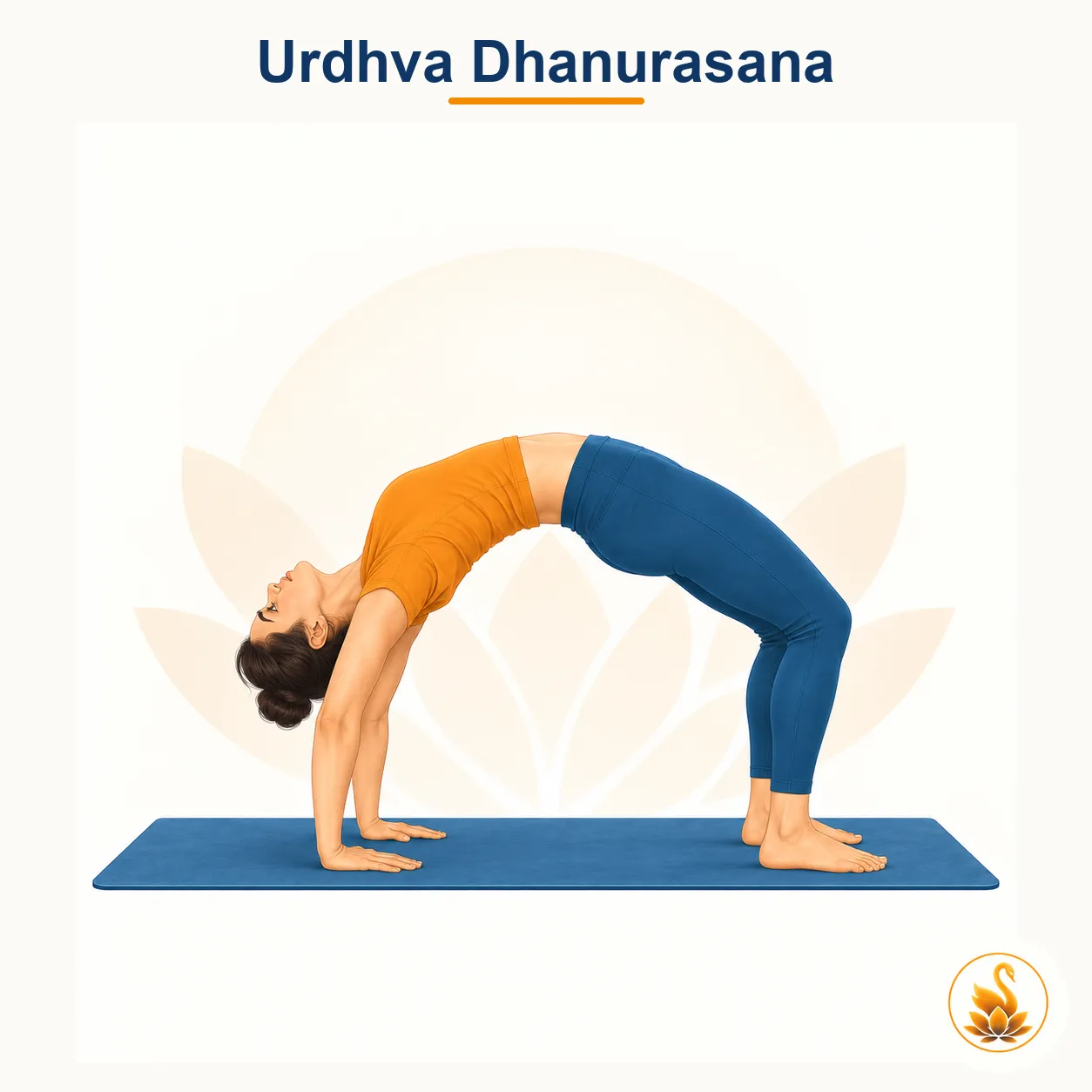
Ananda-X practice guide
How to practise safely
Focus
advanced backbend, coordinated arm and leg support, steady breathing
Steps
- Lie on the back with knees bent, feet hip-width apart and hands placed beside the ears.
- With qualified supervision, press evenly through the feet and hands and lift the pelvis and chest without pausing or bearing weight on the head.
- Straighten the arms only as far as the shoulders remain stable and the knees continue to track forward.
- Bend the elbows, lower the upper back and pelvis with control, then rest before repeating.
Benefits
- Encourages controlled engagement through the back of the body.
- Supports awareness of spinal extension without forcing range.
- Can open the front of the chest and hips when practised comfortably.
Suggested duration
1 to 3 breaths; 1 to 2 attempts with qualified supervision.
Important caution
Advanced posture: avoid unsupervised practice. Never load the head or neck; avoid with wrist, shoulder, neck, back or heart concerns, glaucoma, uncontrolled blood pressure or pregnancy.
Source status: Ananda-X editorial practice guidance. This entry is complete but is not labelled PWA-verified.
Asana 075
Matsyasana
Fish Pose
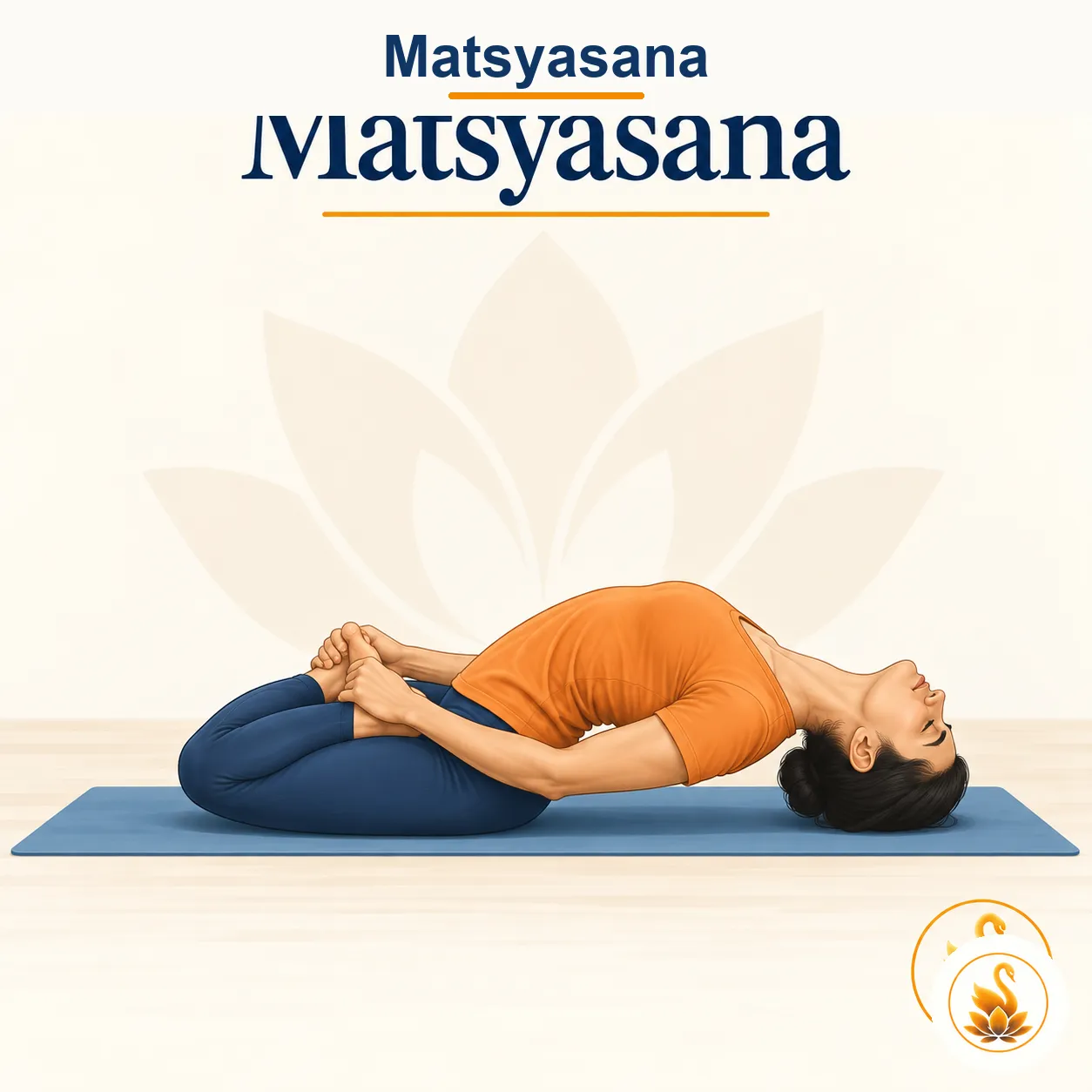
Ananda-X practice guide
How to practise safely
Focus
supported chest opening, upper-back extension, easy throat
Steps
- Sit with the legs extended or comfortably crossed, then lower onto the forearms.
- Lift the breastbone and place the crown or back of the head lightly toward the floor without loading it.
- Keep most weight through the elbows and pelvis while the throat and breath remain comfortable.
- Press into the forearms, lift the head first and return to sitting or lying.
Benefits
- Encourages controlled engagement through the back of the body.
- Supports awareness of spinal extension without forcing range.
- Can open the front of the chest and hips when practised comfortably.
Suggested duration
3 to 5 breaths.
Important caution
Do not bear weight on the head or force the neck. Use a bolster and avoid with neck injury, dizziness, glaucoma or uncontrolled blood pressure.
Source status: Ananda-X editorial practice guidance. This entry is complete but is not labelled PWA-verified.
Asana 076
Sarala Matsyasana
Simple Fish Pose
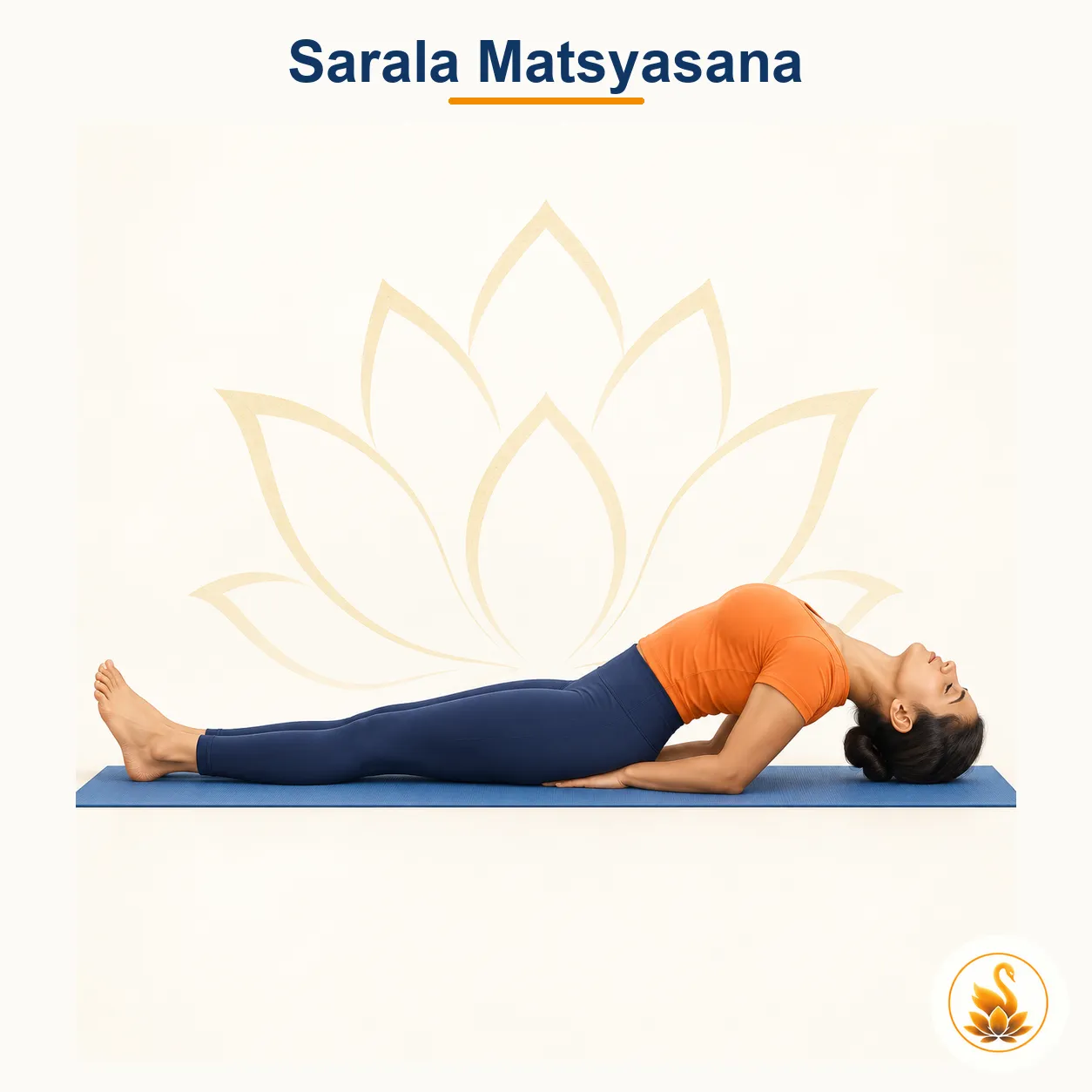
Ananda-X practice guide
How to practise safely
Focus
gentle supported chest opening, relaxed shoulders, comfortable neck
Steps
- Place a bolster or folded blanket lengthwise behind the upper back and sit in front of it.
- Lower onto the support with knees bent or legs comfortably extended.
- Rest the arms by the sides and keep the head fully supported so the throat remains easy.
- Roll to one side or use the hands to rise slowly.
Benefits
- Encourages controlled engagement through the back of the body.
- Supports awareness of spinal extension without forcing range.
- Can open the front of the chest and hips when practised comfortably.
Suggested duration
5 to 10 slow breaths.
Important caution
Support the head and upper back; no neck compression should occur. Come out if dizzy, breathless or uncomfortable.
Source status: Ananda-X editorial practice guidance. This entry is complete but is not labelled PWA-verified.
Asana 077
Purvottanasana
Upward Plank Pose
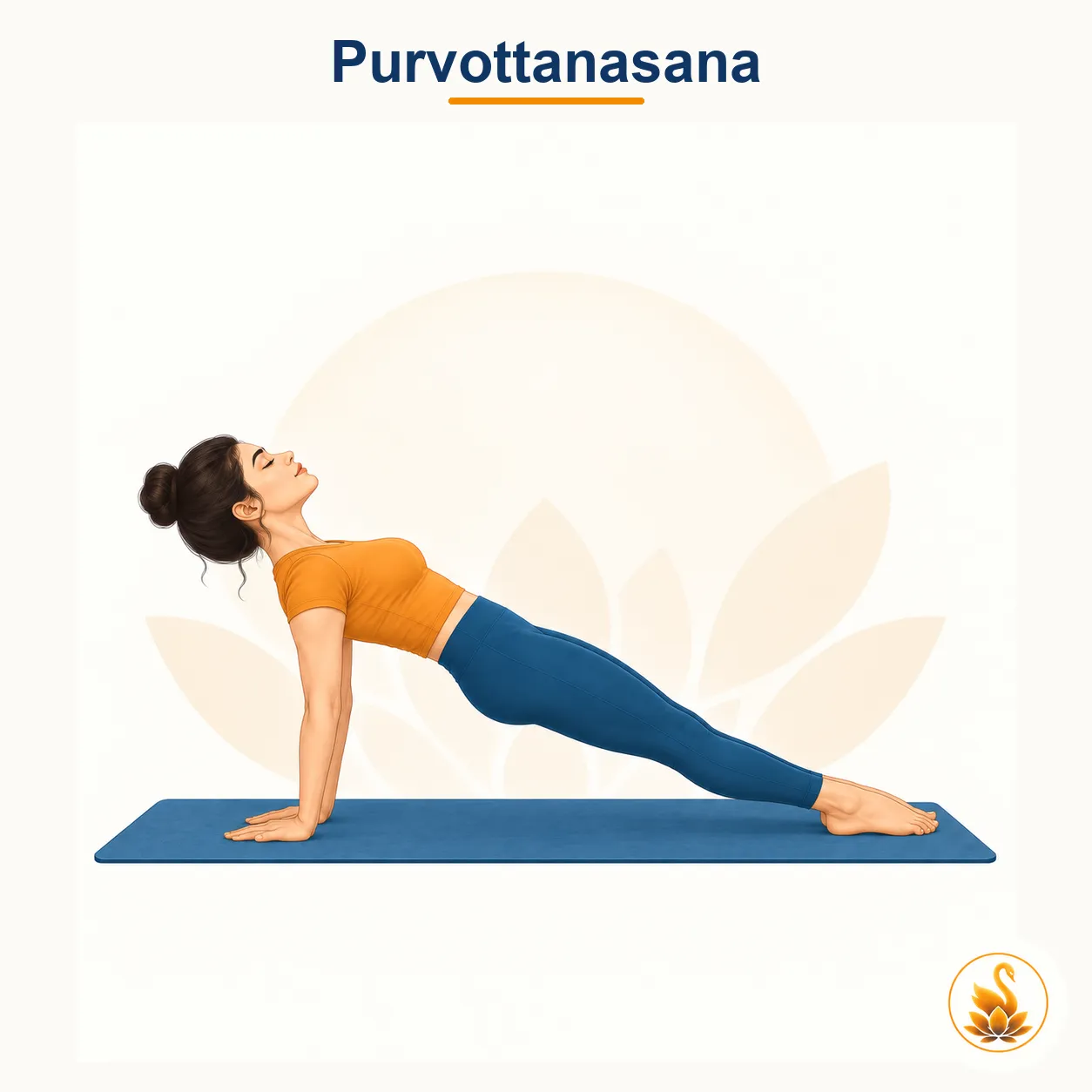
Ananda-X practice guide
How to practise safely
Focus
posterior-chain strength, shoulder extension, straight body line
Steps
- Sit in Staff Pose with the hands behind the hips and fingers pointing forward or slightly outward.
- Press through the hands and feet, lift the pelvis and broaden the chest.
- Keep the neck neutral and bend the knees for a reverse-table variation if needed.
- Lower the pelvis slowly and release the wrists.
Benefits
- Develops whole-body coordination and focused attention.
- Builds controlled upper-body and trunk engagement.
- Challenges balance and body awareness when appropriately supervised.
Suggested duration
2 to 4 breaths; repeat up to 2 times.
Important caution
Use reverse table for wrist, shoulder, hamstring or back limitations. Do not drop the head or continue with joint pain.
Source status: Ananda-X editorial practice guidance. This entry is complete but is not labelled PWA-verified.
Asana 078
Vasisthasana
Side Plank Pose
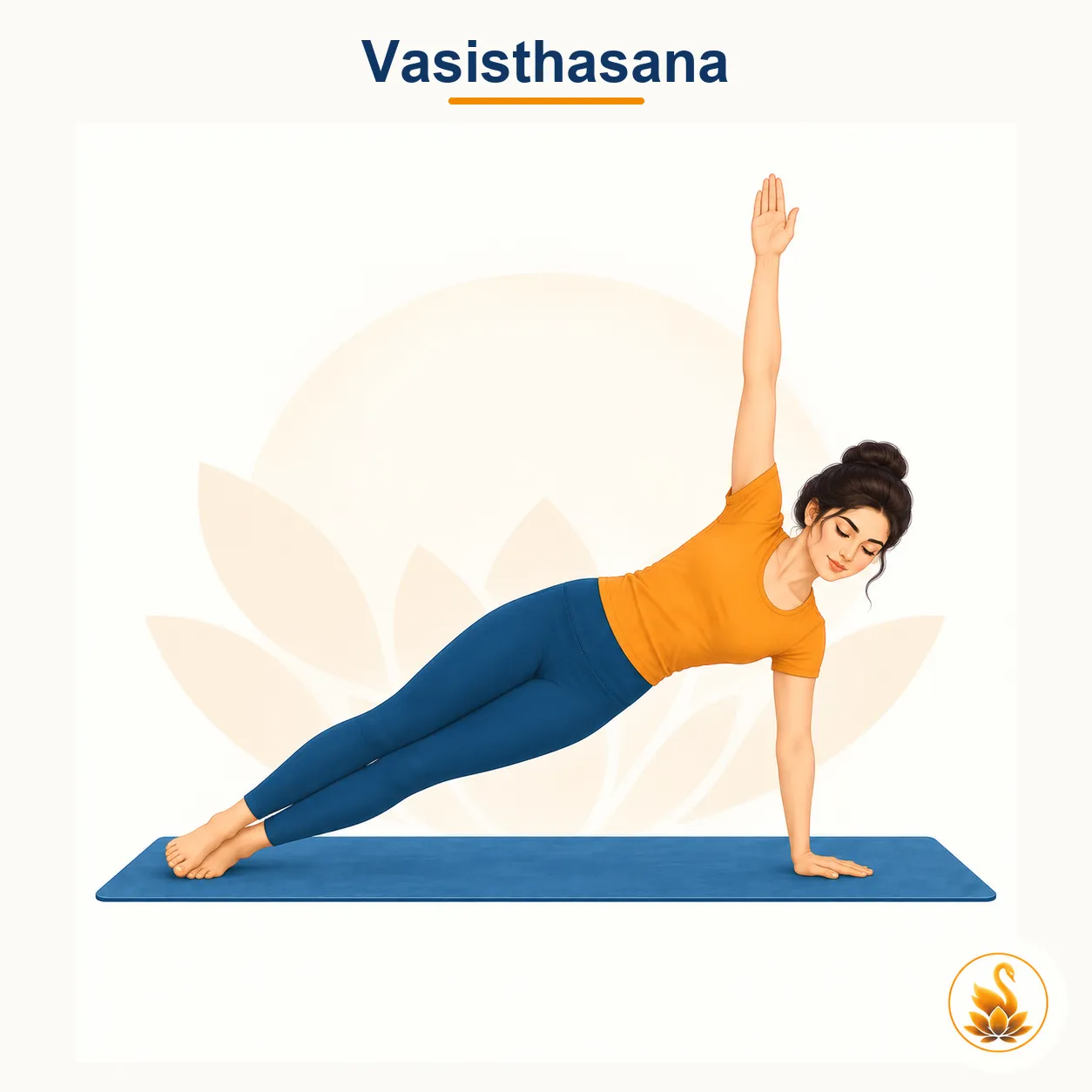
Ananda-X practice guide
How to practise safely
Focus
side-body strength, shoulder stability, balanced stacking
Steps
- Begin in plank or on hands and knees, then shift weight into the right hand and outer right foot or right knee.
- Stack or stagger the feet and lift the left arm while keeping the supporting shoulder broad.
- Lengthen through the crown and heels without letting the pelvis sag.
- Return to the starting position and repeat on the other side.
Benefits
- Develops whole-body coordination and focused attention.
- Builds controlled upper-body and trunk engagement.
- Challenges balance and body awareness when appropriately supervised.
Suggested duration
2 to 4 breaths each side.
Important caution
Use the lower knee for support. Avoid loading a painful wrist or shoulder and practise near a wall if balance is uncertain.
Source status: Ananda-X editorial practice guidance. This entry is complete but is not labelled PWA-verified.
Asana 079
Shavasana
Corpse Pose
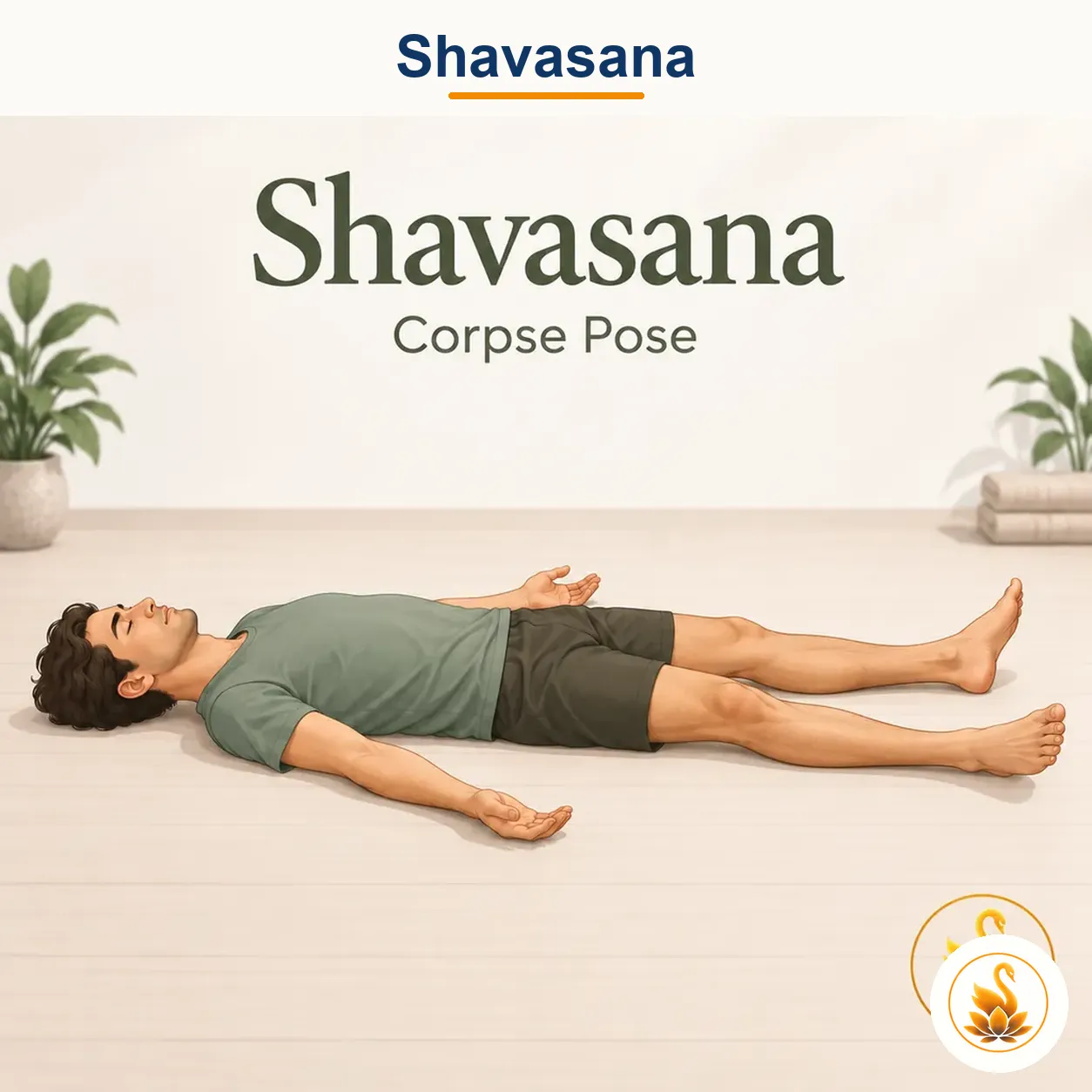
PWA verified guide
How to practise safely
Focus
rest, relaxation, body awareness
Steps
- Lie on the back with legs and arms comfortably supported.
- Let the feet and hands relax naturally.
- Allow the breath to settle without controlling it.
- To finish, move slowly and roll to the side before sitting up.
Benefits
- Provides deliberate rest after practice.
- Supports relaxation and body scanning.
- Creates space for slow, natural breathing.
Suggested duration
2 to 10 minutes depending on comfort and context.
Important caution
Use a bolster under the knees or side-lying position if lying flat is uncomfortable. Rise slowly if prone to dizziness or low blood pressure.
Asana 080
Pawanmuktasana
Wind-Relieving Pose
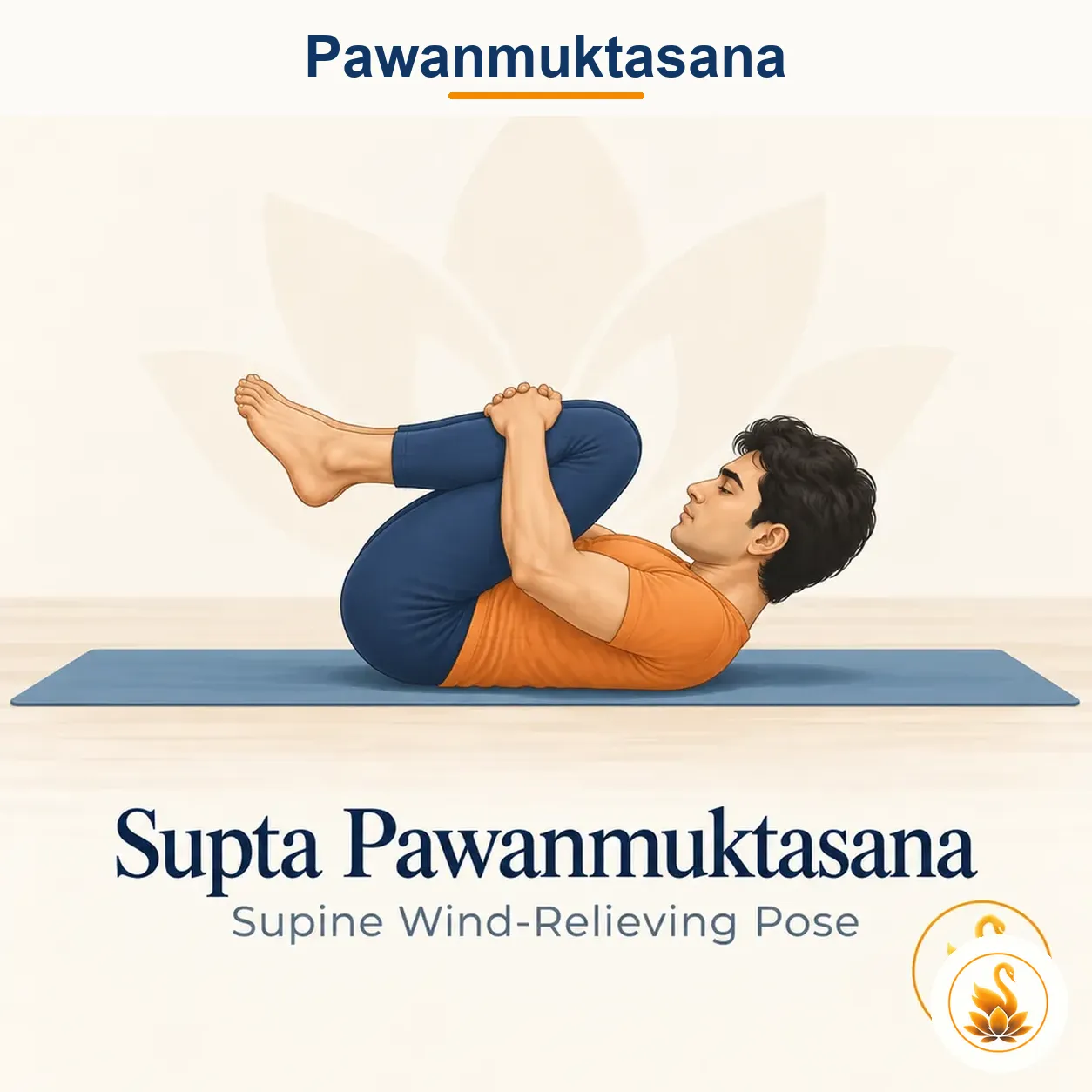
PWA routine source – expert review pending
How to practise safely
Focus
supine, controlled movement, steady breathing
Steps
- Prepare in a stable starting position and keep the breath comfortable.
- Bend both knees toward the chest, interlock the fingers below the knees and bring the head toward the knees.
- Release and relax.
Benefits
- Builds awareness of trunk and pelvic control.
- Supports coordinated movement with steady breathing.
- Develops strength or mobility from a stable floor position.
Suggested duration
About 20 sec; source says repeat once
Important caution
Keep the lower back comfortable and avoid breath-holding. Reduce the range or stop with back, hip, neck or abdominal pain.
Source: YogaAX2. Practice wording is source-derived; focus, benefits and caution are cautious editorial guidance pending expert review.
Asana 081
Ardha Pawanmuktasana
Half Wind-Relieving Pose
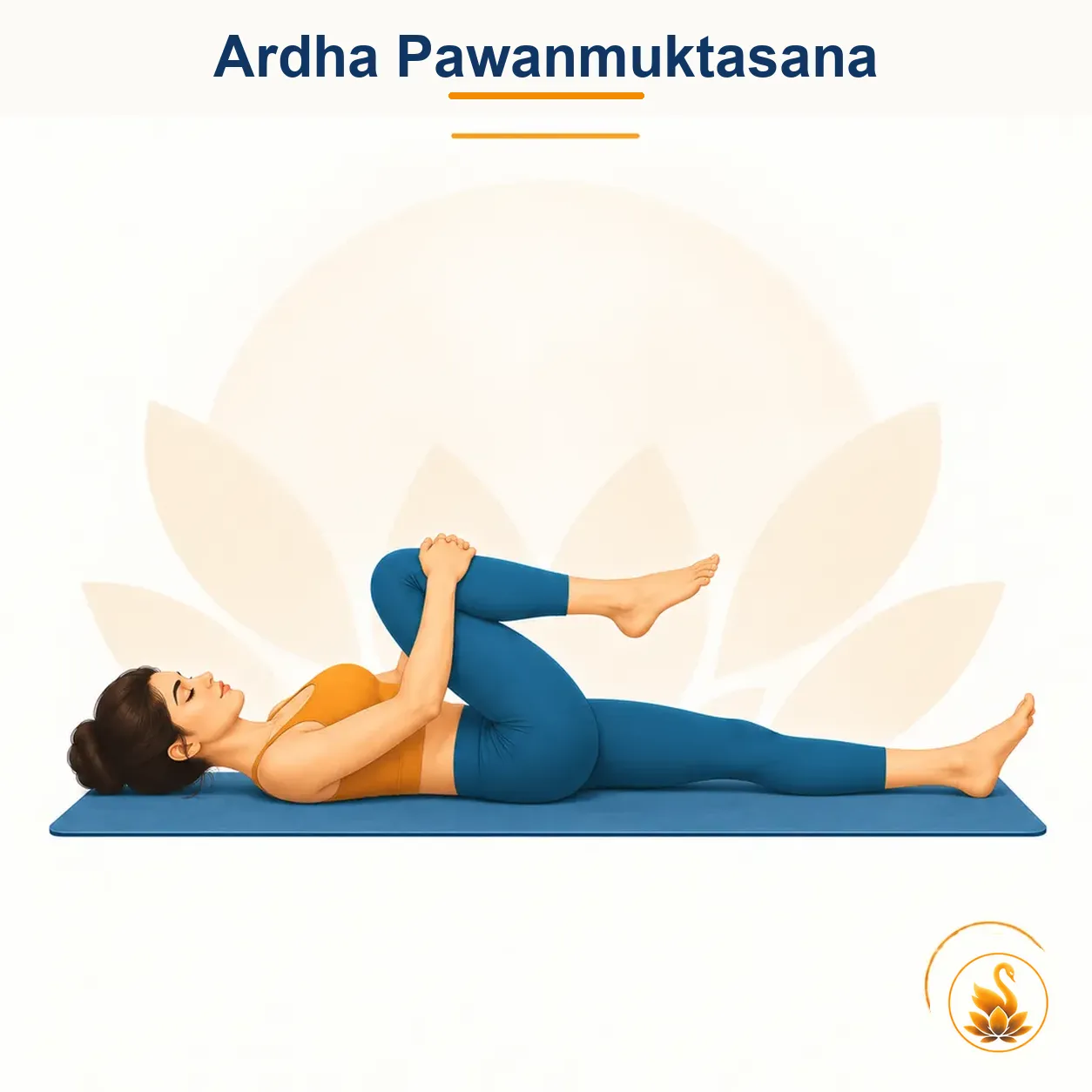
PWA routine source – expert review pending
How to practise safely
Focus
supine, controlled movement, steady breathing
Steps
- Prepare in a stable starting position and keep the breath comfortable.
- Bend one knee to the chest, interlock the fingers below the knee, bring the head/knee toward one another as shown, then repeat the other side.
- Return slowly to a neutral position and pause before repeating.
Benefits
- Builds awareness of trunk and pelvic control.
- Supports coordinated movement with steady breathing.
- Develops strength or mobility from a stable floor position.
Suggested duration
About 20 sec each side; source says 4 total rounds
Important caution
Keep the lower back comfortable and avoid breath-holding. Reduce the range or stop with back, hip, neck or abdominal pain.
Source: YogaAX2. Practice wording is source-derived; focus, benefits and caution are cautious editorial guidance pending expert review.
Asana 082
Jathara Parivartanasana
Reclining Abdominal Twist
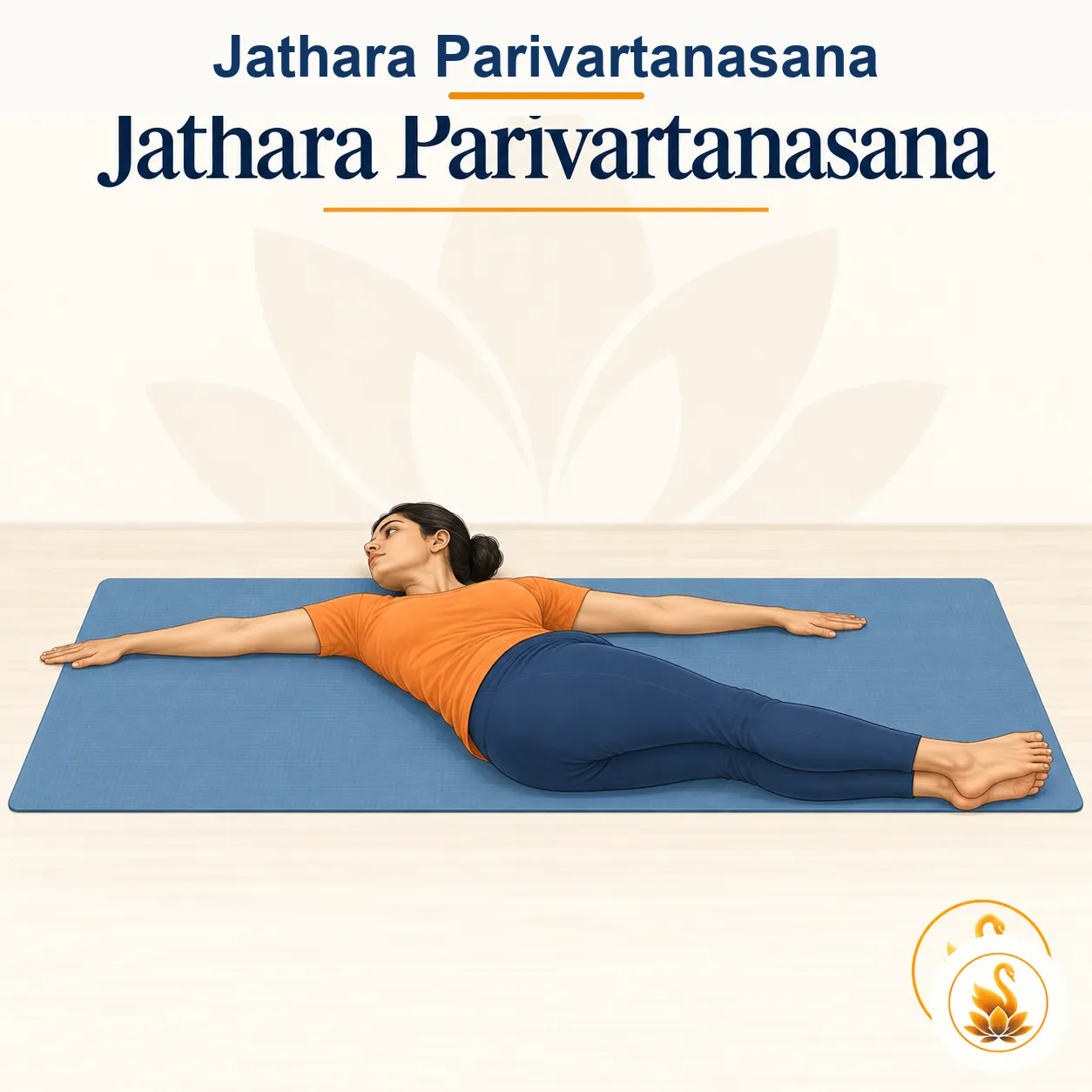
Ananda-X practice guide
How to practise safely
Focus
controlled supine rotation, abdominal support, shoulder grounding
Steps
- Lie on the back with arms out and knees bent over the hips.
- Exhale and lower both knees a small distance to the right while keeping both shoulders comfortable.
- Inhale back to centre using controlled abdominal effort.
- Repeat to the left without allowing the movement to drop or swing.
Benefits
- Encourages controlled trunk rotation.
- Supports upright postural awareness.
- Develops mobility without using force or momentum.
Suggested duration
3 to 5 slow rounds each side.
Important caution
Keep the range small and knees bent. Stop with back pain and avoid deep rotation after abdominal or spinal surgery or during pregnancy.
Source status: Ananda-X editorial practice guidance. This entry is complete but is not labelled PWA-verified.
Asana 083
Supta Matsyendrasana
Supine Spinal Twist
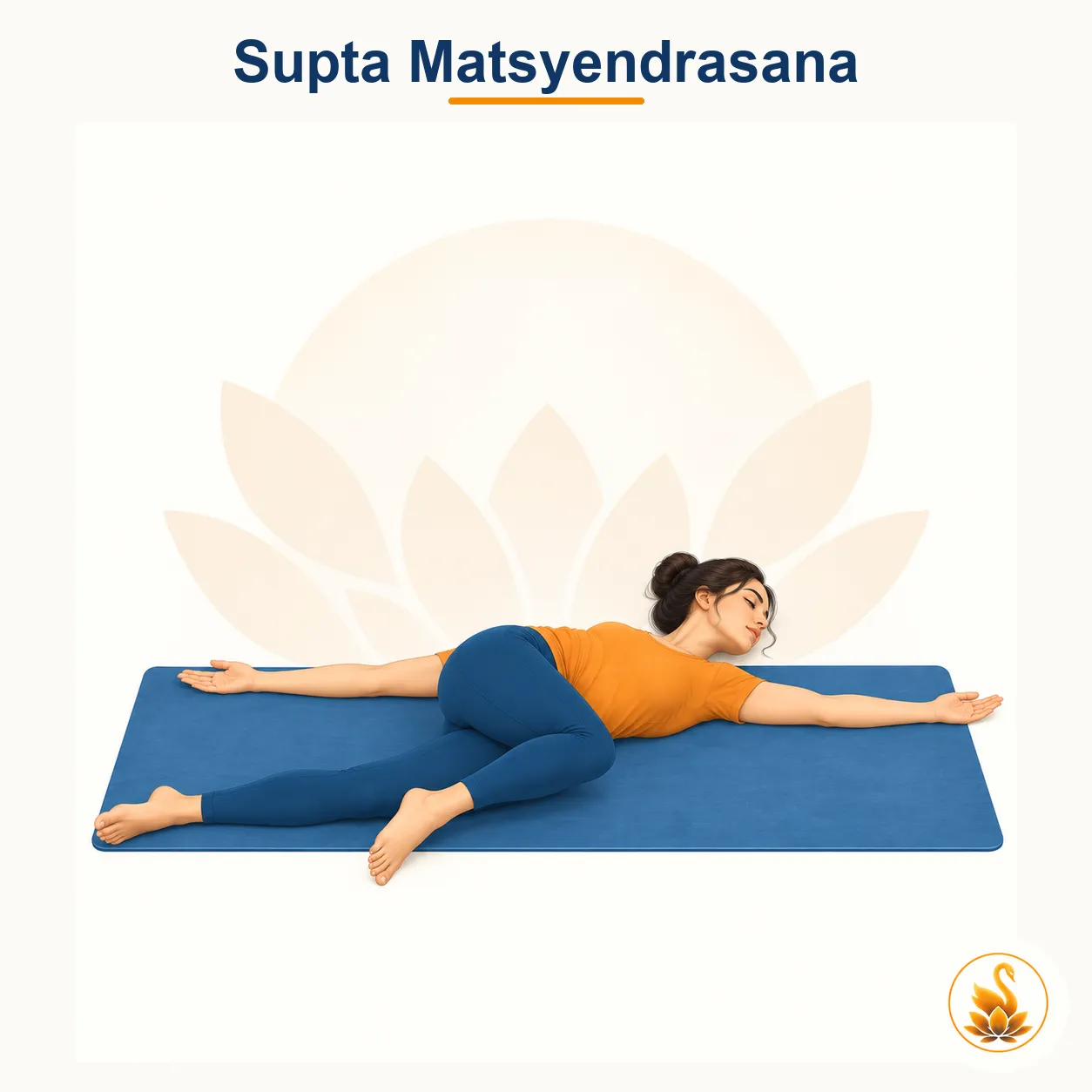
Ananda-X practice guide
How to practise safely
Focus
relaxed supine twist, easy shoulders, unforced breathing
Steps
- Lie on the back, bend the right knee and draw it gently toward the trunk.
- Guide the knee across the body toward a support while the right shoulder remains comfortable.
- Turn the head only if the neck feels easy and breathe into the side ribs.
- Return to centre slowly and repeat on the other side.
Benefits
- Encourages controlled trunk rotation.
- Supports upright postural awareness.
- Develops mobility without using force or momentum.
Suggested duration
4 to 8 breaths each side.
Important caution
Support the knee and keep the twist gentle. Avoid forcing the shoulder down or practising deeply with acute back pain, pregnancy or recent surgery.
Source status: Ananda-X editorial practice guidance. This entry is complete but is not labelled PWA-verified.
Asana 084
Supta Baddha Konasana
Reclining Bound Angle
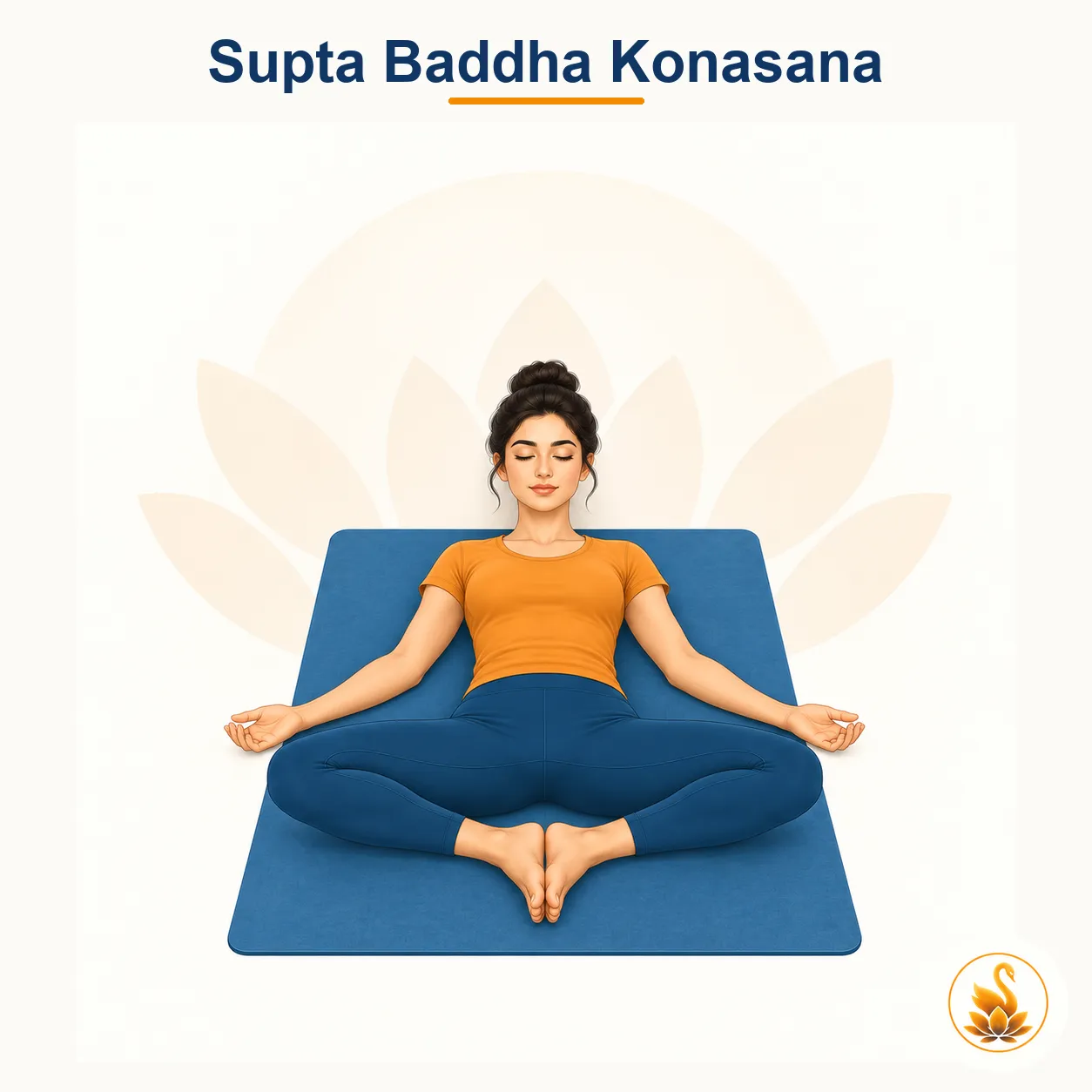
Ananda-X practice guide
How to practise safely
Focus
supported hip opening, rest, quiet abdominal breathing
Steps
- Lie back with knees bent and bring the soles of the feet together.
- Place blocks or cushions under both outer thighs so the legs are fully supported.
- Rest the hands comfortably and allow the breath to stay natural.
- Use the hands to bring the knees together before rolling to one side.
Benefits
- Supports relaxation and breath awareness.
- Provides a quiet pause between more active practices.
- Encourages release of unnecessary muscular effort.
Suggested duration
1 to 5 minutes with full support.
Important caution
Support both thighs; do not press the knees down. Choose another position for groin, hip or knee pain.
Source status: Ananda-X editorial practice guidance. This entry is complete but is not labelled PWA-verified.
Asana 085
Supta Padangusthasana
Reclining Hand-to-Big-Toe
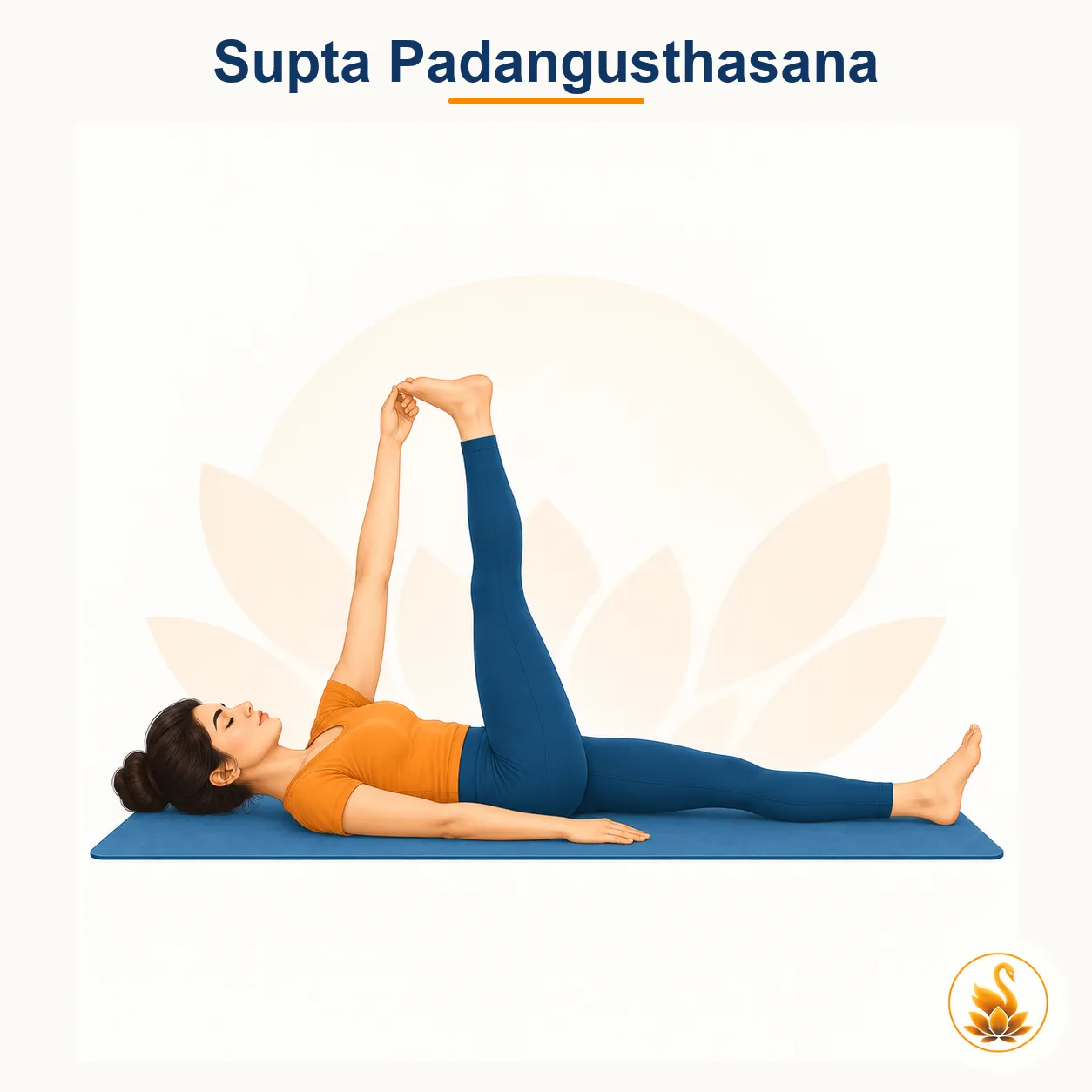
Ananda-X practice guide
How to practise safely
Focus
supine hamstring length, stable pelvis, relaxed upper body
Steps
- Lie on the back with both knees bent and loop a strap around the right foot.
- Extend the right leg upward only as far as the pelvis stays level and the knee remains comfortable.
- Lengthen the left leg along the floor if the lower back stays neutral.
- Bend the raised knee, release the strap and change sides.
Benefits
- Builds awareness of trunk and pelvic control.
- Supports coordinated movement with steady breathing.
- Develops strength or mobility from a stable floor position.
Suggested duration
4 to 8 breaths each side.
Important caution
Do not pull hard or lock the knee. Keep the lower leg bent for back or sciatic sensitivity and stop with tingling or pain.
Source status: Ananda-X editorial practice guidance. This entry is complete but is not labelled PWA-verified.
Asana 086
Utthanapadasana
Raised-Leg Pose
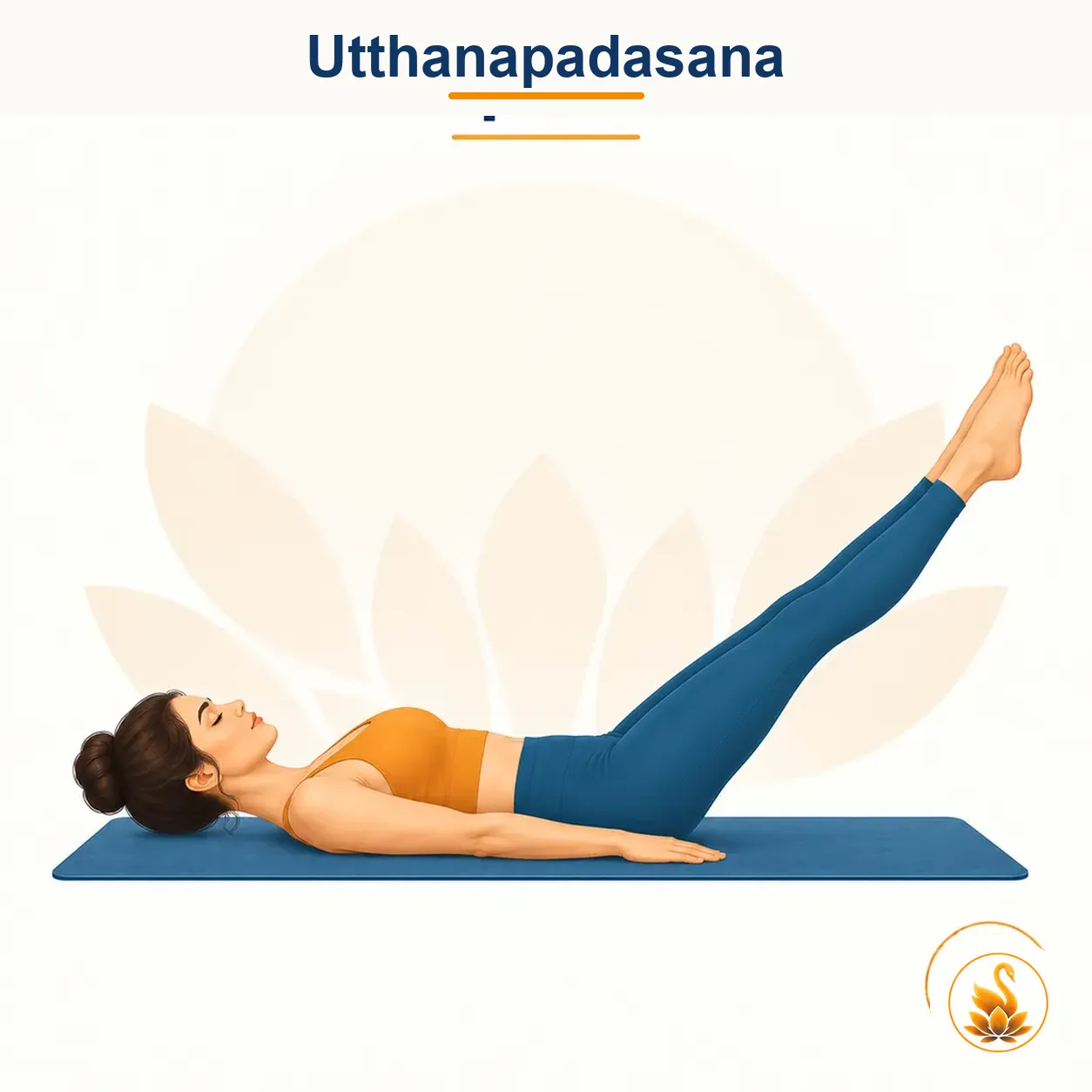
PWA routine source – expert review pending
How to practise safely
Focus
supine core, controlled movement, steady breathing
Steps
- Prepare in a stable starting position and keep the breath comfortable.
- Join the legs.
- Inhale and raise the straight legs to the source angle, breathe normally, then lower on exhalation.
- Repeat with the next angle shown.
- Return slowly to a neutral position and pause before repeating.
Benefits
- Builds awareness of trunk and pelvic control.
- Supports coordinated movement with steady breathing.
- Develops strength or mobility from a stable floor position.
Suggested duration
Source gives staged angles/holds
Important caution
Keep the lower back comfortable and avoid breath-holding. Reduce the range or stop with back, hip, neck or abdominal pain.
Source: YogaAX2. Practice wording is source-derived; focus, benefits and caution are cautious editorial guidance pending expert review.
Asana 087
Ardha Halasana
Half Plough Pose
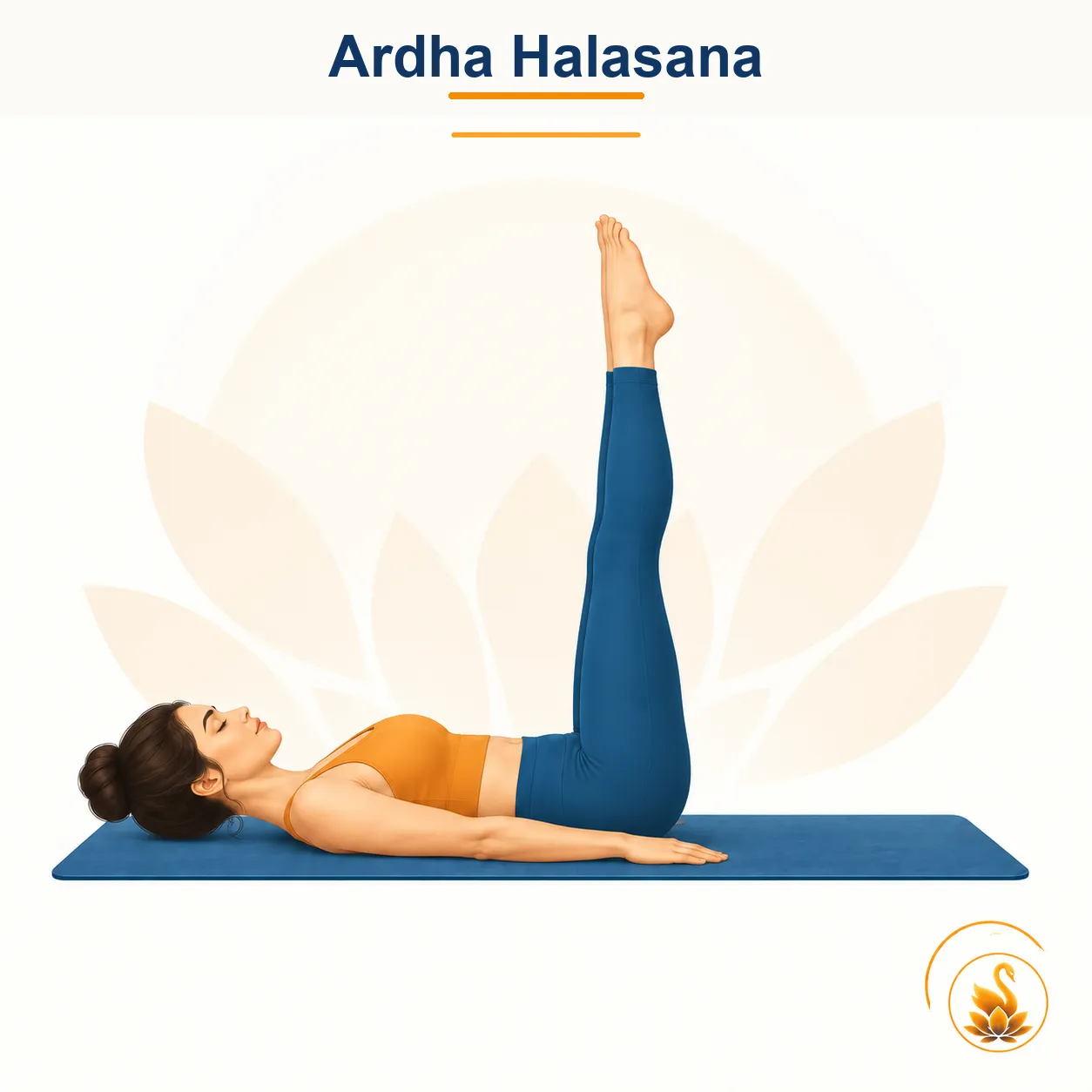
Ananda-X practice guide
How to practise safely
Focus
supine leg control, abdominal engagement, neutral spine
Steps
- Lie on the back with the arms beside the body and knees bent.
- Brace gently through the trunk and lift one leg, then the other, toward a comfortable angle.
- Extend the legs only as far as the lower back remains supported and breathing stays steady.
- Bend the knees and lower one foot at a time with control.
Benefits
- Builds awareness of trunk and pelvic control.
- Supports coordinated movement with steady breathing.
- Develops strength or mobility from a stable floor position.
Suggested duration
2 to 4 breaths or 3 controlled repetitions.
Important caution
Keep the knees bent or work one leg at a time. Stop if the lower back lifts, strains or becomes painful.
Source status: Ananda-X editorial practice guidance. This entry is complete but is not labelled PWA-verified.
Asana 088
Navasana / Naukasana
Boat Pose
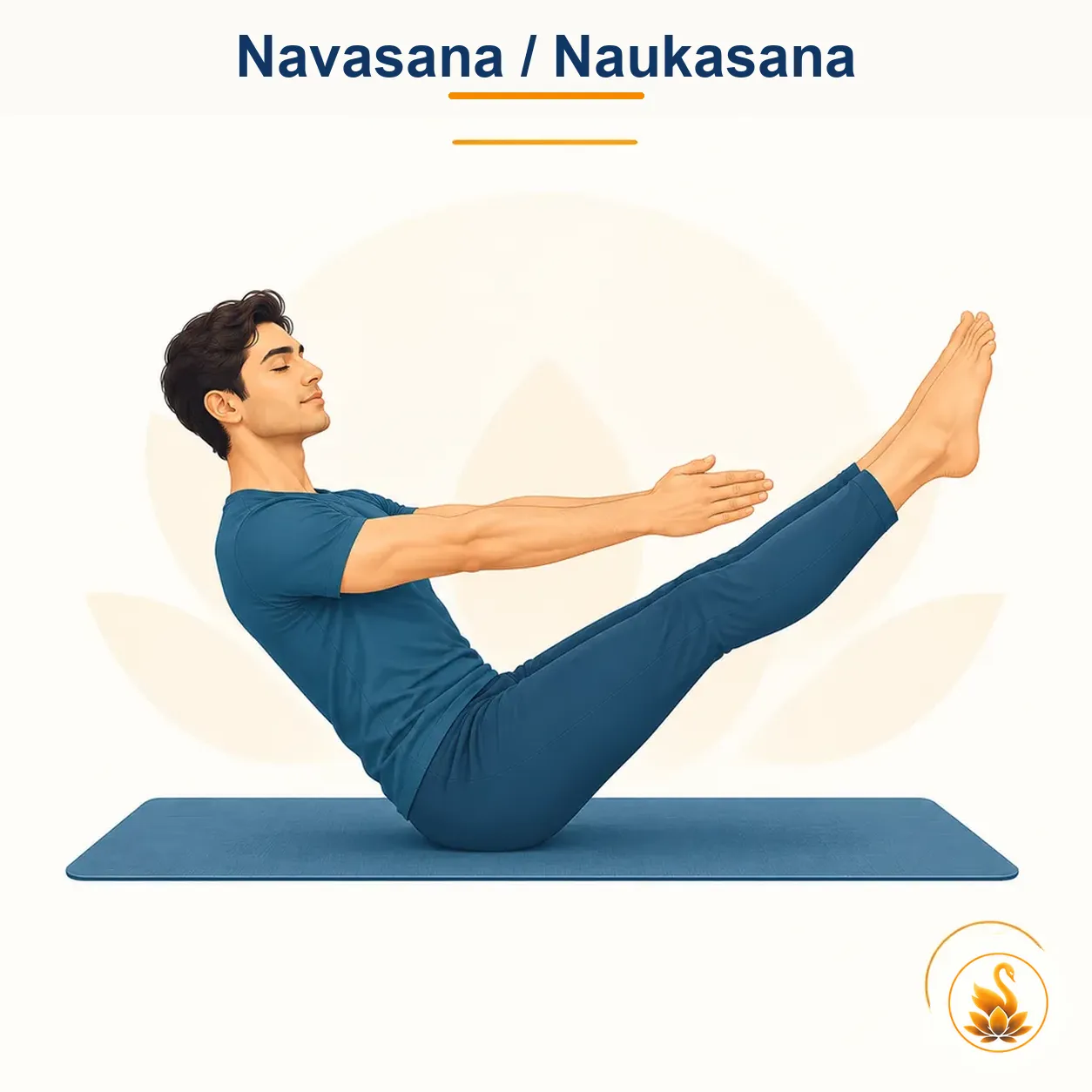
PWA routine source – expert review pending
How to practise safely
Focus
core, controlled movement, steady breathing
Steps
- Prepare in a stable starting position and keep the breath comfortable.
- From supine, inhale and lift the legs, arms, shoulders and head together, balancing on the buttocks.
- Keep the arms level with the toes and breathe normally.
- Return slowly to a neutral position and pause before repeating.
Benefits
- Builds awareness of trunk and pelvic control.
- Supports coordinated movement with steady breathing.
- Develops strength or mobility from a stable floor position.
Suggested duration
Hold about 10 to 20 sec
Important caution
Keep the lower back comfortable and avoid breath-holding. Reduce the range or stop with back, hip, neck or abdominal pain.
Source: YogaAX1. Practice wording is source-derived; focus, benefits and caution are cautious editorial guidance pending expert review.
Asana 089
Ardha Navasana
Half Boat Pose
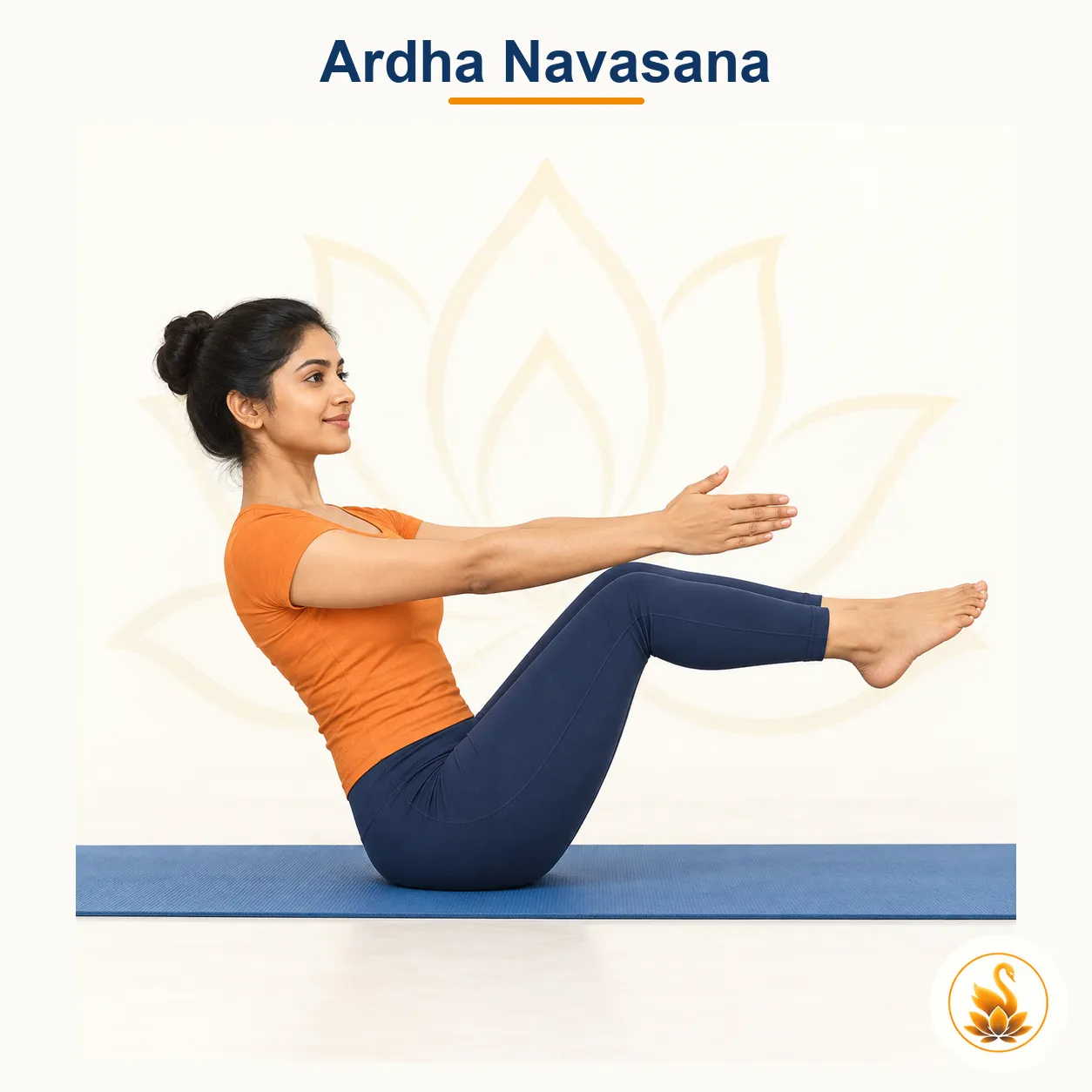
Ananda-X practice guide
How to practise safely
Focus
controlled core engagement, steady breathing, supported lower back
Steps
- Sit with knees bent and feet grounded, holding behind the thighs.
- Lean back slightly with a long spine until the abdominal muscles engage.
- Lift one or both feet while keeping the knees bent; release the hands only if the trunk remains stable.
- Place the feet down and return upright slowly.
Benefits
- Builds awareness of trunk and pelvic control.
- Supports coordinated movement with steady breathing.
- Develops strength or mobility from a stable floor position.
Suggested duration
2 to 4 breaths; repeat up to 3 times.
Important caution
Avoid rounding or breath-holding. Keep the feet down with back, hip-flexor, abdominal or pelvic-floor discomfort.
Source status: Ananda-X editorial practice guidance. This entry is complete but is not labelled PWA-verified.
Asana 090
Ananda Balasana
Happy Baby Pose
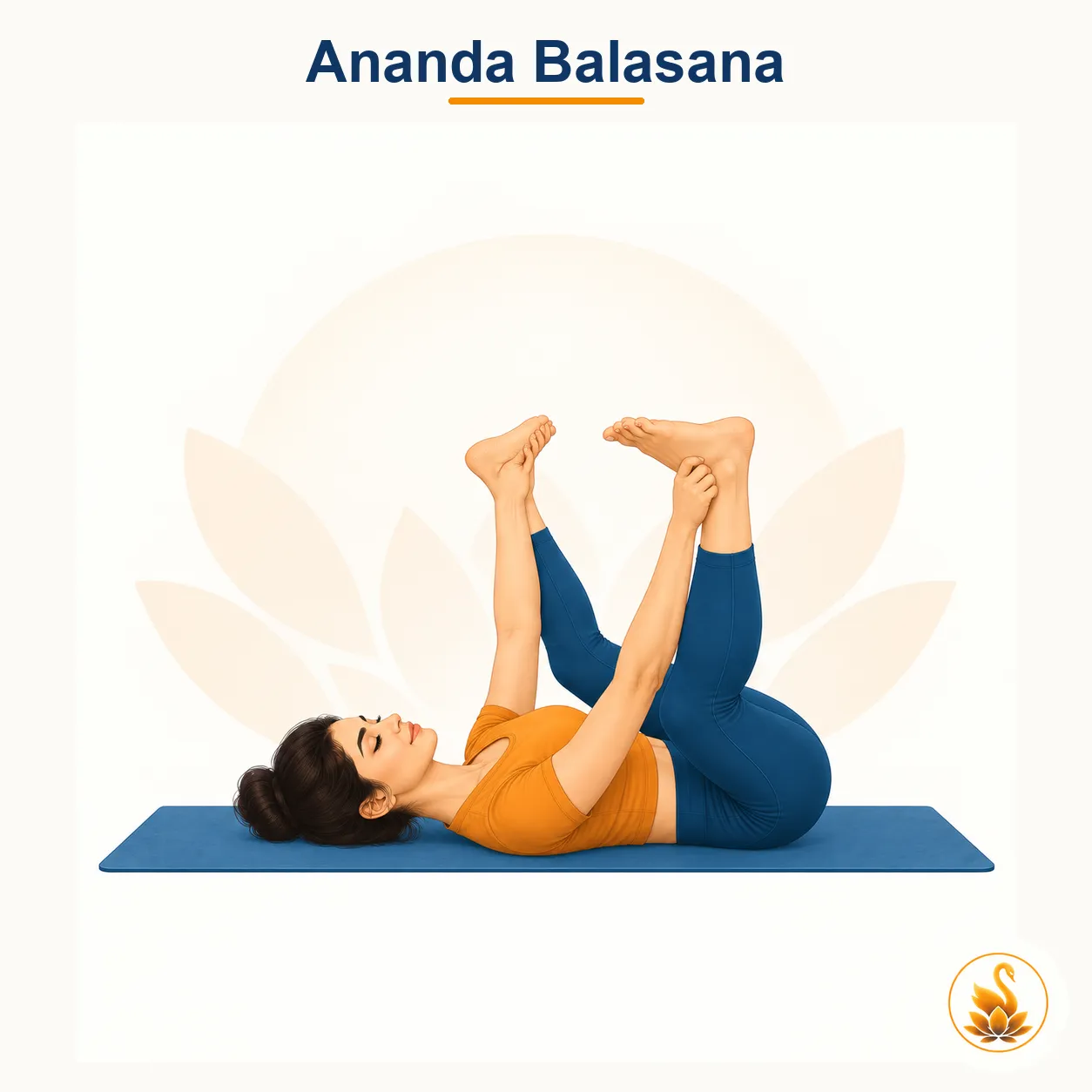
Ananda-X practice guide
How to practise safely
Focus
gentle hip release, stable sacrum, relaxed breathing
Steps
- Lie on the back and draw both knees toward the sides of the trunk.
- Hold behind the thighs or the outer edges of the feet without lifting the sacrum.
- Keep the ankles above the knees as comfortable and let the shoulders relax.
- Release the grip and bring the knees together slowly.
Benefits
- Builds awareness of trunk and pelvic control.
- Supports coordinated movement with steady breathing.
- Develops strength or mobility from a stable floor position.
Suggested duration
5 to 8 breaths.
Important caution
Hold behind the thighs if the hips or knees feel strained. Avoid pulling the knees forcefully or rocking on a painful back.
Source status: Ananda-X editorial practice guidance. This entry is complete but is not labelled PWA-verified.
Asana 091
Supta Virasana
Reclining Hero Pose
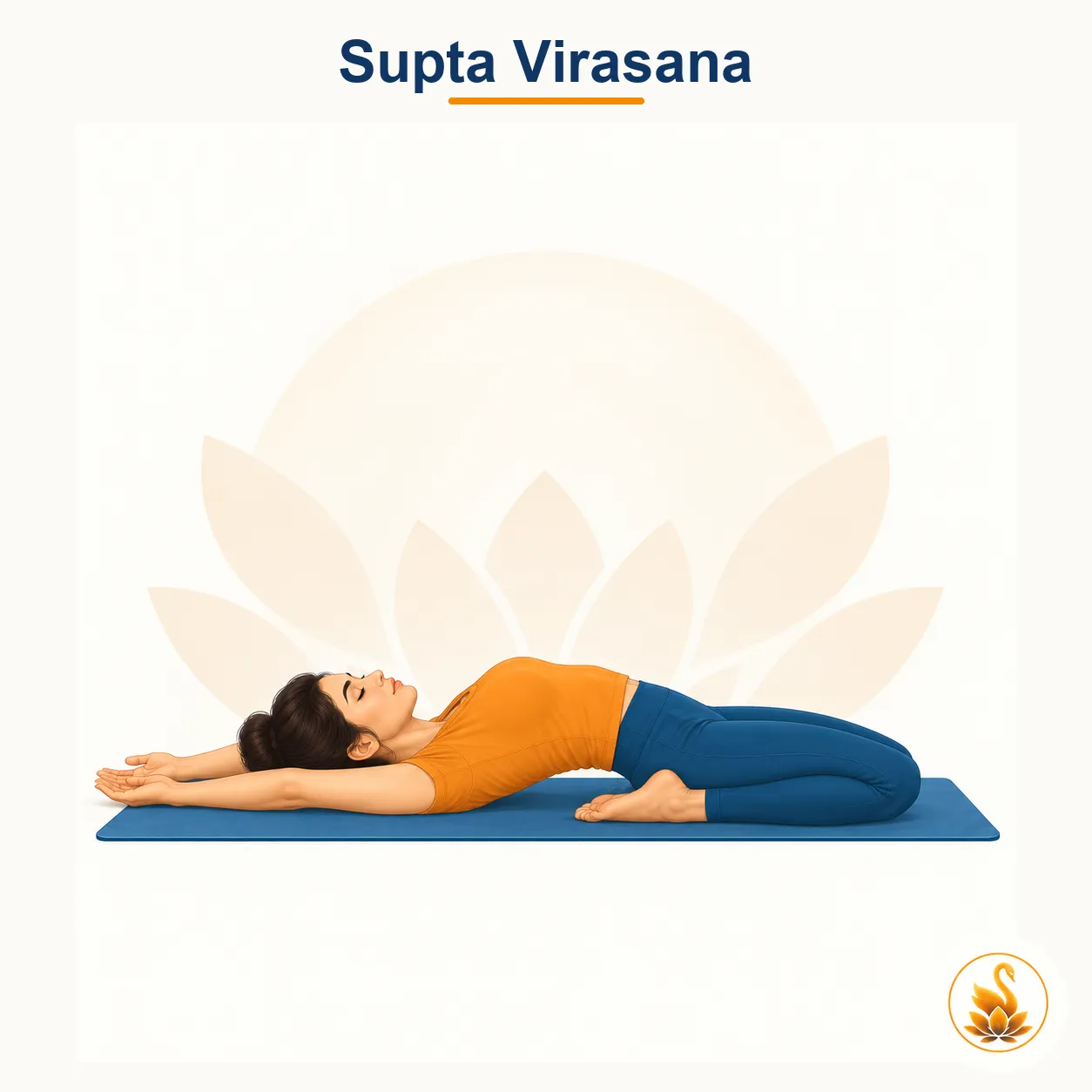
Ananda-X practice guide
How to practise safely
Focus
supported thigh and ankle length, reclining rest, neutral lower back
Steps
- Sit in a well-supported Hero Pose with the pelvis on blocks or blankets.
- Place support behind the back and lower first to the forearms, stopping at the first comfortable level.
- Recline only while both knees remain pain-free and the lower back is supported.
- Press into the forearms and hands to rise, then release the legs carefully.
Benefits
- Builds awareness of trunk and pelvic control.
- Supports coordinated movement with steady breathing.
- Develops strength or mobility from a stable floor position.
Suggested duration
3 to 8 breaths with generous support.
Important caution
Do not recline if the knees lift, separate painfully or feel compressed. Avoid with knee, ankle or lower-back injury.
Source status: Ananda-X editorial practice guidance. This entry is complete but is not labelled PWA-verified.
Asana 092
Supta Vajrasana
Reclining Thunderbolt
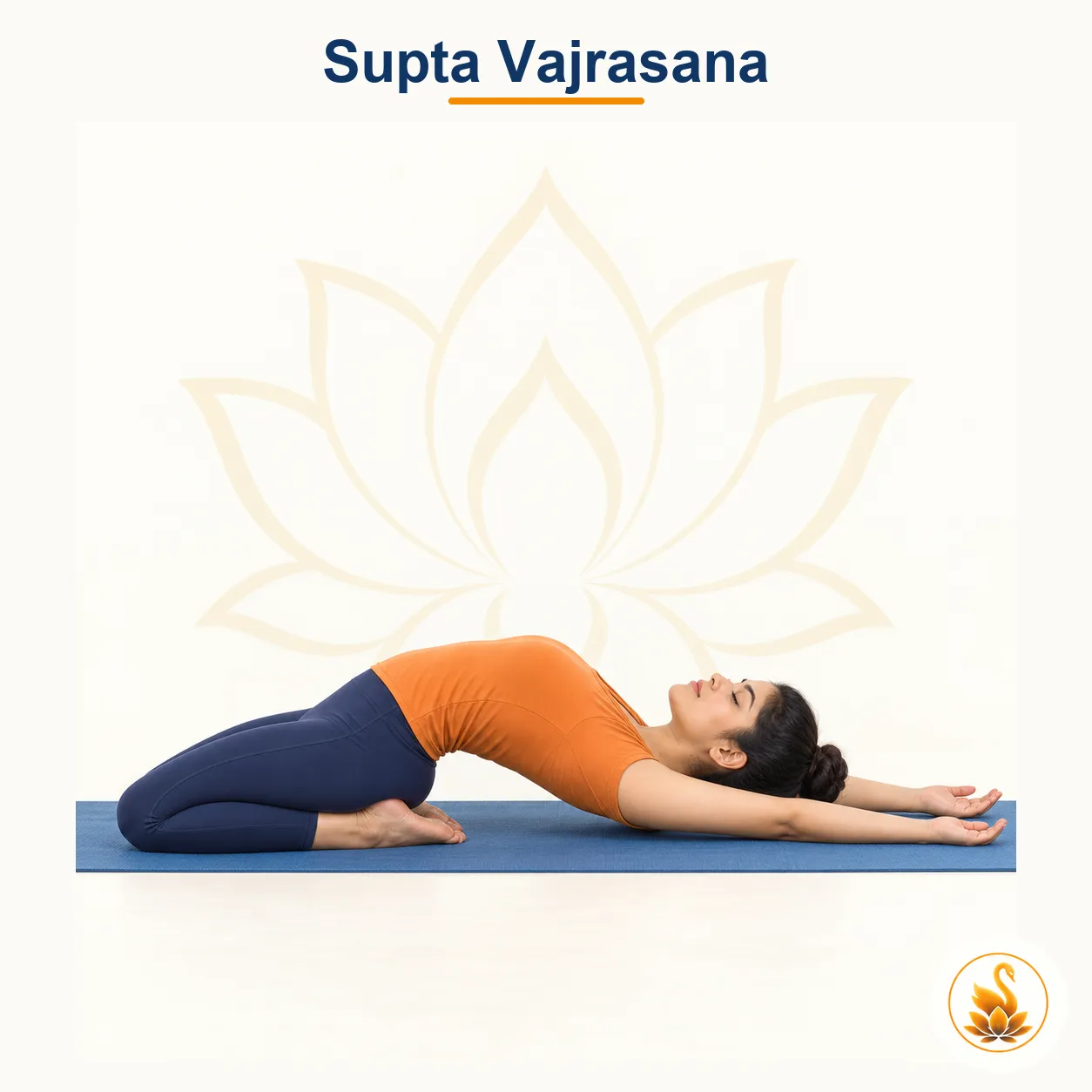
Ananda-X practice guide
How to practise safely
Focus
supported reclining kneel, front-body opening, steady breath
Steps
- Sit in Vajrasana on a block or folded blankets.
- Place a bolster behind the spine and lower onto the forearms.
- Recline only to a level where the knees, ankles and lower back remain comfortable.
- Use the arms to return upright, then unfold the legs slowly.
Benefits
- Builds awareness of trunk and pelvic control.
- Supports coordinated movement with steady breathing.
- Develops strength or mobility from a stable floor position.
Suggested duration
3 to 6 breaths with support.
Important caution
Never force the knees or ankles or drop directly to the floor. Avoid with joint injury, acute back pain or numbness.
Source status: Ananda-X editorial practice guidance. This entry is complete but is not labelled PWA-verified.
Asana 093
Matsya Kridasana
Flapping Fish Pose
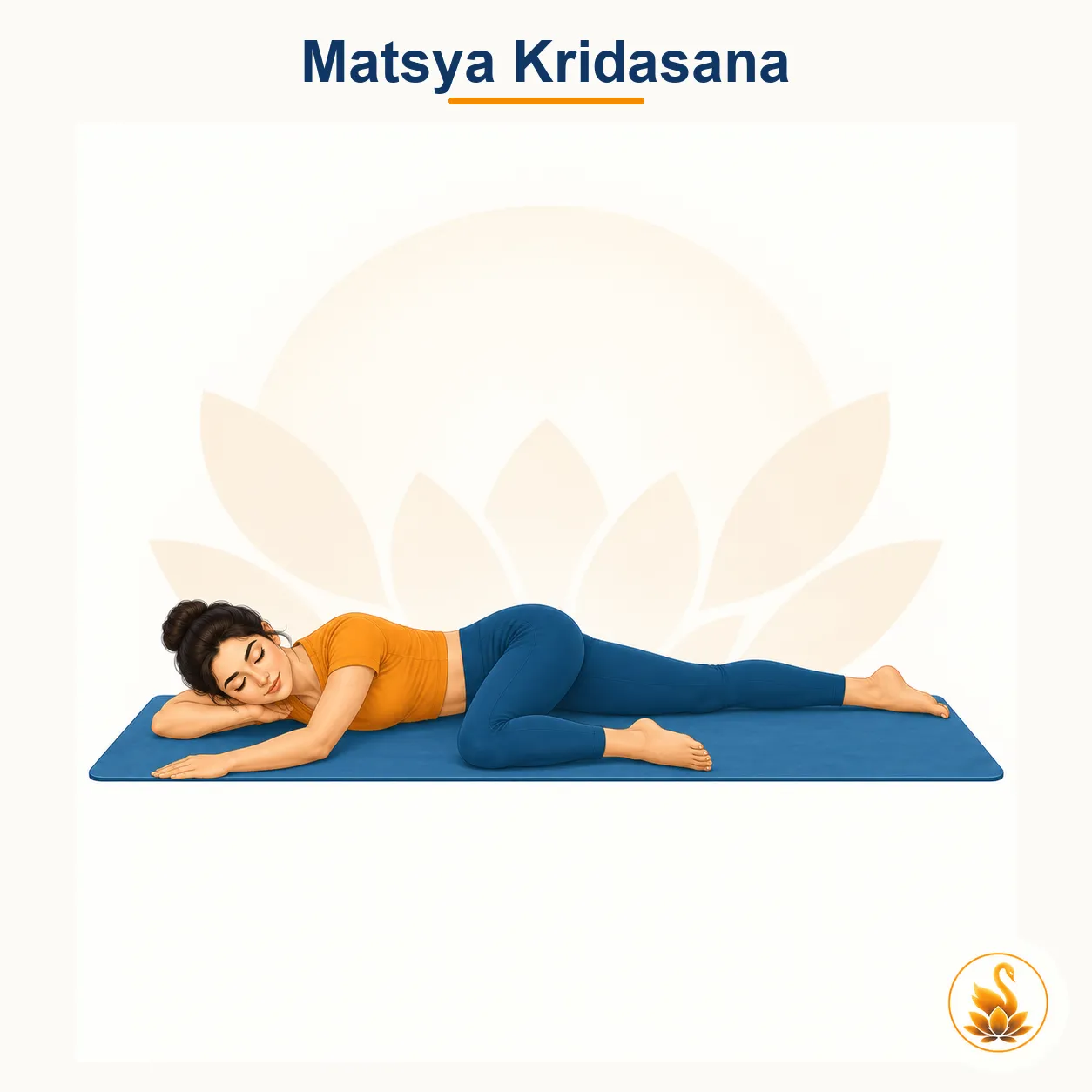
Ananda-X practice guide
How to practise safely
Focus
side-lying relaxation, supported breathing, comfortable hips
Steps
- Lie on the abdomen and turn the head to one side.
- Draw the knee on that side upward and bend the same-side elbow near the face.
- Arrange a pillow under the head or bent knee so the spine and breath remain comfortable.
- Return through the abdomen and repeat on the other side if desired.
Benefits
- Supports relaxation and breath awareness.
- Provides a quiet pause between more active practices.
- Encourages release of unnecessary muscular effort.
Suggested duration
1 to 5 minutes each side.
Important caution
Use enough support to prevent neck or hip strain. Change position if there is numbness, pain or breathing difficulty.
Source status: Ananda-X editorial practice guidance. This entry is complete but is not labelled PWA-verified.
Asana 094
Viparita Karani
Legs-Up-the-Wall Pose
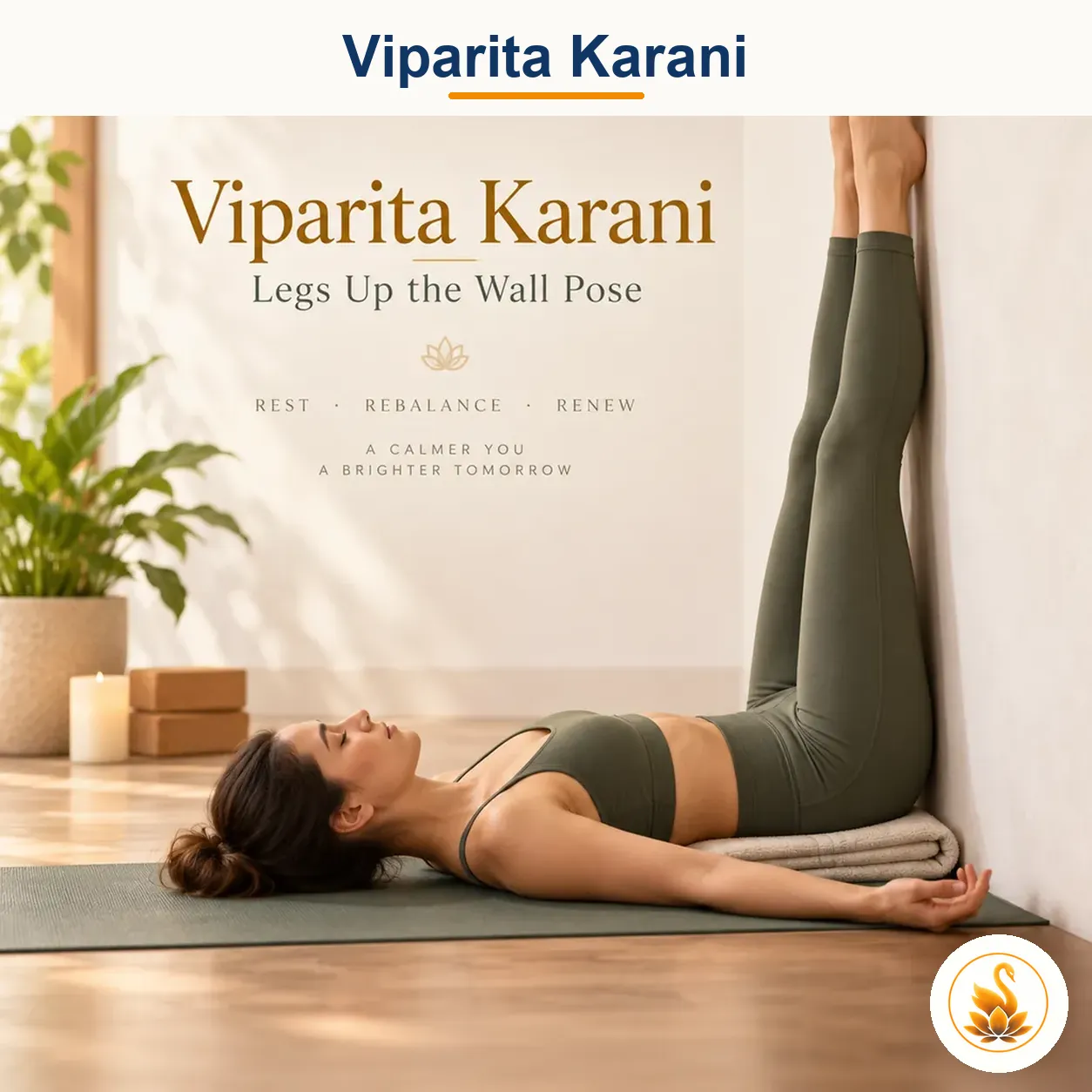
PWA verified guide
How to practise safely
Focus
rest, legs elevated, relaxation
Steps
- Sit beside a wall and carefully turn onto the back while bringing the legs upward.
- Rest the legs against the wall and keep the pelvis at a comfortable distance.
- Let the arms rest and breathe naturally.
- Bend the knees and roll to the side to exit slowly.
Benefits
- Provides a supported resting position with the legs elevated.
- Encourages quiet breathing and relaxation.
- Reduces the effort required to hold the legs upright.
Suggested duration
2 to 8 minutes if comfortable; exit sooner if numbness, pressure or discomfort develops.
Important caution
Avoid or seek guidance when inversions/leg elevation are restricted, including some eye-pressure, cardiovascular, vascular, pregnancy or post-surgical situations.
Asana 095
Halasana
Plough Pose
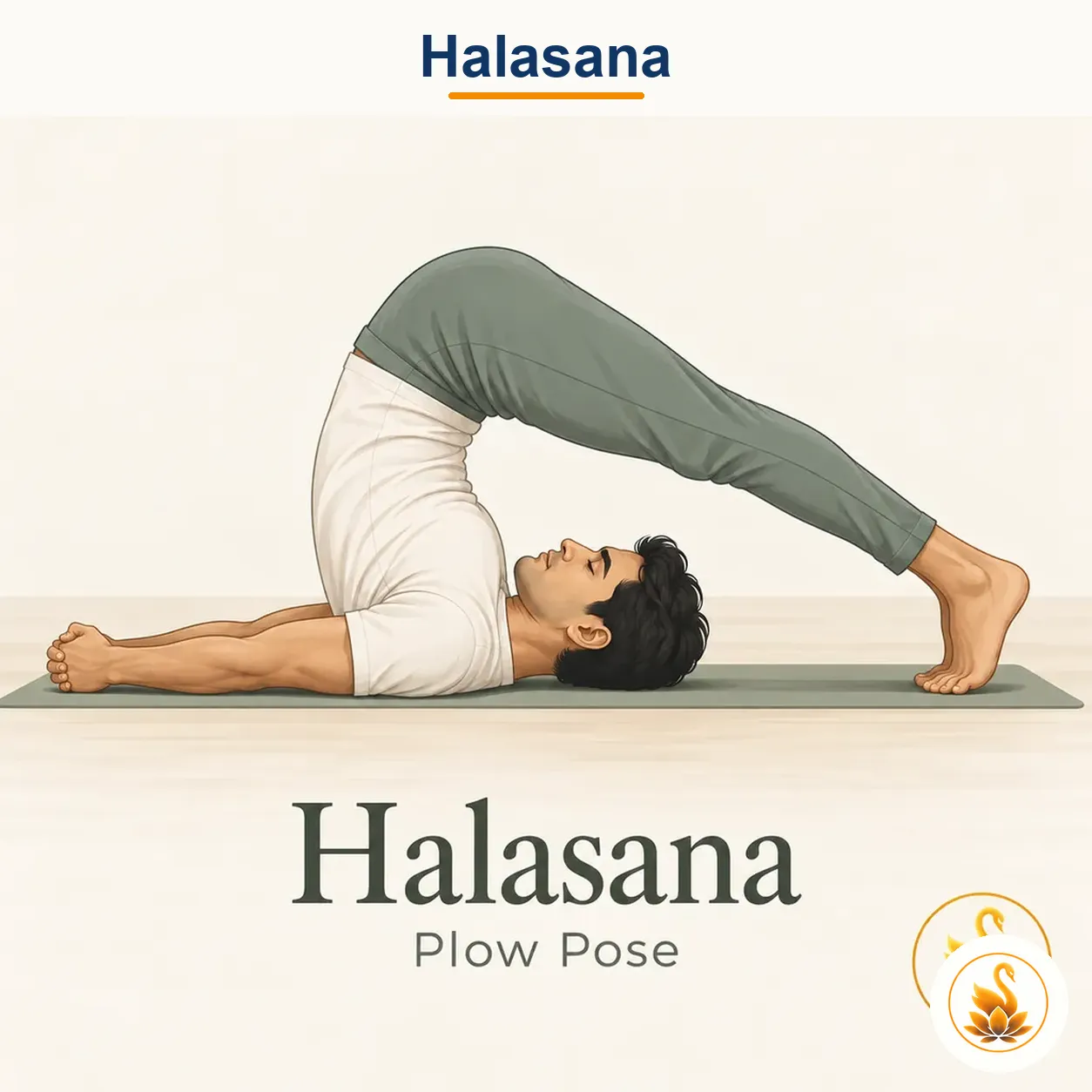
PWA verified guide
How to practise safely
Focus
inversion, spinal flexion, body awareness
Steps
- Begin lying on the back and lift the legs with control.
- Support the pelvis/back with the hands as the legs move overhead.
- Keep weight away from the head and avoid turning the neck.
- Exit slowly by rolling down with control.
Benefits
- A traditional advanced inversion requiring controlled trunk mobility.
- Challenges body awareness and spinal control.
- Best treated as a supervised/experienced practice rather than a default beginner pose.
Suggested duration
Only with prior experience or qualified guidance; short comfortable holds.
Important caution
Do not use as a casual self-guided pose. Avoid with neck/spine problems, glaucoma/eye-pressure concerns, uncontrolled blood pressure, pregnancy, recent surgery or when inversions are restricted.
Asana 096
Sarvangasana
Shoulder Stand
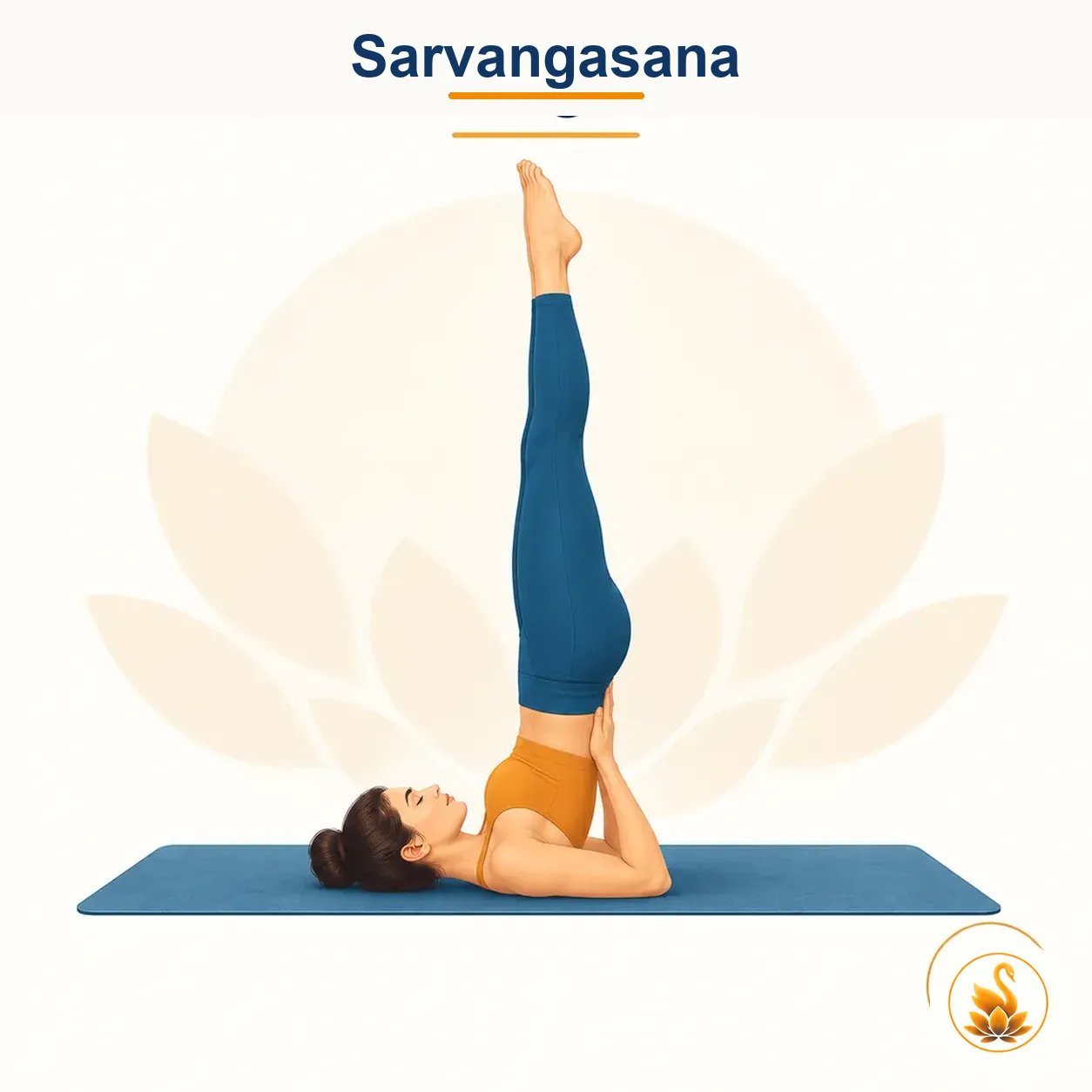
PWA routine source – expert review pending
How to practise safely
Focus
inversion, controlled movement, steady breathing
Steps
- Prepare in a stable starting position and keep the breath comfortable.
- From lying, raise the legs and trunk and support the back with the hands so the body moves toward a vertical supported position.
- Return gradually with control.
Benefits
- Develops whole-body coordination and focused attention.
- Builds controlled upper-body and trunk engagement.
- Challenges balance and body awareness when appropriately supervised.
Suggested duration
Source gives staged hold/return instructions
Important caution
Use qualified supervision. Avoid unsupported practice with wrist, shoulder, neck or back injury, uncontrolled blood pressure, glaucoma, recent surgery, pregnancy, dizziness or fall risk.
Source: YogaAX1. Practice wording is source-derived; focus, benefits and caution are cautious editorial guidance pending expert review.
Asana 097
Sirsasana
Headstand
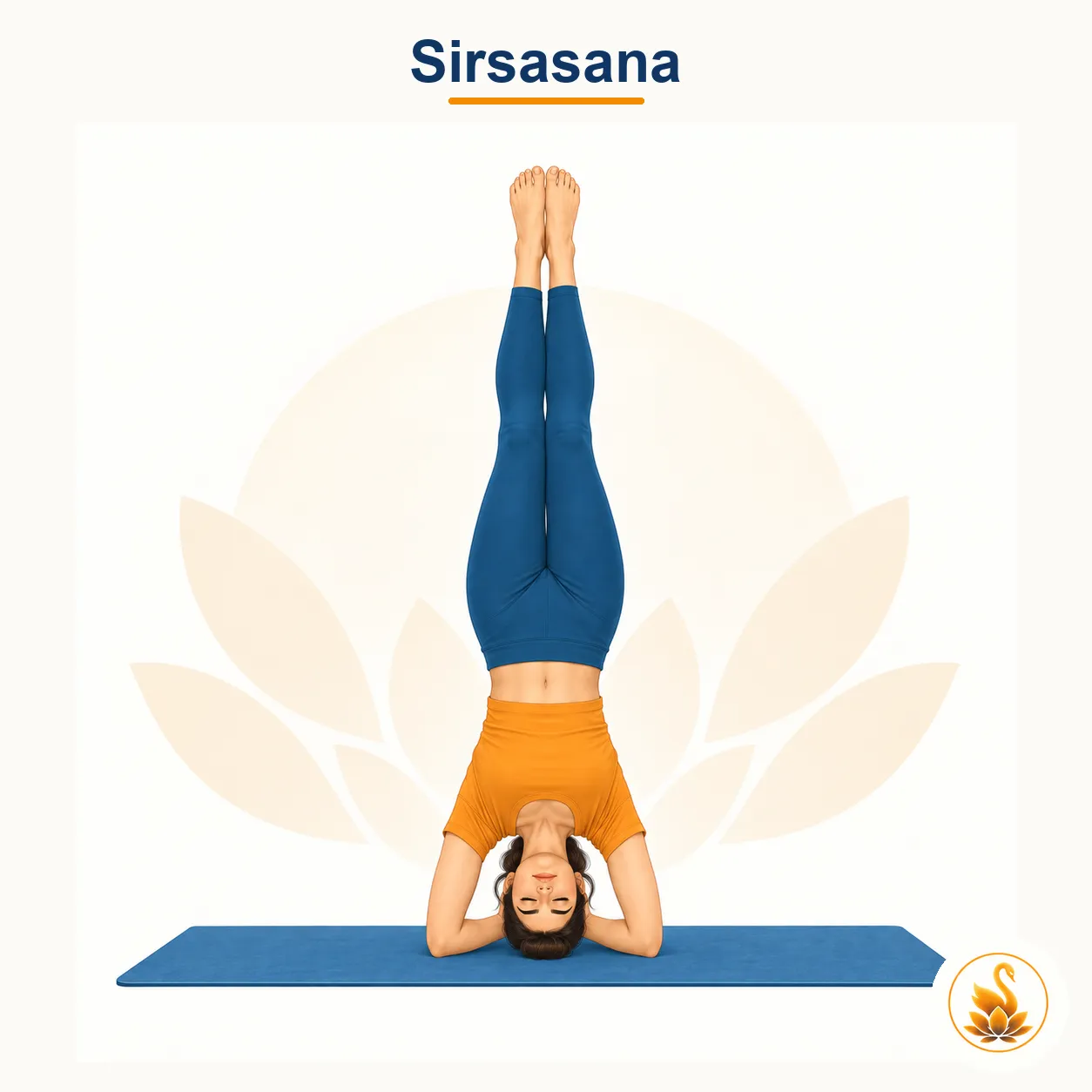
Ananda-X practice guide
How to practise safely
Focus
advanced inversion, shoulder support, controlled entry and exit
Steps
- Prepare forearm and shoulder stability with Dolphin Pose under a qualified teacher.
- Interlace the hands, place the forearms firmly and position the crown lightly without transferring excessive weight to the head.
- Use a wall and teacher assistance to bring the hips over the shoulders and extend the legs only when control is established.
- Descend with control and rest before standing.
Benefits
- Develops whole-body coordination and focused attention.
- Builds controlled upper-body and trunk engagement.
- Challenges balance and body awareness when appropriately supervised.
Suggested duration
Begin with a few seconds only under qualified supervision.
Important caution
Advanced inversion: do not self-teach. Avoid with neck or shoulder injury, glaucoma, retinal problems, uncontrolled blood pressure, heart disease, pregnancy, dizziness or fall risk.
Source status: Ananda-X editorial practice guidance. This entry is complete but is not labelled PWA-verified.
Asana 098
Pincha Mayurasana
Forearm Stand
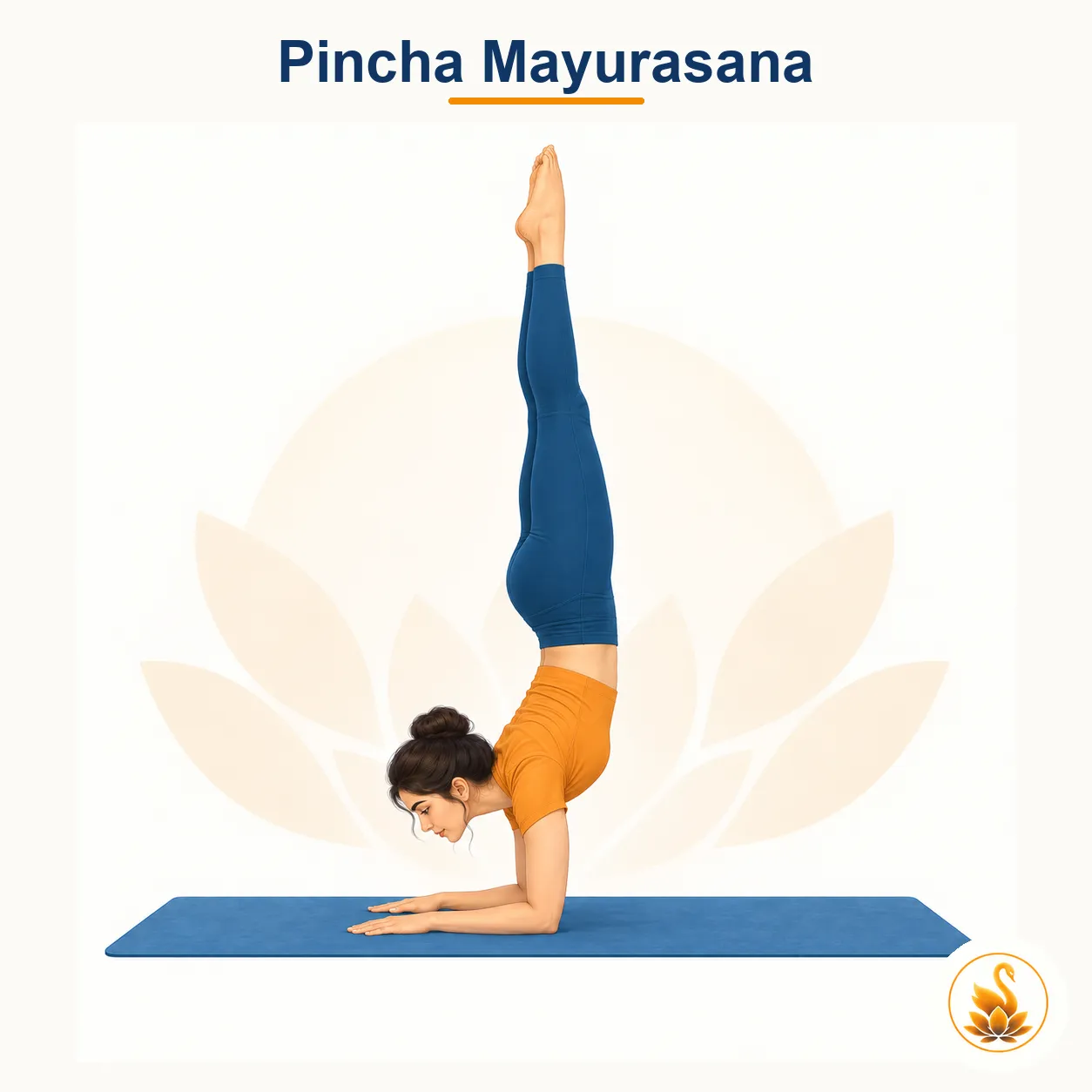
Ananda-X practice guide
How to practise safely
Focus
advanced forearm balance, shoulder stability, wall-supported control
Steps
- Build shoulder and trunk control in Dolphin Pose with a teacher.
- Place the forearms parallel, walk the feet inward and practise small controlled weight shifts near a wall.
- Only with assistance, lift one leg and then the other while keeping the shoulders active and head free.
- Lower one foot at a time and rest.
Benefits
- Develops whole-body coordination and focused attention.
- Builds controlled upper-body and trunk engagement.
- Challenges balance and body awareness when appropriately supervised.
Suggested duration
Brief supervised attempts with full recovery between them.
Important caution
Advanced inversion: wall and qualified supervision required. Avoid with shoulder, elbow, neck or back injury, glaucoma, uncontrolled blood pressure, pregnancy, dizziness or fall risk.
Source status: Ananda-X editorial practice guidance. This entry is complete but is not labelled PWA-verified.
Asana 099
Adho Mukha Vrikshasana
Handstand
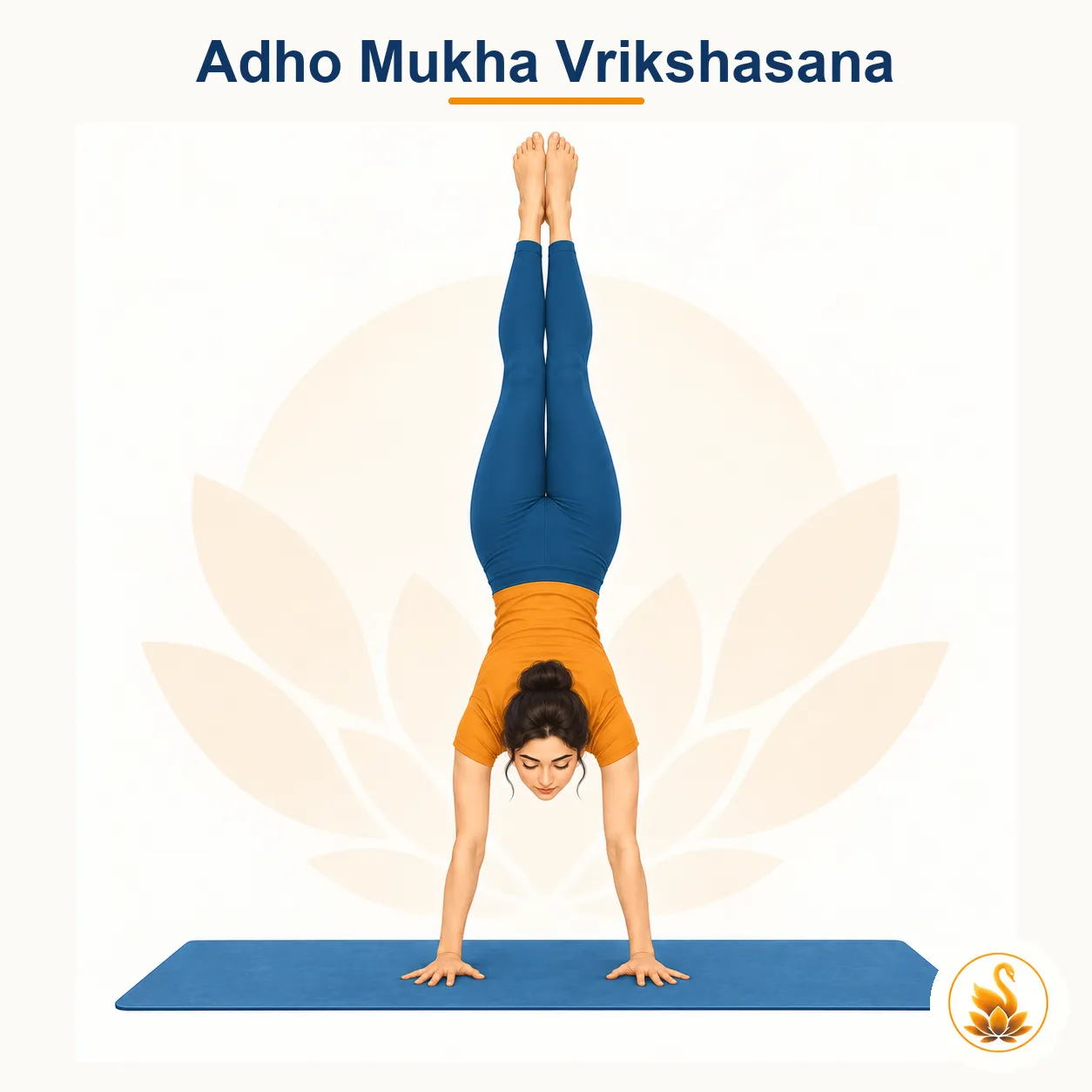
Ananda-X practice guide
How to practise safely
Focus
advanced hand balance, shoulder strength, controlled wall practice
Steps
- Develop a stable plank and wall-facing preparation before attempting inversion.
- Place the hands shoulder-width apart near a wall, spread the fingers and keep the shoulders active.
- With teacher assistance, use a controlled step or kick to bring the legs upward without collapsing into the shoulders.
- Lower one foot at a time and rest in a neutral position.
Benefits
- Develops whole-body coordination and focused attention.
- Builds controlled upper-body and trunk engagement.
- Challenges balance and body awareness when appropriately supervised.
Suggested duration
Brief supervised attempts only.
Important caution
Advanced inversion: do not practise alone. Avoid with wrist, elbow, shoulder, neck or back injury, glaucoma, uncontrolled blood pressure, pregnancy, dizziness or fall risk.
Source status: Ananda-X editorial practice guidance. This entry is complete but is not labelled PWA-verified.
Asana 100
Bakasana
Crane Pose
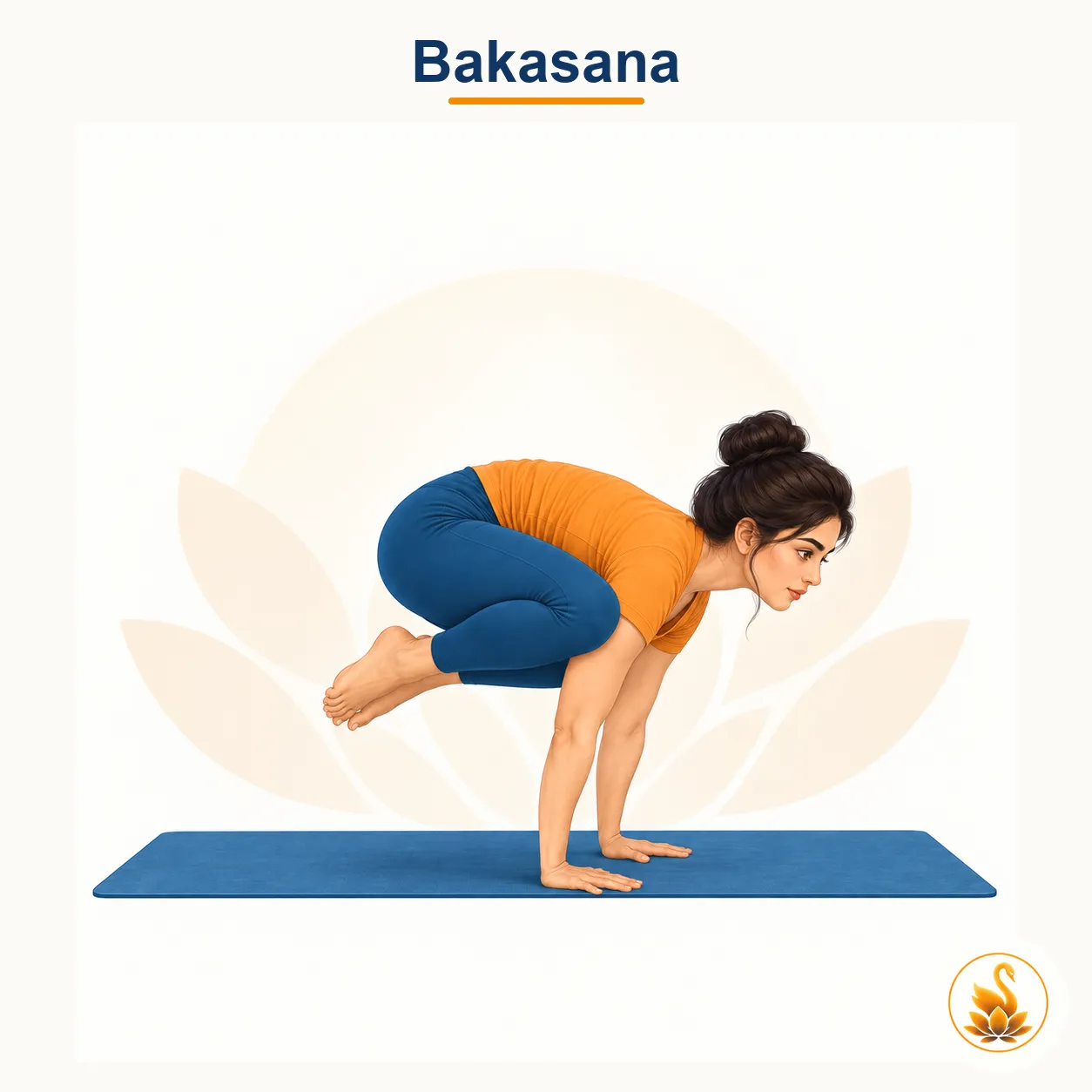
Ananda-X practice guide
How to practise safely
Focus
straight-arm Crane balance, shoulder control, compact weight shift
Steps
- Squat with the hands shoulder-width apart and fingers spread.
- Place the knees high near the armpits, look forward and shift weight gradually into the hands.
- Lift the feet and, only when stable, work toward straighter elbows and an upper-back lift to match Crane Pose; keep some bend if needed while learning.
- Set one foot and then the other down to exit.
Benefits
- Develops whole-body coordination and focused attention.
- Builds controlled upper-body and trunk engagement.
- Challenges balance and body awareness when appropriately supervised.
Suggested duration
1 to 3 brief attempts under qualified supervision.
Important caution
Advanced arm balance: use supervision and padding. Do not force the elbows straight or collapse into the shoulders; avoid with wrist, elbow, shoulder or back injury, uncontrolled blood pressure, pregnancy or fall risk.
Source status: Ananda-X editorial practice guidance. This entry is complete but is not labelled PWA-verified.
Asana 101
Kakasana
Crow Pose
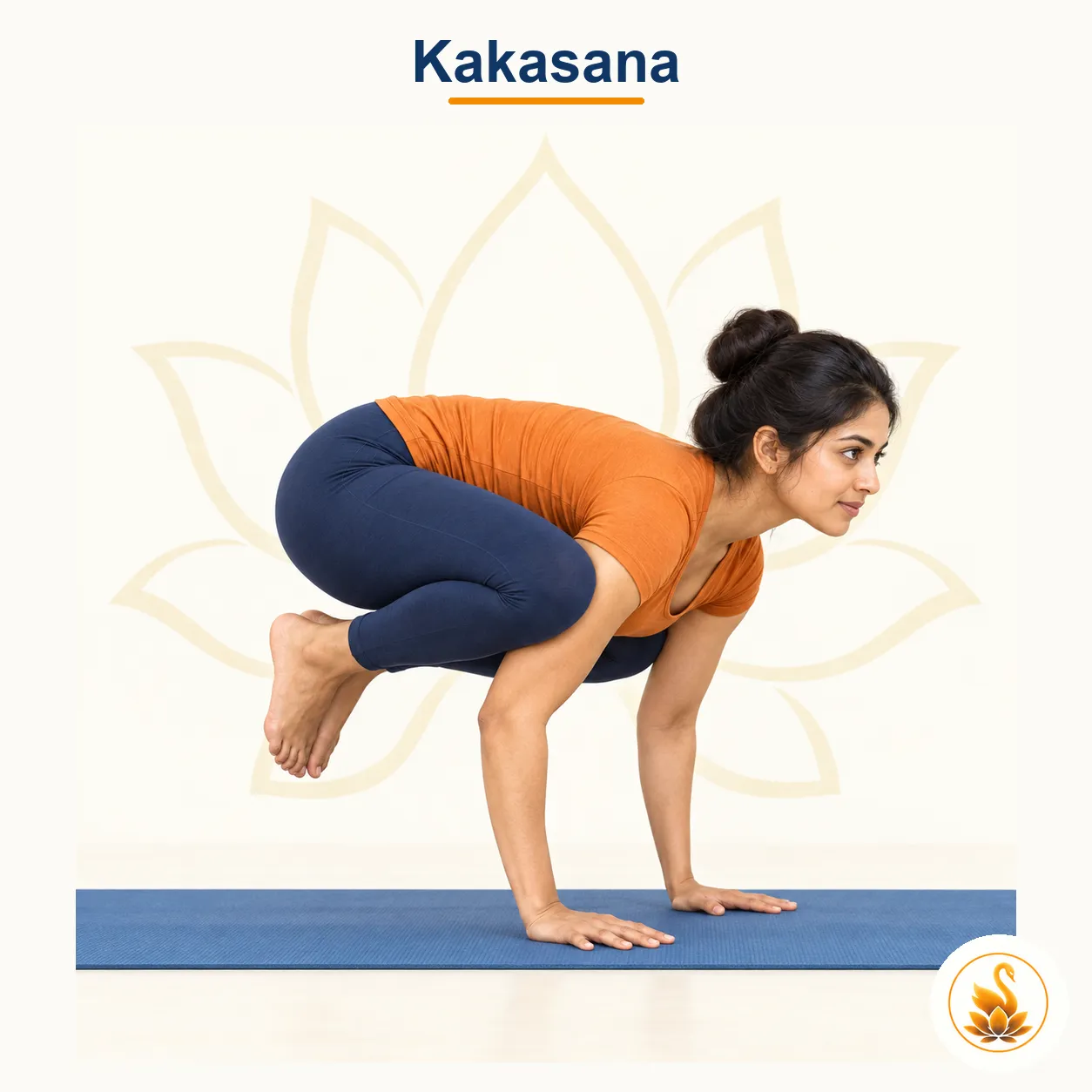
Ananda-X practice guide
How to practise safely
Focus
introductory arm balance, steady gaze, gradual weight shift
Steps
- Come into a squat and place the hands shoulder-width apart with fingers spread.
- Bend the elbows, bring the knees to the upper arms and keep the gaze slightly forward.
- Shift weight slowly into the hands, lifting one foot at a time if stable.
- Lower the feet softly and rest the wrists.
Benefits
- Develops whole-body coordination and focused attention.
- Builds controlled upper-body and trunk engagement.
- Challenges balance and body awareness when appropriately supervised.
Suggested duration
1 to 3 brief attempts with a teacher or safe setup.
Important caution
Use padding and qualified guidance. Avoid with painful wrists, elbows or shoulders, pregnancy, uncontrolled blood pressure or fall risk.
Source status: Ananda-X editorial practice guidance. This entry is complete but is not labelled PWA-verified.
Asana 102
Mayurasana
Peacock Pose
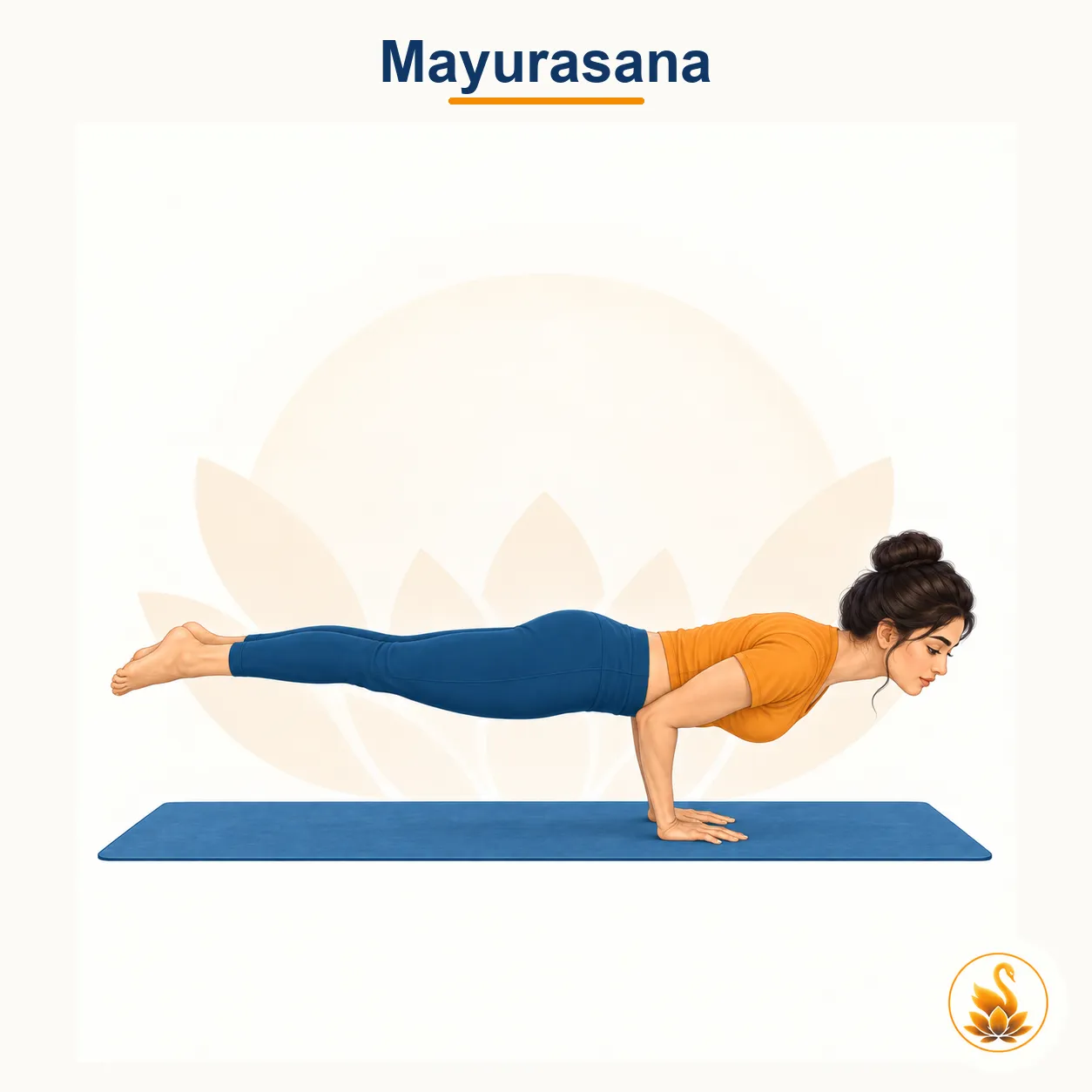
Ananda-X practice guide
How to practise safely
Focus
advanced arm balance, elbow placement, whole-body control
Steps
- Practise only after developing strong wrist, shoulder and trunk control with a qualified teacher.
- From kneeling, place the hands with fingers pointing back or outward as instructed and position the elbows against the abdomen.
- Shift forward gradually and extend the legs only when the body remains supported as one line.
- Lower the feet and knees with control before releasing the wrists.
Benefits
- Develops whole-body coordination and focused attention.
- Builds controlled upper-body and trunk engagement.
- Challenges balance and body awareness when appropriately supervised.
Suggested duration
One or two brief supervised attempts.
Important caution
Advanced posture: avoid with wrist, elbow, shoulder, abdominal or back conditions, pregnancy, hernia, uncontrolled blood pressure or recent surgery.
Source status: Ananda-X editorial practice guidance. This entry is complete but is not labelled PWA-verified.
Asana 103
Tolasana
Scale Pose
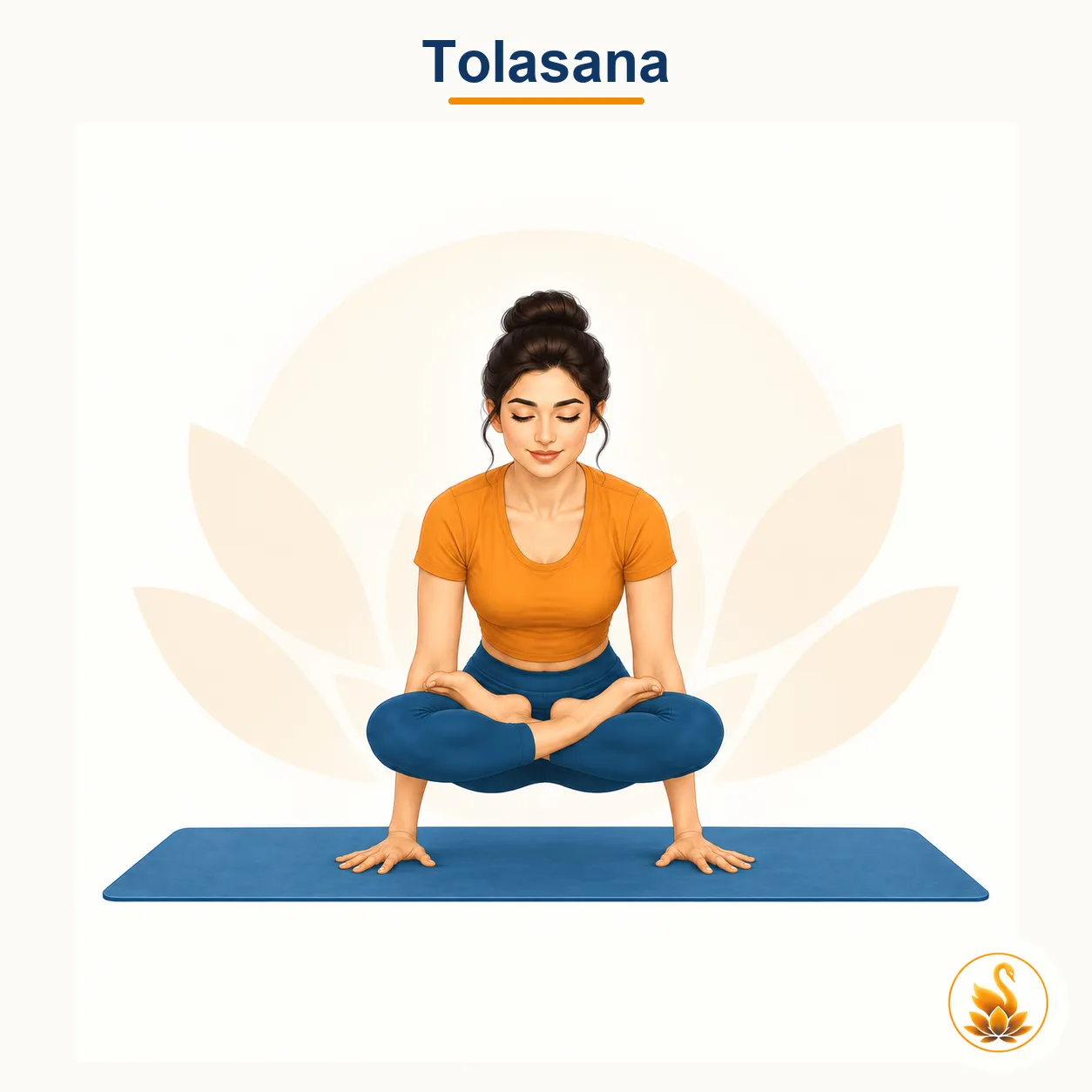
Ananda-X practice guide
How to practise safely
Focus
advanced lift, arm support, compact trunk engagement
Steps
- Sit in a comfortable cross-legged or lotus-compatible position with blocks beside the hips.
- Place the palms on the blocks, press down and draw the abdomen inward gently.
- With qualified guidance, lift the pelvis and feet without swinging or forcing the knee position.
- Lower with control and release the legs.
Benefits
- Develops whole-body coordination and focused attention.
- Builds controlled upper-body and trunk engagement.
- Challenges balance and body awareness when appropriately supervised.
Suggested duration
1 to 3 brief lifts.
Important caution
Advanced arm support: do not use Lotus unless it is already effortless. Avoid with wrist, shoulder, hip or knee injury.
Source status: Ananda-X editorial practice guidance. This entry is complete but is not labelled PWA-verified.
Asana 104
Chaturanga Dandasana
Four-Limbed Staff
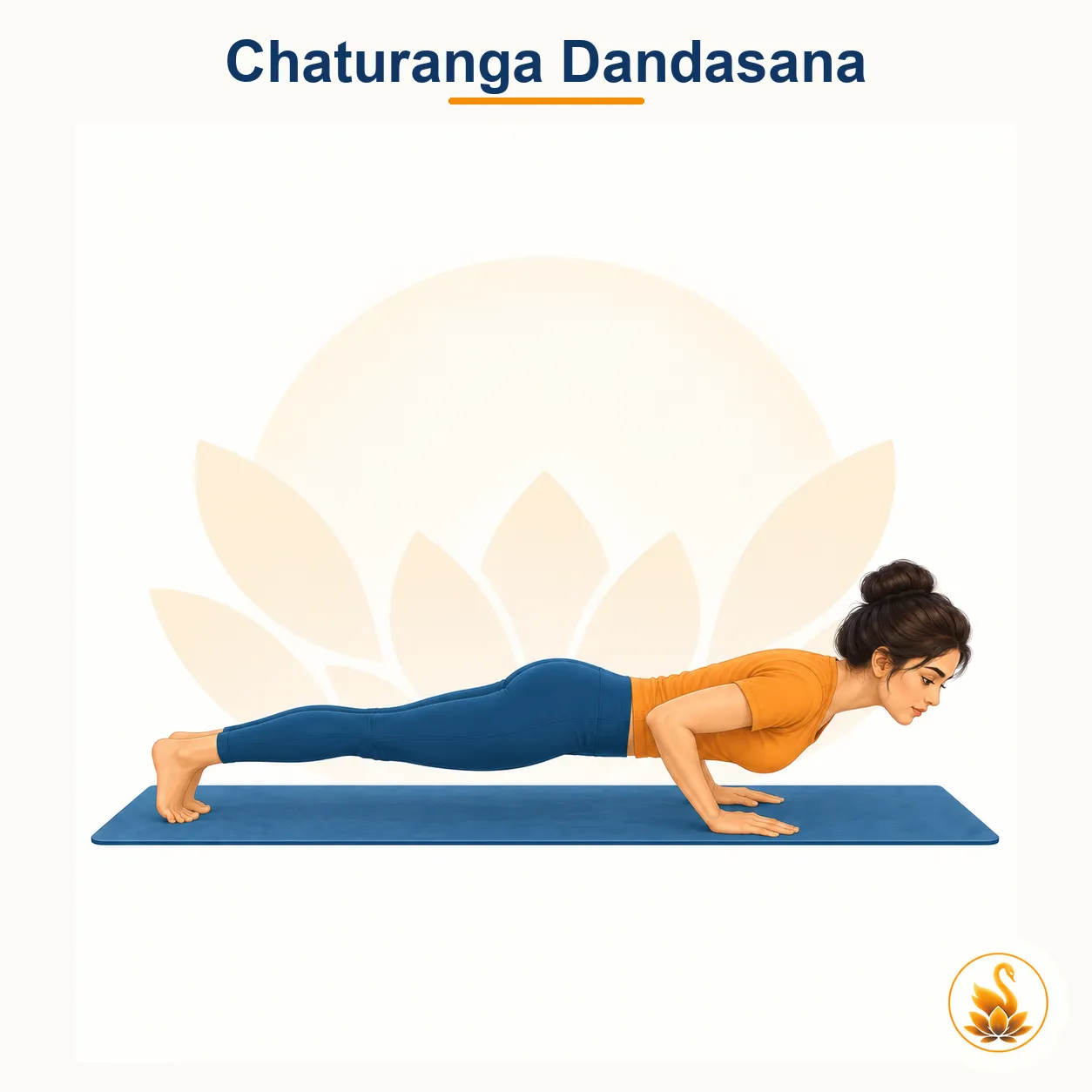
Ananda-X practice guide
How to practise safely
Focus
straight-body strength, shoulder stability, controlled lowering
Steps
- Begin in plank with shoulders over wrists and heels reaching back.
- Shift slightly forward, keep the elbows close to the ribs and lower the body as one line.
- Stop at a height where the shoulders do not dip below the elbows; place the knees down if needed.
- Lower fully or press back to a supported position without holding the breath.
Benefits
- Develops whole-body coordination and focused attention.
- Builds controlled upper-body and trunk engagement.
- Challenges balance and body awareness when appropriately supervised.
Suggested duration
1 to 4 controlled repetitions.
Important caution
Use knees-down support and stop before shoulder collapse. Avoid with wrist, elbow, shoulder or lower-back pain.
Source status: Ananda-X editorial practice guidance. This entry is complete but is not labelled PWA-verified.
Asana 105
Astavakrasana
Eight-Angle Pose
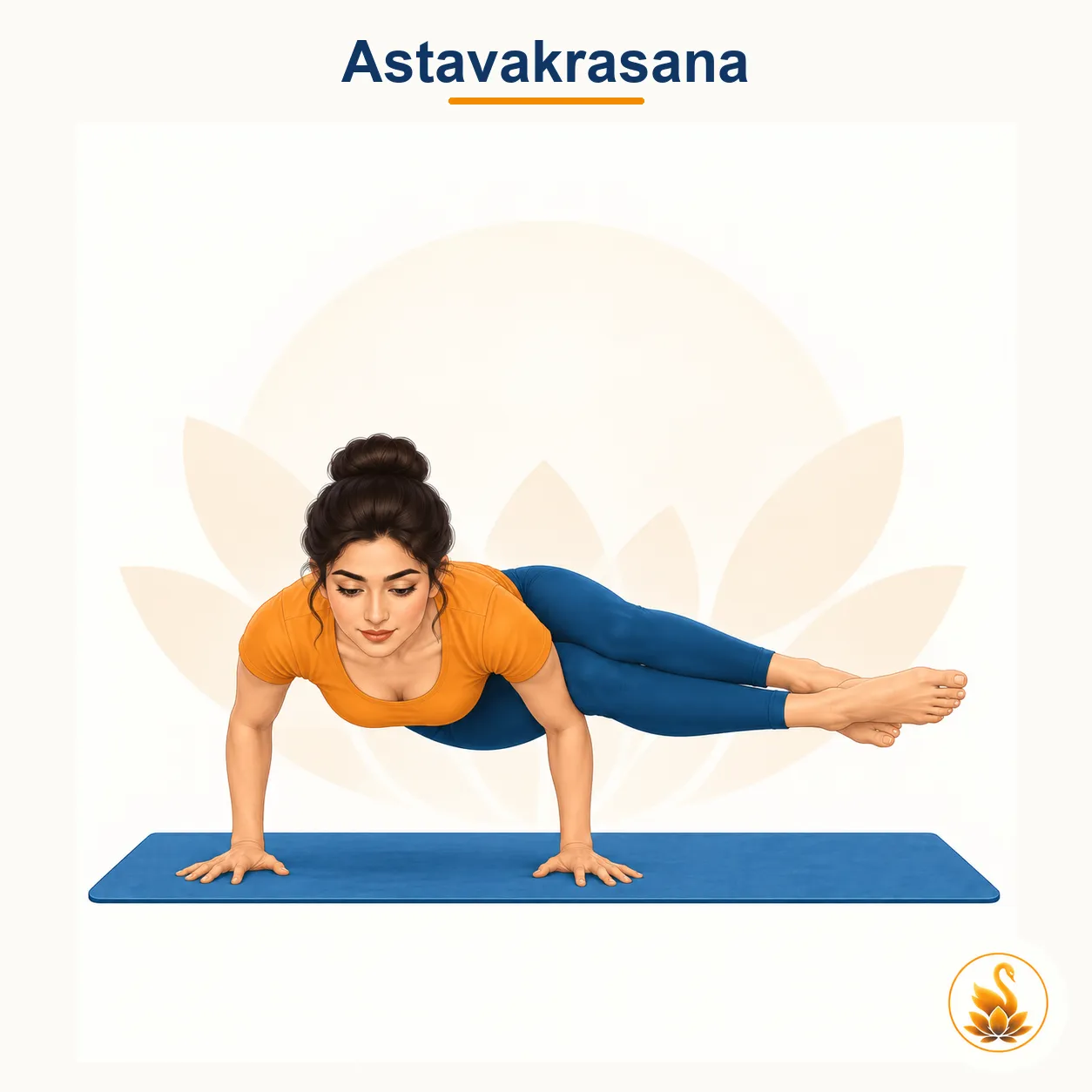
Ananda-X practice guide
How to practise safely
Focus
advanced asymmetrical arm balance, trunk rotation, controlled exit
Steps
- Prepare with seated hip mobility, twists and stable arm balances under a qualified teacher.
- Hook one leg over the upper arm and cross or extend the ankles as instructed.
- Press into both hands, bend the elbows evenly and shift forward while extending the legs to the side.
- Bend the knees and lower the hips with control before changing sides.
Benefits
- Develops whole-body coordination and focused attention.
- Builds controlled upper-body and trunk engagement.
- Challenges balance and body awareness when appropriately supervised.
Suggested duration
One or two brief supervised attempts each side.
Important caution
Advanced posture: do not self-teach. Avoid with wrist, elbow, shoulder, hip or back injury, pregnancy or fall risk.
Source status: Ananda-X editorial practice guidance. This entry is complete but is not labelled PWA-verified.
Asana 106
Bhujapidasana
Shoulder-Pressing Pose
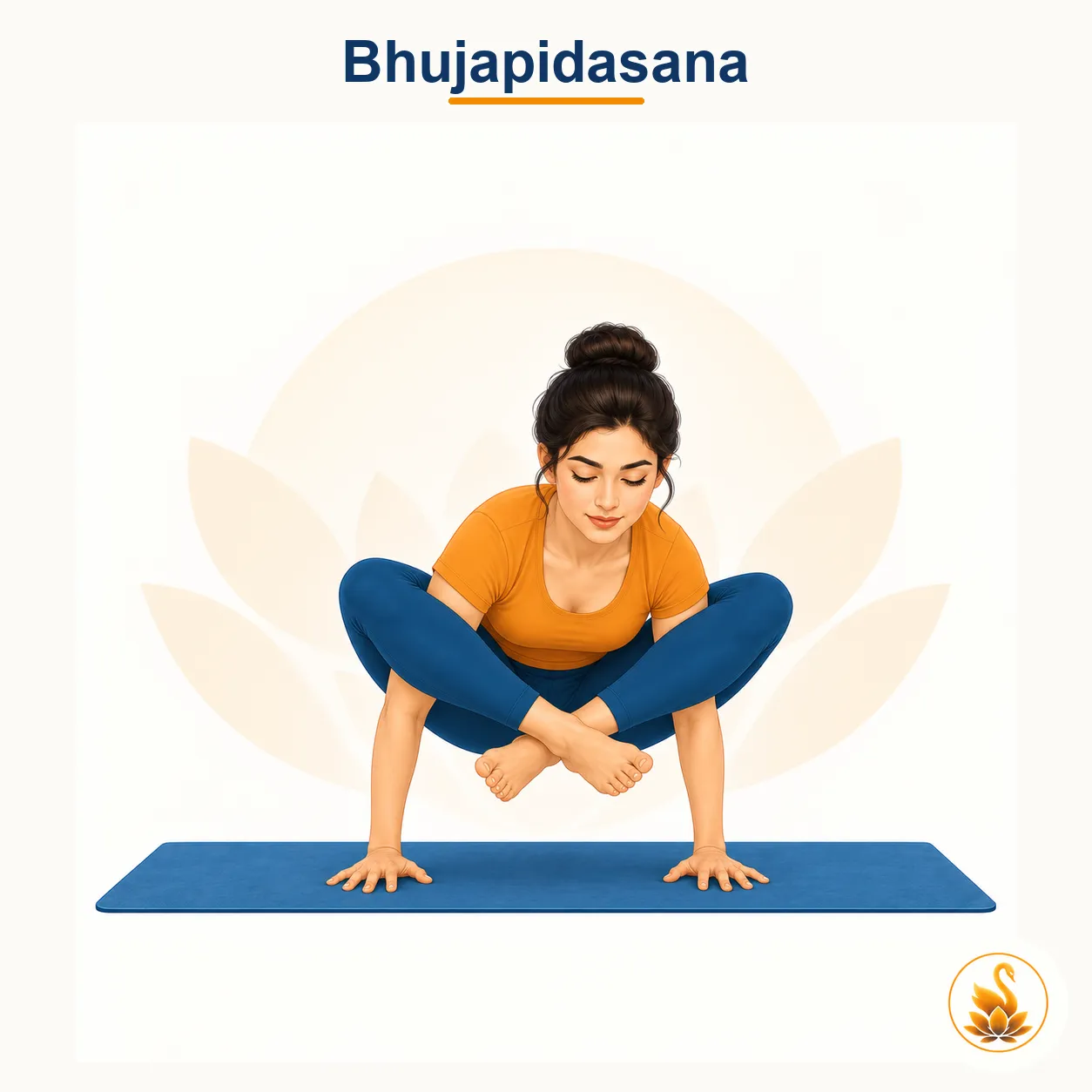
Ananda-X practice guide
How to practise safely
Focus
advanced shoulder-press balance, hip mobility, stable hands
Steps
- Squat with the feet wide and bring the shoulders beneath the thighs as far as comfortable.
- Place the hands firmly behind the heels and bend the elbows slightly.
- With teacher support, shift weight into the hands and lift the feet, keeping the gaze forward.
- Lower the feet and return to the squat slowly.
Benefits
- Develops whole-body coordination and focused attention.
- Builds controlled upper-body and trunk engagement.
- Challenges balance and body awareness when appropriately supervised.
Suggested duration
One or two brief supervised attempts.
Important caution
Advanced arm balance: requires substantial hip and shoulder preparation. Avoid with wrist, elbow, shoulder, hip or back injury, pregnancy or fall risk.
Source status: Ananda-X editorial practice guidance. This entry is complete but is not labelled PWA-verified.
Asana 107
Eka Pada Koundinyasana
One-Legged Sage Balance
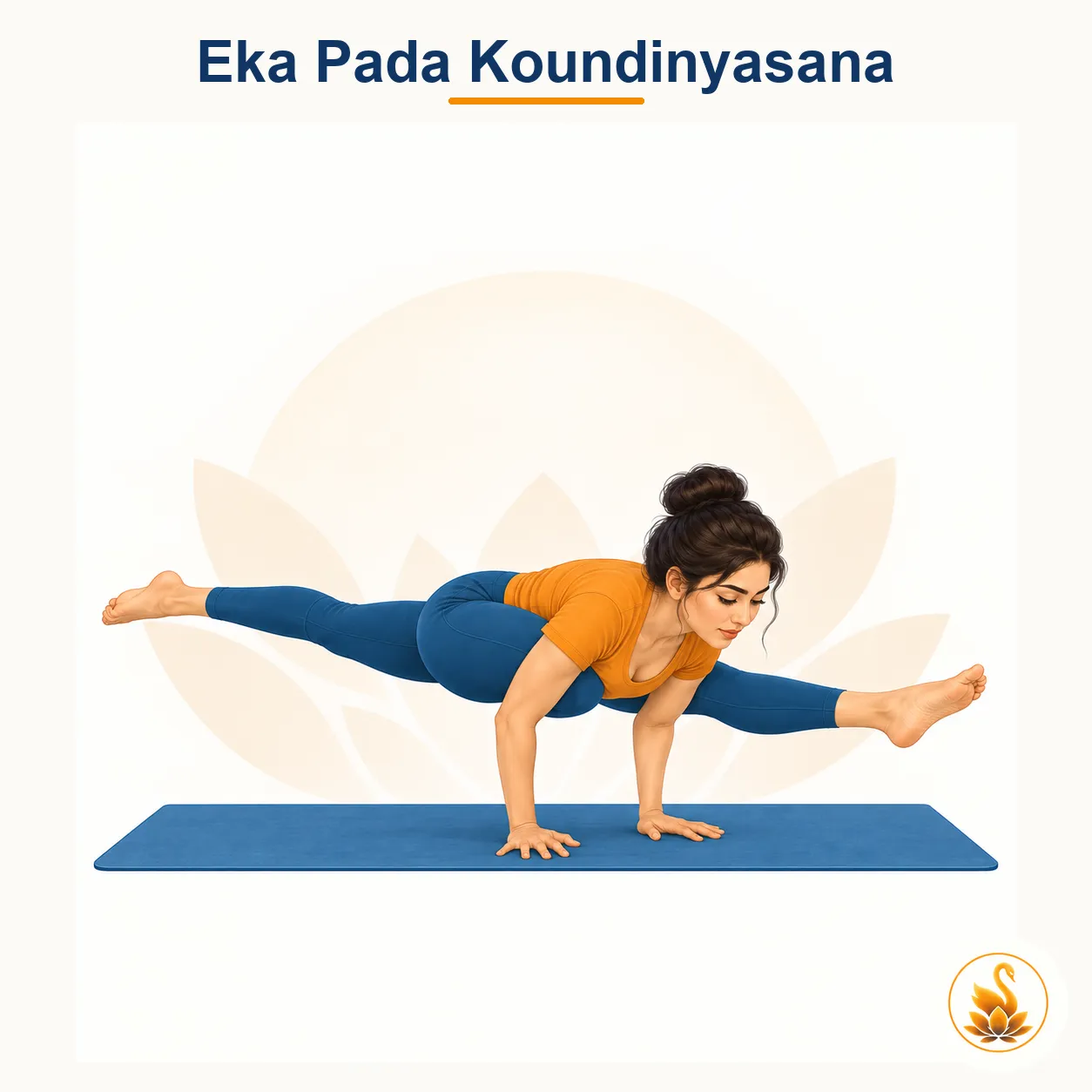
Ananda-X practice guide
How to practise safely
Focus
advanced split-leg arm balance, rotational control, steady shoulders
Steps
- Prepare with lunges, twists and stable two-arm balances under qualified supervision.
- From a twisting lunge, place both hands firmly and bring the outer thigh high onto the upper arm.
- Shift forward gradually, extending the front leg and back leg in opposite directions only when the shoulders remain controlled.
- Bend the knees and lower the feet carefully before changing sides.
Benefits
- Develops whole-body coordination and focused attention.
- Builds controlled upper-body and trunk engagement.
- Challenges balance and body awareness when appropriately supervised.
Suggested duration
One or two brief supervised attempts each side.
Important caution
Advanced posture: do not practise alone. Avoid with wrist, elbow, shoulder, hip, knee or back injury, pregnancy, uncontrolled blood pressure or fall risk.
Source status: Ananda-X editorial practice guidance. This entry is complete but is not labelled PWA-verified.
Asana 108
Vayunishkasana
Wind-Releasing Squat
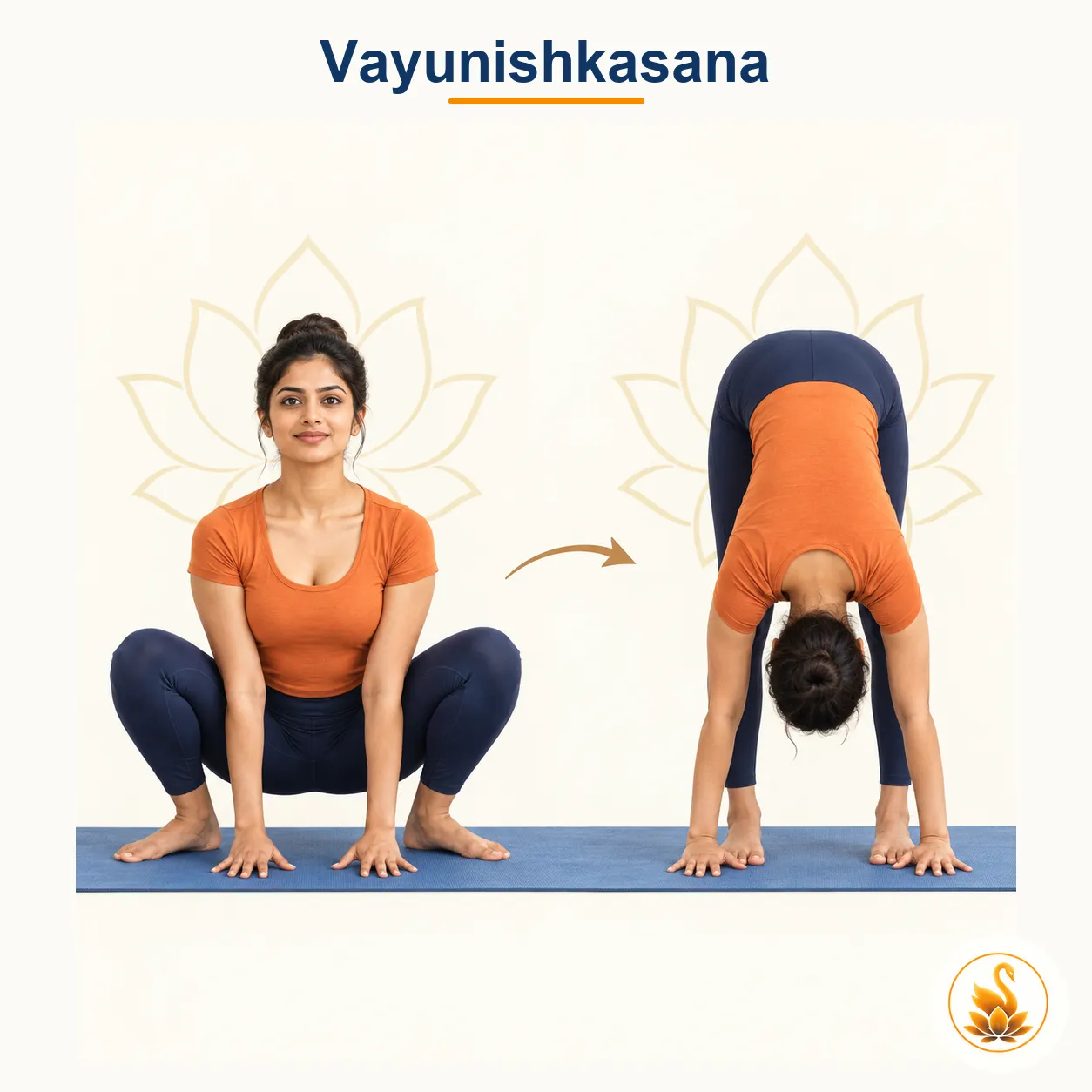
PWA routine source – expert review pending
How to practise safely
Focus
standing / squat, controlled movement, steady breathing
Steps
- Prepare in a stable starting position and keep the breath comfortable.
- From a wide squat, hold under the feet/soles as shown, straighten the knees on inhalation while keeping the feet held, then return to the squat on exhalation.
Benefits
- Develops standing awareness and controlled movement.
- Supports balance, coordination and postural organization.
- Encourages steady breathing while the body remains attentive.
Suggested duration
Source says 8 rounds
Important caution
Use a wall or chair if balance is uncertain. Stop with pain, dizziness, unusual breathlessness or loss of control.
Source: YogaAX1. Practice wording is source-derived; focus, benefits and caution are cautious editorial guidance pending expert review.
No asanas match these filters.